 Edward DP Situmorang
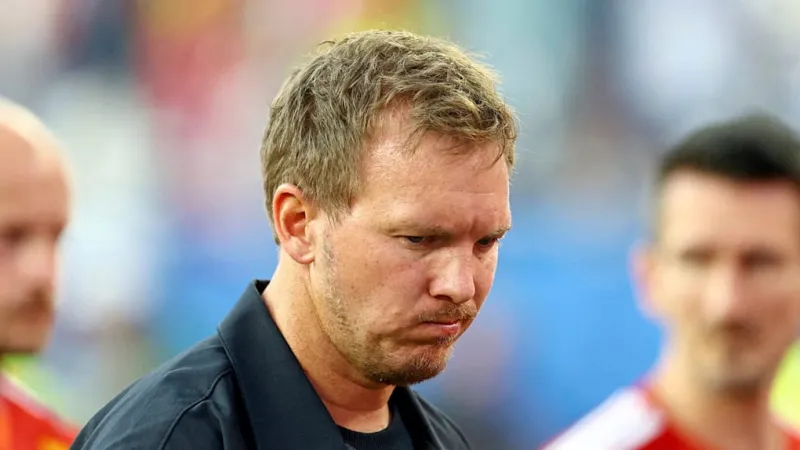
BERLIN – Julian Nagelsmann has resigned from his position as coach of the German national football team, known as the Bundestrainer, effective Friday. His departure follows the squad's widely criticized performance and early exit from the recent World Cup tournament, plunging the nation's football federation into an immediate search for new leadership.
The resignation comes on the heels of Germany's deeply disappointing campaign in the 2026 World Cup, where the highly anticipated team failed to advance past the group stage. This premature elimination marked a significant setback for a footballing nation accustomed to deep tournament runs and global success, igniting widespread public and media outcry.
Nagelsmann, appointed to the prestigious role, had been tasked with revitalizing a squad that had underperformed in previous major competitions. His tenure, initially met with optimism due to his innovative tactics and prior club success, ultimately failed to translate into consistent results on the international stage, culminating in the World Cup debacle.
The German Football Association (DFB) confirmed Nagelsmanns departure through a concise statement, acknowledging the mutual decision and thanking him for his service. While the DFB did not immediately announce a successor, sources close to the federation indicate an urgent process is underway to identify a candidate capable of steering the team toward the upcoming European Championship and future World Cup cycles.
The sudden vacancy at the helm leaves the German national team in a precarious position, with crucial qualifying matches and international friendlies looming. Players and staff now face a period of uncertainty as the DFB grapples with the task of instilling stability and a fresh tactical direction before the next competitive fixtures.
Speculation regarding Nagelsmanns replacement quickly gained momentum within German football circles. Prominent names like Jurgen Klopp, currently with Liverpool, have frequently been mentioned as a potential long-term target for the DFB. Reports suggest that securing such a high-profile coach could involve complex negotiations, as detailed in related discussions about the DFB pursuing coaches like Klopp. Red Bull Demands Millions for Klopp As DFB Pursues Coach. Other domestic coaches are also likely contenders.
The role of Bundestrainer carries immense national pressure and historical weight. Germany has a storied football legacy, with multiple World Cup and European Championship titles. Recent struggles, particularly consecutive early exits from major tournaments, have intensified scrutiny on coaching decisions and the overall direction of youth development within the German football system.
Fans across Germany expressed a mixture of disappointment and understanding following the announcement. Social media platforms buzzed with discussions about the teams performance, the coaching change, and hopes for a resurgence. Many acknowledged the difficulty of the role but demanded accountability for the teams results.
The financial ramifications of Nagelsmanns early departure, including any potential severance packages and the cost of securing a new elite coach, will undoubtedly be a significant consideration for the DFB. These costs add another layer of complexity to an already challenging transition period for the national governing body.
Nagelsmanns resignation signals a critical juncture for German football. It underscores the need for a comprehensive reassessment of strategy, player development, and the tactical philosophy at the national level. The next Bundestrainer will inherit not only a talented squad but also the formidable challenge of restoring national pride and competitive dominance.
This latest World Cup disappointment draws parallels with Germany's performance in the 2018 and 2022 tournaments, where the team also failed to meet expectations. The pattern of early exits highlights a systemic issue that extends beyond a single coaching change, indicating a deeper challenge for one of football's traditional powerhouses.
The path forward for German football will require strategic vision, decisive leadership, and a renewed focus on fundamental strengths. The DFB's selection of the next Bundestrainer will be one of the most consequential decisions for the future trajectory of the national team, as the nation looks to reclaim its place at the pinnacle of international football.