Gabriella
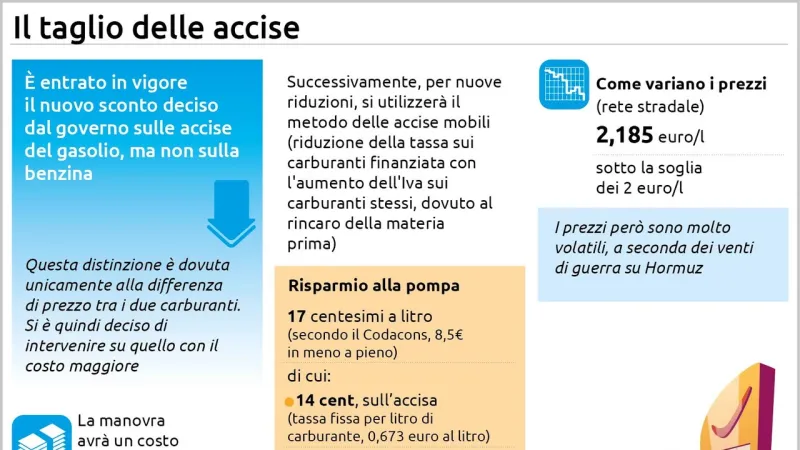
ROME – Italian drivers will see an immediate reduction in fuel costs as a government-mandated diesel excise tax cut takes effect today, following the publication of official decrees in the Gazzetta Ufficiale. The measure, designed to alleviate economic pressures, translates to a saving of 17 cents per liter for diesel fuel, promising tangible relief for motorists and transport operators across the nation.
The consumer association Codacons was quick to highlight the direct financial benefit for households, estimating an average saving of 8.5 euros for every full tank of diesel. This immediate impact is expected to resonate positively with millions of commuters and businesses reliant on road transport.
The formal implementation follows swift action by the Italian government to address persistent high energy costs. These decrees, now legally binding, mandate the reduction of excise duties, directly influencing the price displayed at the pump from today forward.
For months, both private citizens and commercial entities have grappled with fluctuating and often elevated fuel prices, which have contributed significantly to inflationary pressures across the Italian economy. The latest diesel tax cut represents a targeted effort to mitigate these rising expenses.
The move is particularly crucial for the logistics and agricultural sectors, where diesel is a primary operational cost. Lower fuel expenses can potentially lead to reduced transportation costs for goods, which might, in turn, help stabilize consumer prices for a variety of products.
Industry analysts suggest that while 17 cents per liter may seem modest individually, the cumulative savings nationwide will be substantial, especially for high-volume consumers. This intervention aims to inject a degree of predictability into budgeting for fuel expenditures.
The government has framed this intervention as a necessary step to support the national economy and bolster purchasing power. It underscores a responsive approach to current economic challenges, particularly those impacting the daily lives of citizens and the competitiveness of businesses.
Questions remain regarding the duration of this excise duty reduction and whether similar measures might be extended to other fuel types. Historically, governments have employed various fiscal levers to manage fuel prices, often as temporary relief measures.
Public reaction, while generally positive, also includes calls for more structural solutions to Italy's energy costs. Consumer groups advocate for long-term strategies that go beyond temporary tax adjustments to ensure sustainable affordability.
The diesel tax cut also places Italy within a broader European context where several nations have been debating or implementing similar measures to cushion their populations from global energy market volatility. Each country balances fiscal stability with citizen welfare.
This policy adjustment highlights the dynamic relationship between government revenue, consumer spending, and the broader economic health of the nation. It illustrates how immediate legislative actions can directly impact daily expenses.
Further monitoring will be essential to assess the full economic impact, including any potential shifts in consumer behavior or broader market dynamics resulting from the reduced cost of diesel.