 Chandra Wijayanto
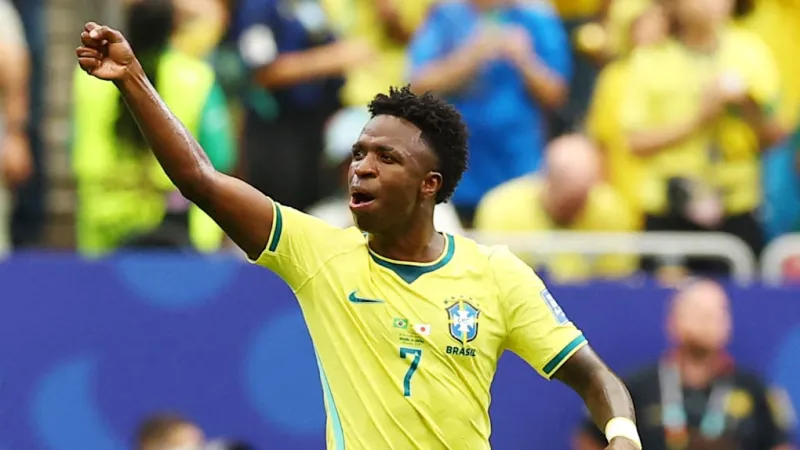
DOHA, QATAR – Vinicius Junior, the electric forward for the Brazilian national team, solidified his burgeoning reputation as a complete player during Brazil's hard-fought 2-1 victory over Japan in the World Cup Round of 16. The match, decided in the waning moments, saw the superstar demonstrate a surprising evolution, prioritizing cohesive team play and strategic contributions over his signature individual brilliance, a shift pivotal in securing Brazil's advance to the quarterfinals.
While fans and pundits often celebrate Vinicius Junior for his breathtaking solo runs and dazzling dribbling — a style that electrified the World Cup and nearly broke Japan's defense in earlier stages — his performance against the resilient Japanese side highlighted a growing maturity. This newfound emphasis on collective strategy rather than purely individual heroics marks a significant development in his already stellar career.
Brazil's triumph against an underdog Japan team that proved a formidable challenge was not easily won. The five-time champions found themselves pressed by Japan's disciplined defense and sharp counter-attacks, necessitating a collective response. Vinicius Junior's willingness to track back, engage in pressing, and distribute the ball effectively demonstrated an understanding of the broader tactical demands.
This particular match saw a critical late comeback from Brazil, which underscored the necessity of every player contributing beyond their primary offensive roles. Vinicius Junior's influence was felt not just in moments of individual flair but in the subtle ways he created space for teammates and maintained possession under pressure.
His coaches have long lauded Vinicius Junior's potential, but this World Cup campaign, especially the Round of 16 clash, appears to be a turning point. It suggests a player keenly aware of the need to adapt his prodigious talent to the high-stakes environment of international football, where team cohesion often trumps individual spectacle.
The transformation is particularly noteworthy given the immense pressure on players like Vinicius Junior to deliver moments of individual magic. For years, the narrative around him has focused on his thrilling one-on-one battles and capacity to score spectacular goals. Now, the emphasis shifts to his role as a crucial cog in a formidable collective machine.
This strategic shift could be a significant asset for Brazil as they navigate the treacherous knockout stages. A team capable of relying on its individual stars for both brilliance and selfless collaboration presents a more unpredictable and potent threat to opponents. The deeper Brazil goes into the tournament, the more crucial such multifaceted contributions become.
The Brazilian squad, teeming with world-class talent, benefits immensely from a star like Vinicius Junior embracing a more comprehensive role. It sends a clear message throughout the team: collective success is paramount, even for the most gifted individuals.
His performance against Japan was not defined by a single highlight-reel solo effort, but by a consistent display of intelligence and tactical discipline. He moved the ball quickly, supported defensive efforts, and made unselfish runs that opened up avenues for other attackers, contributing to a fluid offensive system.
Fans, who were initially captivated by his dazzling solo efforts, are now witnessing the maturation of a player destined for greatness, not just as an individual talent, but as a leader by example. This evolution allows Brazil to harness his energy and skill in a more integrated manner, making the team stronger overall.
The World Cup demands evolution from its brightest stars. Those who can adapt their game to the specific needs of their national team often lift the most coveted trophy. Vinicius Junior appears to be on that path, understanding that his greatest contribution might not always be the most spectacular one.
As Brazil looks ahead to their quarterfinal fixture, the collective strength demonstrated against Japan, bolstered by Vinicius Junior's refined team play, will be a cornerstone of their strategy. Their aspiration for a sixth World Cup title rests not just on individual genius, but on a harmonious and adaptable unit.