Angel Doris
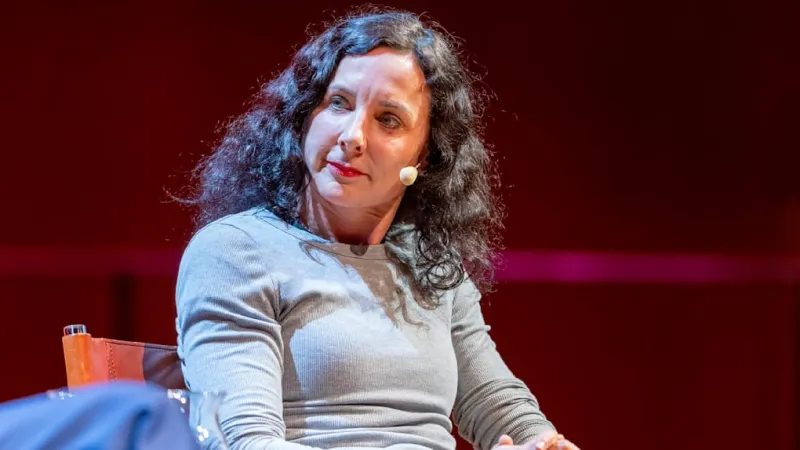
Author Juli Zeh recently delivered a pointed critique on a pervasive societal narrative, identifying what she characterizes as a rhetoric of downfall as a fundamentally narcissistic phenomenon prevalent among older men. During her appearance on the popular German podcast Hotel Matze, Zeh contended that this self-aggrandizing lamentation inadvertently finds sustenance through women who adopt analogous male behavioral patterns.
Zeh meticulously described Untergangsrhetorik—often translated as rhetoric of demise or gloom—as transcending mere pessimism. Instead, she posited it as a theatrical performance, a dramatic articulation of societal decay that, somewhat ironically, elevates the speaker to the role of a sagacious oracle foretelling inevitable collapse.
The novelist pinpointed the inherent narcissism embedded within this mindset. She suggested it stems from a profound desire for significance and recognition, wherein the act of warning against impending doom serves as a peculiar validation. This intellectual posturing, Zeh argued, allows certain individuals to command central attention in public discourse by perpetually signaling crisis.
A particularly salient and perhaps provocative dimension of Zeh's analysis involves the role of women in the perpetuation of this cycle. She observed that, rather than actively challenging this pattern of lamentation, some women unknowingly contribute to its endurance by internalizing and echoing established male behavioral scripts.
This adoption, according to Zeh, does not necessarily signify a conscious endorsement of patriarchal structures. Rather, it frequently manifests as an unconscious mirroring of communication styles and power dynamics, leading to the entrenchment of a system she perceives as ultimately unproductive and self-serving.
The author's remarks gained traction during her extensive conversation on Hotel Matze. The podcast, celebrated for its rigorous and in-depth interviews with prominent cultural figures, provided a considerable platform for Zeh's incisive sociological observations, reaching a broad German-speaking audience.
Juli Zeh is a highly distinguished German novelist, essayist, and former constitutional judge, renowned for her intellectually charged and often polemical works. Her literary contributions consistently dissect contemporary societal dilemmas, power imbalances, and the intricate dynamics of individual liberty within complex systems.
Her sharp assessment resonates with wider academic and public debates concerning entrenched gender roles, the intricacies of intergenerational communication, and the psychological underpinnings of public rhetoric across modern societies. It compels a deeper inquiry into how narratives of societal decline are crafted and sustained.
In the current global climate of 2026, frequently marked by heightened anxieties over ecological shifts, economic uncertainties, and escalating geopolitical tensions, Zeh's critique serves as a timely reminder. It urges a critical examination of the underlying motivations that propel declarations of imminent societal collapse, including various political narratives.
The author’s analysis encourages both men and women to scrutinize their active and passive contributions to the prevailing public narratives. It underscores the importance of discerning how influence or perceived wisdom might inadvertently arise from, and thereby perpetuate, a continuous cycle of negative prognostication.
Zeh's central thesis advocates for a heightened self-awareness regarding the subtle mechanisms that reinforce established, yet potentially harmful, modes of public expression. It suggests that genuine progress requires transcending these ingrained patterns of communication.
Ultimately, the commentary by Juli Zeh presents a profound challenge to the intellectual status quo, pushing for a reevaluation of how societal problems are discussed and who benefits from particular forms of discourse. Her insights prompt a move towards more constructive dialogue.