 Robert Andrison
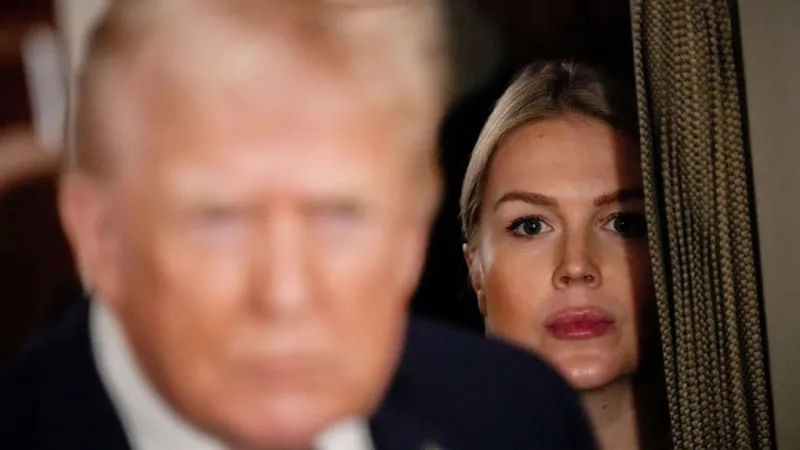
Washington, D.C. – Karoline Leavitt, a prominent spokesperson for President Donald Trump, has become a focal point of contention within modern feminist discourse, with her public image and rapid ascent in conservative politics prompting intense scrutiny and criticism over what constitutes a legitimate female voice in power. The ongoing debate centers on her aesthetic choices and political alignment, which some argue challenge conventional feminist ideals, while others defend her autonomy and effectiveness.
Critics have pointed to Leavitts appearance, characterized by her blonde hair and polished style, often dubbed a Barbie-look, as incongruous with their vision of feminist representation. Questions frequently arise about the implications of such an aesthetic for women in positions of influence, particularly within a political administration viewed by many as challenging progressive values.
Conversely, supporters and some commentators contend that these critiques represent an outdated or narrow interpretation of feminism, which should embrace diverse expressions of womanhood, including choices in appearance and political affiliation. They argue that judging a woman solely on her looks rather than her professional capabilities or policy positions is inherently anti-feminist.
Leavitts career trajectory, serving as a key communications figure for President Trump, underscores her significant role in the administration. Her articulate defense of the President and his policies positions her at the forefront of conservative communication strategies, making her a visible and influential figure in national politics.
The recent resignation by Leavitt from a prior role, the specifics of which were not publicly detailed, reportedly served only to intensify the dialogue. This departure, rather than quieting the discussion, reportedly spurred further conjecture and fueled polarized opinions regarding the pressures faced by women in high-profile political positions.
The controversy surrounding Leavitt highlights a deeper ideological rift within modern feminism. It forces a re-examination of whether the movement effectively advocates for all women or inadvertently creates prescriptive molds that exclude those who do not conform to specific political or aesthetic expectations.
Historically, women in public-facing roles, particularly in politics and media, have frequently endured intense scrutiny over their appearance and personal choices. This legacy of aesthetic judgment, while sometimes challenged by feminist movements, appears to persist, evolving into new forms in the contemporary media landscape.
Her association with President Trumps administration, often characterized by its combative stance against what it perceives as liberal media and progressive ideologies, further complicates the narrative. Leavitts role as a staunch defender of this administration naturally places her at odds with many who identify with mainstream feminist movements.
One political analyst, speaking anonymously to preserve professional impartiality, remarked, "The debate over Karoline Leavitt is less about her individually and more about the ongoing struggle within feminism to reconcile diverse expressions of power and identity. It questions whether solidarity can extend across political divides."
As the political landscape continues to evolve, the discourse surrounding figures like Leavitt will likely persist, challenging both traditional and modern feminist frameworks to broaden their definitions of female empowerment and representation in the public sphere. The enduring conversation underscores the complexities of gender, power, and perception in 21st-century politics.