 Demian Sahputra
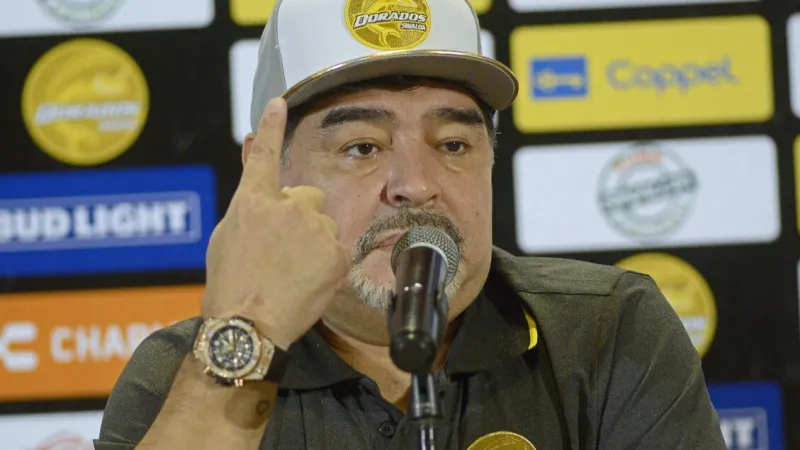
WASHINGTON, D.C. - A chillingly prescient statement made in 2018 by Argentine football legend Diego Maradona has once again captivated global audiences, resurfacing in a viral video just two years before the United States, Canada, and Mexico co-host the FIFA World Cup in 2026. Maradona, known for his fiery personality and unfiltered commentary, had then predicted a highly commercialized tournament, famously suggesting the U.S. leg of the event would feature games so laden with advertisements that they would effectively be played in “four halves.”
The Pibe de Oro, as he was affectionately known, expressed profound skepticism about the United States primary role in organizing the pinnacle of international football. His critique centered on the American approach to sports broadcasting, which prioritizes commercial interruptions, a stark contrast to the continuous flow traditionally associated with football matches worldwide.
In the circulating footage, Maradona, who tragically passed away in 2020, voiced his concerns with characteristic bluntness. He envisioned a scenario where the standard 90-minute match, split into two halves, would be elongated or segmented to accommodate a deluge of advertising, thereby disrupting the game's rhythm and alienating purist fans. His specific mention of “four halves” became a poignant symbol of his apprehension.
Maradona's words carry significant weight within the football community. As a World Cup winner in 1986 and one of the sport's most iconic figures, his opinions often reflected a deep-seated passion for the beautiful game's integrity, frequently challenging perceived threats from commercial interests.
The relevance of Maradona's World Cup prediction has intensified as the 2026 tournament draws closer. With North American organizing committees finalizing plans, the debate around commercialization and fan experience has gained momentum, especially concerning potential adaptations to the match format or television broadcasts. The United States, a key host, operates a distinct sports media landscape compared to many traditional football nations.
American major sports events, such as the Super Bowl, are renowned for their extensive commercial breaks, often leading to games stretching over several hours. Critics argue that transplanting this model onto a FIFA World Cup could fundamentally alter the viewer experience, particularly for an international audience accustomed to uninterrupted gameplay.
FIFA itself has expanded the 2026 tournament to include 48 teams, an increase from the previous 32. This expansion means more matches, inherently creating more inventory for advertising slots and sponsorship opportunities. While FIFA touts increased global participation, the financial windfall from greater commercial exposure is undeniable.
This dynamic pits traditional football values against the massive economic potential of the American market. For many, the unceasing flow of football is sacrosanct, a defining characteristic that distinguishes it from other high-pause sports. Maradona's comments underscore this cultural divide.
Historically, the World Cup has always been a commercial enterprise, but its evolution has seen an escalating integration of corporate sponsorship and broadcast revenue. The 2026 tournament, with its unprecedented scale and multi-national hosting, represents another significant step in this commercial trajectory.
Maradona's legacy extends beyond his on-field brilliance; he was also an outspoken critic of corruption and commercialism within football's governing bodies. His 2018 remarks align with a career of advocating for the sport's essence over its commodification. He remained a voice for the fans and the players, often at odds with the establishment.
The practical implications of excessive commercial breaks could range from prolonged match durations to a disjointed spectator experience, both in stadiums and through broadcasts. Imagine a critical late-game sequence interrupted for a car advertisement; such scenarios are precisely what Maradona seemingly feared.
The conversation around the 2026 World Cup also brings to mind other major sporting events that have grappled with balancing tradition and commerce. For instance, the discussion around expanding the college football playoffs in the U.S. similarly navigates these tensions.
While neither FIFA nor the U.S. organizing committee has officially commented on specific plans for increased commercial breaks or altered game structures in response to these resurfacing concerns, the viral nature of Maradona's prediction ensures the topic remains prominent in public discourse. The global football community watches closely to see how the host nations will honor the game's spirit.
The recent Triple Threat: Heatwave, Swift Nuptials, and America's 250th Challenge World Cup article touched upon the broader context of the U.S. hosting, highlighting the multifaceted challenges and opportunities associated with the nation's bicentennial celebrations coinciding with the global football spectacle.
As the tournament draws nearer, the ghost of Maradona continues to offer a poignant reminder of the delicate balance required to maintain football's soul amidst the ever-increasing demands of commercial enterprise. His prophecy, once dismissed by some as hyperbolic, now resonates as a potent warning for the future of the beautiful game.