 Angel Doris
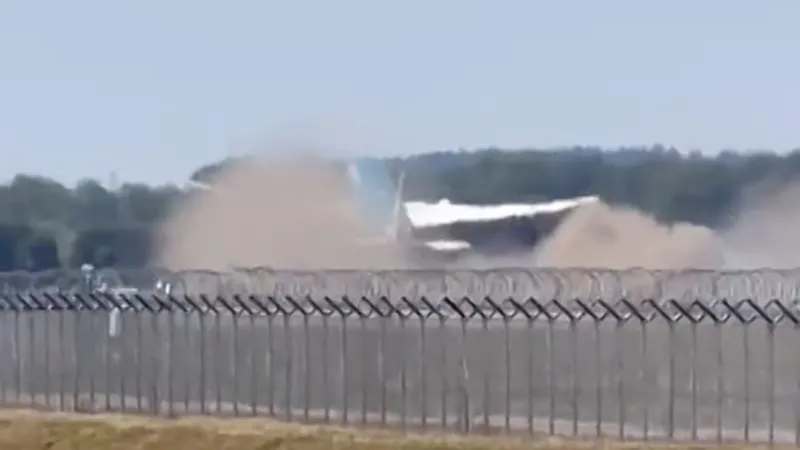
Munich, Germany – A Vietnam Airlines aircraft recently avoided what aviation experts are calling a potential catastrophe at Munich Airport when its tail struck the runway during a delayed takeoff, an incident attributed to multiple pilot errors. The event has prompted serious questions about flight safety protocols and crew training within the aviation industry.
Reports indicate the incident occurred after a noticeable delay in the aircrafts departure sequence. As the plane accelerated down the runway, its rotation for takeoff was apparently executed late, causing the tail section to scrape against the tarmac with considerable force.
Aviation expert Peter Gatz emphasized the gravity of the situation, stating, "The two pilots certainly made several mistakes here." He further elaborated on the potential scenarios that could have unfolded, all of which, he stressed, "must not occur" in professional aviation.
A tail strike, as defined by aviation safety bodies, is a critical event where the rear fuselage of an aircraft contacts the runway during takeoff or landing. While often visually subtle from a distance, it can inflict severe structural damage to the airframe.
The immediate consequence of a tail strike can include damage to the aircrafts pressure hull. Undetected or inadequately repaired, such damage poses a serious risk of fuselage fatigue, depressurization at altitude, or even catastrophic structural failure during subsequent flights.
Investigators will undoubtedly focus on the precise sequence of events leading to the delayed rotation. Factors typically examined include pilot technique, the aircrafts weight and balance, runway conditions, and adherence to standard operating procedures.
Delayed takeoffs can sometimes lead to rushed decision-making or deviations from optimal flight parameters. Pilots are trained to maintain precise control over pitch during rotation to avoid both tail strikes and nose-high stalls.
Peter Gatzs assessment underscores the fundamental importance of pilot judgment and adherence to established checklists and flight envelope limits. Even minor deviations can accumulate into hazardous situations, especially during critical phases of flight like takeoff.
While specific details regarding the immediate aftermath of the Vietnam Airlines incident remain under investigation, standard procedures would involve a thorough inspection of the aircraft. Any damage discovered would necessitate extensive repairs before the aircraft is cleared for service again.
This near-catastrophe at Munich Airport serves as a stark reminder of the continuous need for rigorous pilot training, robust safety checks, and unwavering discipline in aviation operations. The industry maintains an exceptional safety record through constant vigilance and learning from every incident, no matter how narrowly averted.
Air traffic control communications and cockpit voice recorder data will be crucial in understanding the human and mechanical factors that contributed to the unexpected tail strike. Such data provides invaluable insights for future safety enhancements.