 Dodi Irawan
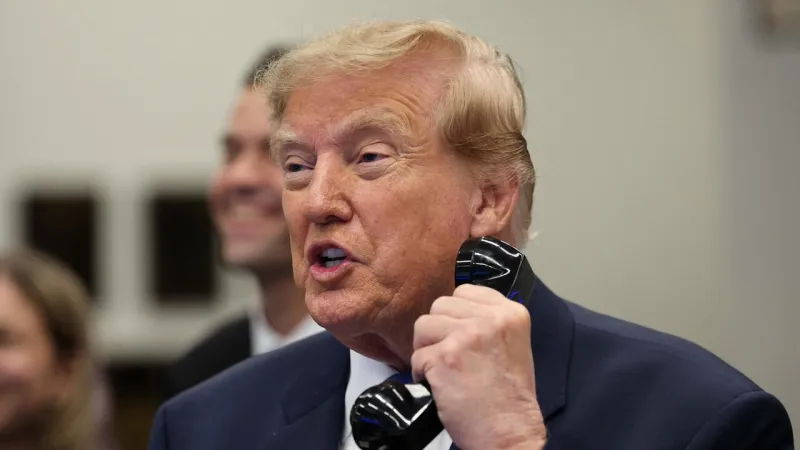
WASHINGTON – President Donald Trump today announced what he termed a "historic maxi-agreement" with Venezuela, poised to grant the United States majority control over an estimated 65 billion barrels of the South American nation's vast crude oil reserves. The declaration, made amidst ongoing geopolitical complexities, immediately raised questions regarding its specific terms, long-term implications, and the future of US-Venezuelan relations.
The White House statement indicated that the agreement would transfer a significant stake in Venezuela's substantial oil assets, a move that could profoundly reshape global energy markets and US strategic interests. The claimed 65 billion barrels represent a considerable portion of Venezuela's proven reserves, among the largest globally.
While President Trump hailed the accord as a major diplomatic and economic victory, experts and international observers quickly pointed to a myriad of unanswered questions. Details surrounding the operational control, financial mechanisms, and the precise legal framework of the deal remain largely undisclosed, fueling speculation and caution.
The announcement comes against a backdrop of historically strained relations between Washington and Caracas. For years, the United States has imposed extensive sanctions on Venezuela's oil industry and government officials, citing concerns over human rights, democracy, and political stability. This sudden pivot marks a dramatic shift in policy.
Analysts are scrutinizing how this agreement reconciles with previous US foreign policy objectives towards Venezuela, particularly the sustained efforts to isolate the current Venezuelan government. The implications for the internal political dynamics within Venezuela and the legitimacy of the deal under international law are also significant points of contention.
Securing majority control over such extensive oil reserves could significantly bolster US energy independence and provide a hedge against volatility in other major oil-producing regions. However, the operational challenges of integrating Venezuelan production capabilities, which have suffered from years of underinvestment and mismanagement, are considerable.
Global oil markets reacted with a mixture of anticipation and uncertainty. While increased supply from Venezuela could theoretically stabilize prices, the political risks associated with the agreement could also introduce new elements of instability. OPEC, historically wary of market disruptions, is expected to monitor the situation closely.
Critics of the deal question the transparency of negotiations and the potential for the agreement to inadvertently legitimize a regime that many in the international community have sought to pressure. Concerns also exist about the environmental impact of potentially ramping up production in a country with a fragile infrastructure.
For the Venezuelan economy, which has been in a prolonged state of crisis, a deal involving significant foreign investment and expertise could offer a lifeline. However, the allocation of revenues and the extent to which the agreement benefits the Venezuelan populace, as opposed to political elites, will be paramount.
President Trump emphasized the strategic importance of the accord for American national security and economic prosperity. He asserted that the deal reflects his administration's capacity to forge unprecedented agreements that serve American interests on a grand scale.
The long-term viability of the agreement will depend heavily on its implementation and adherence to terms by both parties, as well as the evolving political landscape in Venezuela. As the world awaits further clarity, this "historic maxi-agreement" stands as a testament to the unpredictable nature of international diplomacy and energy politics.