 Dodi Irawan
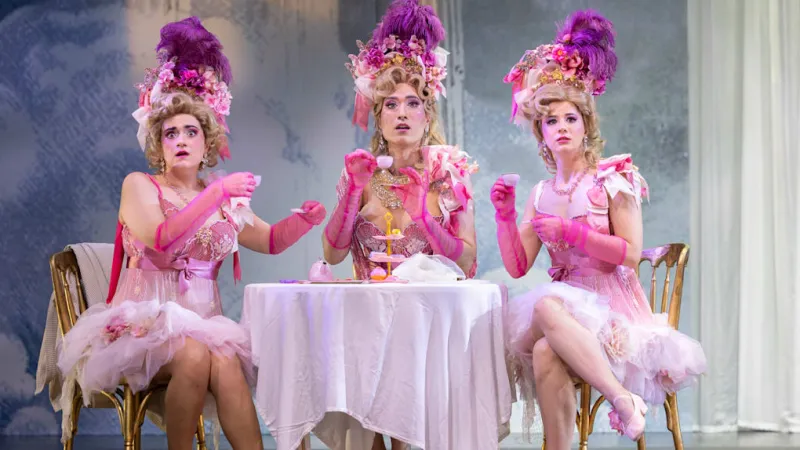
Innsbruck, Austria – One of the most ambitious and elaborate Baroque operas ever conceived, Antonio Cestis "Il pomo doro," has been spectacularly revived in Innsbruck, Austria, marking its return to the stage after an astonishing 358-year hiatus. This monumental production, renowned for its immense length and intricate demands, premiered to an eager international audience, solidifying Innsbrucks commitment to preserving and showcasing significant cultural heritage.
The opera, originally composed for the wedding of Emperor Leopold I and Infanta Margarita Teresa of Spain in 1668, is a theatrical colossus. It requires two full evenings for its performance and demands dozens of highly skilled singers to portray its myriad roles, a scale rarely attempted in contemporary opera.
For centuries, "Il pomo doro" remained largely confined to historical texts and musical scores, its sheer complexity and financial requirements rendering it unplayable. Its rediscovery and subsequent revival represent a significant archaeological feat in the world of performing arts, bringing to life a work thought lost to modern staging.
This revival underscores Innsbrucks burgeoning reputation as a vibrant center for historical performance and cultural innovation. The citys investment in such a challenging project positions it at the forefront of efforts to reintroduce forgotten masterpieces to a new generation of opera enthusiasts and scholars.
Composed by Antonio Cesti, a prominent Italian Baroque composer, with a libretto by Francesco Sbarra, "Il pomo doro" translates to "The Golden Apple," referring to the mythological Judgment of Paris. Its narrative, deeply embedded in classical mythology, explores themes of love, jealousy, and divine intervention, all presented with the characteristic pomp and spectacle of the High Baroque era.
Staging an opera of this magnitude in 2026 presents formidable logistical and artistic challenges. Modern orchestras, conductors, and designers must meticulously research and recreate authentic Baroque performance practices, costumes, and elaborate stage machinery to honor the originals grand vision.
The financial undertaking associated with "Il pomo doro" is substantial, encompassing extensive rehearsals, the hiring of a large ensemble, the construction of intricate sets, and period-accurate costumes. Innsbrucks ability to finance and execute such an endeavor speaks to robust cultural funding and a dedicated patronage for the arts.
Audiences are treated to a visual and auditory feast, characterized by the opulent and vibrant aesthetics synonymous with Baroque art. The operas designation as the worlds most colorful Baroque opera stems from its original production, which featured unprecedented theatrical effects, complex ballets, and dazzling stage transformations designed to awe the imperial court.
The experience extends beyond a typical single-evening performance, inviting attendees into an immersive, multi-day journey through seventeenth-century theatrical grandeur. This extended format allows for a deeper appreciation of Cestis elaborate musical structures and Sbarras intricate dramatic arcs.
This production not only celebrates a historical landmark but also serves as a powerful reminder of the enduring power and ambition of classical music. It is a testament to the dedication required to bridge centuries, bringing artistic brilliance from the past into the present for global appreciation.
Cultural leaders in Innsbruck hope the revival will attract a diverse international audience, fostering cultural exchange and tourism. Such high-profile events often serve as economic catalysts for host cities, drawing visitors keen to witness unique artistic achievements.
Reconstructing the musical text and performance conventions demanded collaboration among musicologists, conductors, and period instrument specialists. Their meticulous work ensured that the resurrected "Il pomo doro" closely mirrored its original splendor while resonating with contemporary audiences.