 Chris Robert
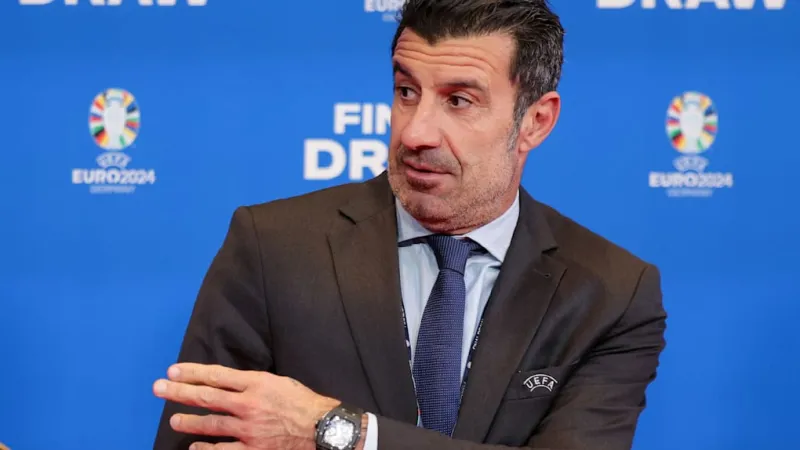
Football icon Luis Figo has issued a profound challenge to the highest echelons of global football, publicly asserting that FIFA President Gianni Infantino must step down. The former Portuguese midfielder, renowned for his technical brilliance and unwavering commitment to the game's purity, contends that such a leadership change is imperative to dismantle what he describes as the entrenched machinations of a corrupt FIFA, thereby reinstating integrity to the sport's governing body.
Figo, a Ballon d'Or winner and a figure emblematic of football's golden era, expressed his candid perspective on the current state of world football governance. His sentiments reflect a growing disquiet among many within the sport regarding the direction and ethical standards of FIFA under its present administration.
Speaking with unreserved conviction, Figo encapsulated his solution to the organization's deep-seated issues with a succinct statement: "The solution can be reduced to three words: Infantino must go." This blunt assessment underscores a profound frustration that extends beyond superficial criticisms, pointing instead to a fundamental crisis of trust and accountability within the sport's paramount institution.
The former Real Madrid and Barcelona star has historically been a vocal critic of football politics, having himself once launched an unsuccessful bid for the FIFA presidency in 2015, advocating for transparency and reform against a backdrop of widespread corruption scandals that ultimately led to the downfall of then-President Sepp Blatter.
His latest pronouncement carries considerable weight, given his stature and unwavering advocacy for the sport's fundamental values. Figo's appeal is not merely a critique but a direct demand for decisive action to address perceived systemic failings that continue to mar FIFA's reputation.
The call for Infantino's departure resurfaces concerns about the global governing body's operational integrity, despite recent efforts to project an image of reform. Critics argue that persistent issues, from transparency in decision-making to the ethical implications of major tournament selections, continue to undermine public and stakeholder confidence.
Indeed, FIFA recently found itself defending President Infantino amidst admitted errors following a summit in Morocco, as reported by outlets such as FIFA Upholds Infantino Amid Admitted Errors After Morocco Summit. Such incidents, though sometimes framed as minor, cumulatively erode the credibility of the leadership Figo now openly challenges.
Infantino, who took the helm in 2016 pledging to clean up the organization, has faced his own share of controversies, including questions regarding his travel expenses, meetings with prosecutors, and the opaque nature of some of FIFA's financial dealings. These ongoing scrutinies contribute to the narrative of an organization struggling to shed its past reputation.
Figo's assertion that the beauty of the game is being overshadowed by administrative malfeasance resonates deeply within the football community. He personifies an era where skill and sportsmanship were paramount, and his voice adds significant moral authority to the demand for ethical governance.
The prospect of a leadership change, as advocated by Figo, introduces a complex political challenge within FIFA's intricate power structures. The current landscape suggests strong internal support for Infantino, making any immediate ouster unlikely without significant external pressure or new revelations.
Nonetheless, Figo's powerful appeal serves as a critical rallying cry for those who believe FIFA must undergo a more profound transformation to truly embrace transparency and ethical leadership. It intensifies the dialogue around accountability at the very apex of international football.
His intervention highlights the enduring tension between the commercial and political realities of modern football and the foundational principles of sportsmanship and fairness. For Figo, the integrity of the game is paramount, transcending administrative convenience or political maneuvering.
As discussions surrounding FIFA's governance continue to evolve in 2026, Figo's direct challenge to Infantino's leadership underscores the persistent demand for a world football body that is beyond reproach. His vision remains clear: a FIFA where the beautiful game flourishes, untainted by corruption.