Gabriella
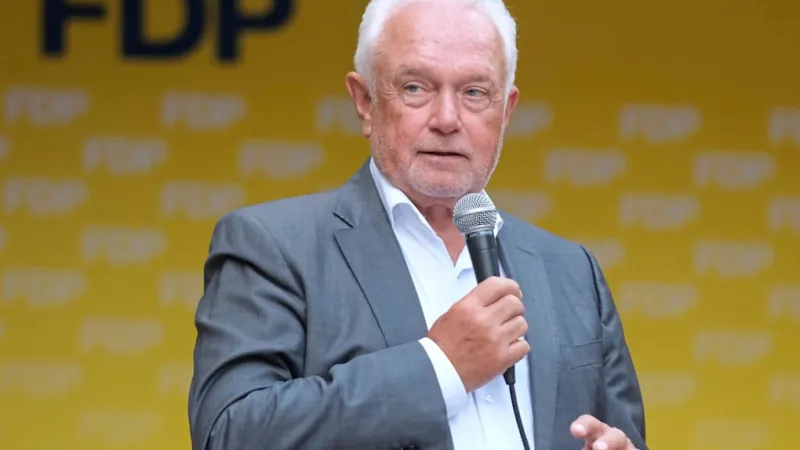
Berlin – Wolfgang Kubicki, the deputy leader of Germany's Free Democratic Party (FDP), has ignited a fresh political debate by presenting a radical new tax concept designed to deliver significant relief for taxpayers. His proposal, featuring a simplified four-stage income tax system and an innovative “50-cent rule” aimed at preventing cold progression, immediately drew criticism, particularly from within the Christian Democratic Union (CDU), signaling deepening rifts within the ruling coalition.
Kubicki's ambitious blueprint outlines a drastic overhaul of Germany's convoluted income tax structure. Currently characterized by a progressive system with numerous thresholds, the FDP vision seeks to streamline this into just four distinct tax brackets. Proponents argue this simplification would enhance transparency and significantly reduce the administrative burden on both citizens and the state.
Central to Kubicki's plan is the unique “50-cent rule.” This mechanism is specifically designed to combat the phenomenon known as cold progression, where wage increases intended to offset inflation inadvertently push taxpayers into higher tax brackets, effectively reducing their real income. Under the proposed rule, for every euro of wage increase, at least 50 cents would remain in the taxpayer's pocket after taxes and social security contributions.
The FDP argues that this innovative approach would provide a tangible financial benefit to millions of German workers, boosting consumer spending and stimulating economic growth. Party officials emphasize that the measure is not merely about tax cuts but about ensuring fairness and preventing the erosion of purchasing power caused by inflation.
However, the proposal has encountered immediate and strong resistance from opposition parties and even within the governing coalition. The Union bloc, comprising the CDU and CSU, swiftly voiced its skepticism, with prominent figures raising concerns about the potential fiscal implications and the perceived lack of detail in Kubicki's presentation.
Criticism from the Union primarily targets the feasibility and funding of such sweeping tax cuts. Members of the CDU have questioned how the government plans to offset the substantial revenue losses that would result from reducing income tax burdens across the board, especially in a period of ongoing economic challenges.
This latest development underscores the persistent tensions surrounding fiscal policy in Germany. Discussions about significant German tax reform have repeatedly ignited coalition feuds, with different parties holding divergent views on budgetary priorities and the role of state intervention in the economy.
The timing of Kubicki's proposal is noteworthy, emerging amidst broader debates on economic competitiveness and the cost of living. Germany, like many European nations, grapples with inflationary pressures and the need to maintain fiscal discipline while simultaneously supporting its citizens.
Finance Minister Christian Lindner, also a prominent FDP member, has previously advocated for tax relief measures, echoing the party's core philosophy of empowering individuals through lower taxation. While Kubicki's plan represents a specific FDP initiative, it aligns broadly with the party's long-standing objectives.
Analysts suggest that the FDP's move is a strategic attempt to distinguish itself politically and reinforce its pro-business and pro-individual economic credentials ahead of future elections. By putting forward such a bold plan, the party aims to galvanize its base and appeal to a broader electorate seeking financial relief.
Yet, the path to implementation remains fraught with obstacles. Any comprehensive tax reform requires broad consensus, particularly within the fragile three-party coalition that currently governs Germany. The Social Democratic Party (SPD) and the Greens, the FDPs coalition partners, traditionally advocate for different fiscal priorities, often favoring social spending over large-scale tax reductions.
Expert economists are now scrutinizing the potential economic impacts of the proposed 50-cent rule and the four-stage tax system. While acknowledging the benefits of combating cold progression, some warn of the need for robust revenue planning to avoid exacerbating the national debt or compromising essential public services.
The political discourse is expected to intensify as the details of Kubicki's proposal are further debated in parliament and across media outlets. Public opinion on tax fairness and the distribution of wealth will undoubtedly play a crucial role in shaping the eventual outcome of these discussions.
The 50-cent rule is certainly a catchy phrase, but its practical application and the political will to overcome entrenched resistance will determine whether this radical concept can transition from a party proposal into legislative reality. The future of German tax policy appears to be heading toward a significant crossroads.