 Stefani Rindus
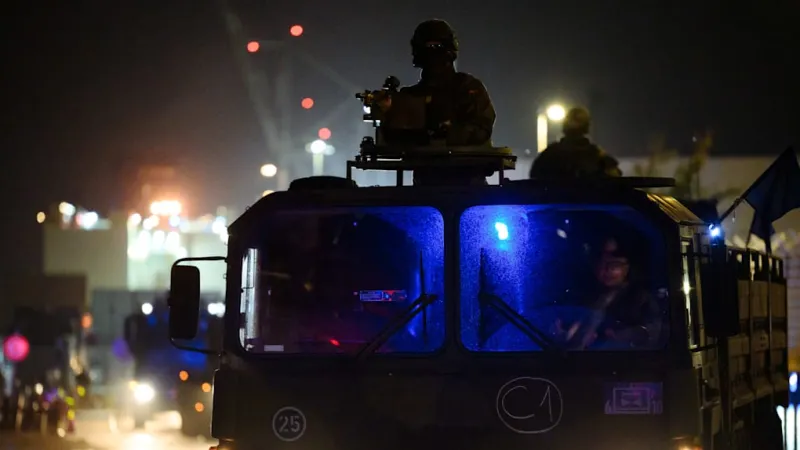
BRUSSELS – Russia has significantly intensified its provocations against member states of the North Atlantic Treaty Organization (NATO), increasingly embracing substantial risks, according to a consensus among defense and geopolitical analysts. This escalating aggressive posture, marked by a palpable shift in the tactics and nature of hybrid warfare, is, from Moscow's strategic perspective, a logical continuation of its foreign policy objectives. The evolving situation is compelling Western capitals to assess various potential scenarios and their broader implications for European security.
Experts suggest that Russia's actions, while alarming to the West, are perceived within the Kremlin as a rational means to test NATO's resolve, sow division among allies, and assert its sphere of influence. This calculated brinkmanship aims to disrupt the existing security architecture without necessarily triggering a full-scale conventional conflict.
The character of this hybrid warfare has undergone notable changes. Gone are some of the more overt, easily attributable actions, replaced by a nuanced array of subterfuge including intensified cyberattacks targeting critical infrastructure, sophisticated disinformation campaigns, and ambiguous border incidents. Analysts point to a heightened willingness by Moscow to employ non-conventional methods.
Recent intelligence reports and security assessments highlight increased incursions into NATO airspace, GPS jamming in proximity to alliance territories, and targeted cyber operations against government and military networks. These incidents, while individually often below the threshold of armed attack, cumulatively create an environment of sustained pressure and unpredictability.
The acceptance of greater risks by Russia indicates a strategic recalculation. This could involve pushing closer to the edge of direct confrontation, potentially through more aggressive military drills near borders or supporting proxies in contested regions, knowing that NATO's response options are complex and often require collective agreement.
Several scenarios are now under consideration by analysts. These range from a prolonged period of low-intensity gray zone conflict and cyber warfare, to accidental escalation resulting from a miscalculation during a provocative incident. The most concerning scenario involves a deliberate, albeit limited, military action designed to further destabilize a vulnerable NATO flank.
This pattern of escalation occurs against the backdrop of the ongoing conflict in Ukraine. Russia's intensified pressure on NATO can be seen as an attempt to divert attention or resources from its commitments to Kyiv. The persistent conflict, which has seen developments like Ukraine Strikes Russian Refinery, Kyiv Under Fire Amid Escalating War, underscores the volatile regional dynamic.
In response, NATO has reiterated its commitment to collective defense under Article 5 and has bolstered its presence in Eastern Europe. Alliance leaders have consistently condemned Russia's aggressive actions, emphasizing the need for deterrence and de-escalation while maintaining channels for communication to prevent miscalculation.
European nations, particularly those bordering Russia or with strategic maritime interests, express heightened vigilance. Reports concerning potential Russia Poised for Sea Drone Attacks on Europe exemplify the evolving threats and the need for robust defensive measures across various domains.
The United States, under President Donald Trump, continues to play a pivotal role in shaping NATO's response. President Trump has emphasized the importance of allies meeting their defense spending obligations, while also engaging in complex diplomatic efforts to manage the broader geopolitical landscape involving Russia.
Beyond military and cyber domains, Russia's hybrid strategy often incorporates economic pressures, such as manipulating energy supplies or weaponizing trade, further complicating the response for European economies reliant on various Russian resources. This multifaceted approach aims to exploit vulnerabilities and create internal divisions within NATO.
The proficiency with which Russia conducts information warfare has also advanced, utilizing state-sponsored media and social platforms to disseminate narratives that undermine Western institutions, foster distrust, and justify its own assertive foreign policy. This battle for public perception is as crucial as any physical confrontation.
The long-term implications of this sustained escalation are profound. It risks normalizing a state of heightened tension and unpredictability in Europe, demanding continuous adaptation from defense planners and policymakers. The erosion of established international norms poses a significant challenge to global stability.
Experts consistently stress the critical importance of NATO unity and a cohesive response. Any perceived crack in alliance solidarity could be interpreted by Moscow as an invitation to further escalate or test boundaries, potentially leading to more dangerous encounters.
Balancing deterrence with diplomatic engagement remains a delicate act. While the alliance fortifies its defensive posture, there is also an ongoing, albeit strained, effort to maintain communication channels with Moscow to prevent miscalculations from spiraling into wider conflict.