 Edward DP Situmorang
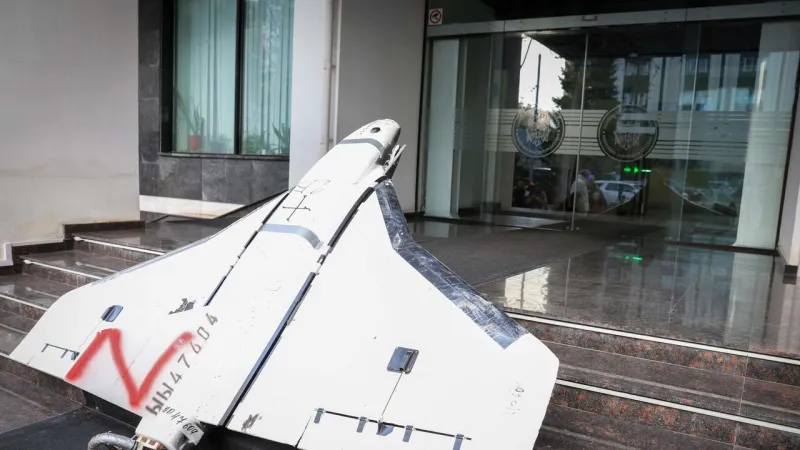
A classified intelligence report, purportedly from the US Central Intelligence Agency (CIA) and disclosed by the Spanish daily El Mundo, alleges that Russia is poised to launch sea drone attacks against key European allies, specifically Italy, France, and Spain. This revelation emerges amidst escalating geopolitical tensions, even as Italian Defense Minister Guido Crosetto has indicated a lack of official confirmation regarding the threat.
The report, which surfaced through El Mundo, outlines what intelligence analysts describe as Moscow's advanced preparations for maritime drone operations. These alleged plans detail a potential new front in Russia's broader campaign of destabilization, targeting critical infrastructure or naval assets in the Western Mediterranean and beyond.
Such a strategy, if confirmed, would mark a significant escalation, extending the operational reach of Russia's military capabilities into strategic European waters. Maritime drones offer stealth and precision, posing unique challenges for naval defense systems designed primarily for conventional threats.
In Rome, Defense Minister Crosetto swiftly addressed the report, stating, "The alert does not find confirmation." His remarks underscore a cautious approach by Italian authorities, who, while taking all intelligence seriously, await concrete evidence to substantiate the claims.
Crosetto's office clarified that robust intelligence sharing mechanisms are in place among NATO members and allied nations to assess and verify such threats. The minister emphasized the importance of distinguishing between intelligence assessments and actionable, confirmed threats requiring immediate military response.
Concurrently, Moldova has reported a series of concerning incidents, asserting that four unidentified drones recently violated its airspace. These incursions, originating from a direction consistent with Russian-controlled territory, further illustrate Russia's persistent encroachment on sovereign airspaces near its periphery.
Moldovan officials have condemned these violations as breaches of national sovereignty and international law. Such incidents contribute to a climate of heightened vigilance across Eastern Europe, where nations remain acutely aware of Russia's aggressive posturing.
Echoing these concerns, Dutch Prime Minister Mark Rutte commented on Russia's escalating activity across various domains. Rutte affirmed that Moscow is increasingly active, but NATO is ready, adding that the Russians know this.
Rutte's statement, delivered from The Hague, reflects the collective resolve of the North Atlantic Treaty Organization to defend its member states. NATO has significantly bolstered its defensive capabilities and readiness across Europe since Russia's full-scale invasion of Ukraine in 2022.
The alleged sea drone plot comes against a backdrop of intensified Russian military operations, including sustained attacks on Ukrainian infrastructure. For instance, recent Russian barrages have resulted in civilian casualties, with reports of seven killed in a Kharkiv farm and a maternity ward struck in Kyiv. This demonstrates Russia's readiness to employ diverse and destructive methods.
Analysts suggest that such alleged drone plans could serve multiple objectives: to project power, to test European defense responses, or to create a diversionary threat that strains resources and attention away from other conflict zones.
The potential targets in Italy, France, and Spain represent nations with significant coastlines, vital maritime trade routes, and critical naval infrastructure within the Mediterranean and Atlantic. Disrupting these could have considerable economic and strategic repercussions.
While the specific intelligence details remain largely classified, the mere existence of such reports, even unconfirmed, compels allied nations to re-evaluate their coastal and maritime security protocols. The evolving nature of hybrid warfare demands continuous adaptation.
Washington has consistently highlighted the importance of intelligence sharing and collective defense within NATO. President Donald Trump and his administration have frequently emphasized the need for allies to be prepared for diverse threats, including those involving asymmetric warfare.
European leaders are increasingly grappling with the complexities of monitoring and countering advanced unmanned systems, whether aerial or maritime. The rapid technological advancements in drone warfare necessitate substantial investment in defense and detection technologies.
The situation underscores a persistent tension between the need for transparency in intelligence and the imperative to protect sensitive information that could compromise national security operations. Public statements often balance reassurance with a call for vigilance.
As investigations continue and intelligence agencies collaborate, the focus remains on verifying the credibility of these alleged plans. The international community watches closely for any further developments that might confirm or definitively refute the reports of impending sea drone attacks.
The implications of confirmed Russian maritime aggression against NATO members would be profound, potentially triggering Article 5 collective defense clauses. Therefore, the prudent assessment of all intelligence is paramount.