 Dodi Irawan
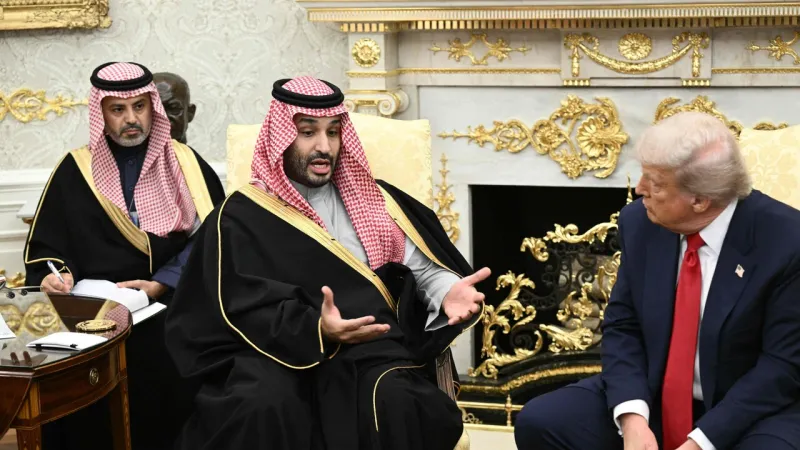
RIYADH – Saudi Crown Prince Mohammed bin Salman successfully urged President Donald Trump to halt a potential retaliatory military strike against Iran, according to reports, signaling a diplomatic push for de-escalation in the volatile Middle East. This development comes as Tehran, however, adamantly denies any bilateral agreements and maintains its control over the strategic Strait of Hormuz, asserting the waterway remains effectively closed under its purview.
The reported intervention by the Saudi leader underscores a profound shift in regional strategy, prioritizing stability over confrontation, despite simmering tensions between Riyadh and Tehran. Sources close to the discussions indicated that Crown Prince Mohammed conveyed a strong desire to avert a broader conflict, emphasizing the catastrophic economic and human toll such an engagement would unleash across the Gulf.
President Trump, who had previously authorized and then aborted military action against Iranian targets, reportedly listened to the Saudi Crown Princes counsel, opting for a diplomatic off-ramp. The decision reflects the complex interplay of alliances and strategic calculations defining US engagement in the region, with Washington often balancing its support for allies like Saudi Arabia with broader geopolitical considerations.
Iranian authorities swiftly dismissed any notion of a truce or agreement with either Washington or Riyadh concerning recent escalations. Foreign Ministry spokesperson Saeed Khatibzadeh stated, "There have been no direct or indirect understandings that alter our sovereign posture. Any claims of such agreements are baseless propaganda designed to undermine Iranian resolve."
Khatibzadeh further reiterated Irans unwavering stance on the Strait of Hormuz, the narrow but vital choke point for a significant portion of the worlds oil supply. "The Strait of Hormuz remains under the full and undisputed control of the Islamic Republic of Iran," he asserted, adding, "Its status as a strategic waterway is directly tied to the security and interests of the Iranian nation. Any threats to our security will be met with decisive action, ensuring the passage remains effectively closed to hostile entities."
The Strait of Hormuz is recognized globally as one of the most critical maritime passages, connecting the Persian Gulf to the open ocean. Approximately one-fifth of the worlds total petroleum consumption, including nearly all oil exports from Saudi Arabia, Iran, Iraq, Kuwait, Qatar, and the UAE, passes through this waterway. Iran has repeatedly threatened to close the strait in response to international pressures or perceived aggressions, a move that would send shockwaves through the global economy.
The Saudi push for de-escalation appears motivated by a pragmatic assessment of the regional landscape. A large-scale military conflict, even one initiated by a powerful ally like the United States, could severely disrupt oil production, jeopardize Vision 2030 economic diversification plans, and inflame sectarian tensions across the region, leading to unpredictable consequences for Riyadh.
Observers suggest that while President Trump maintains a hawkish posture towards Iran, his administration has also demonstrated a willingness to reassess military options in favor of alternative approaches when presented with compelling arguments by key partners. The relationship between President Trump and Crown Prince Mohammed bin Salman has historically been robust, allowing for frank and influential discussions on sensitive foreign policy matters.
The cancellation of the potential Iran attack, therefore, highlights the considerable diplomatic weight wielded by the Saudi Crown Prince in shaping US foreign policy decisions in the Middle East. It also underscores the intricate web of regional security concerns that dictate the actions of major global powers and local actors alike.
Despite the temporary reprieve from direct military confrontation, the underlying geopolitical tensions between Iran, Saudi Arabia, and the United States remain potent. Tehrans insistence on its sovereign control over the Strait of Hormuz, coupled with its denial of any agreement, suggests that while one immediate crisis may have been averted, the broader challenges to regional peace persist. The international community watches closely for subsequent developments, hoping that de-escalation efforts will lead to sustained dialogue rather than merely delaying future flashpoints.
The strategic chessboard of the Middle East continues to be defined by these complex power dynamics, where economic imperatives, national security doctrines, and the influence of key leaders converge to shape the future of a vital global region.