 Chandra Wijayanto
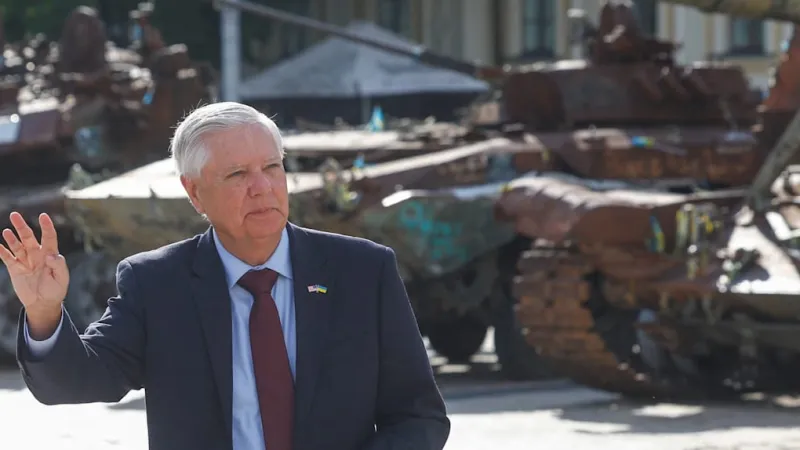
The sudden passing of US Senator Lindsey Graham has plunged the future of a pivotal sanctions package targeting Russia into deep uncertainty. Senator Graham, a prominent voice for a robust foreign policy and a steadfast critic of Moscow, had announced a significant breakthrough on the legislation designed to staunch Russia's primary revenue streams just last Friday. His unexpected death leaves a substantial void in the legislative effort, casting doubt on the momentum and eventual passage of this critical national security measure.
For months, Senator Graham dedicated considerable political capital to galvanizing support for the comprehensive package. His advocacy was instrumental in navigating the complex landscape of Capitol Hill, uniting lawmakers from both sides of the aisle who shared concerns over Russian aggression and influence. The proposed Russia sanctions aimed specifically at areas identified as crucial financial arteries for the Russian state, a move intended to exert maximum economic pressure.
The specifics of the package, while not fully public before his death, were understood to target sectors beyond those already under existing punitive measures. Sources close to the senator indicated the legislation sought to expand restrictions on financial transactions, energy exports, and potentially individuals within Russia's oligarchic circles, areas where Graham believed previous actions had not gone far enough.
Senator Graham, representing South Carolina, had emerged as one of the most consistent and vocal proponents for stronger action against Russia throughout his tenure in the Senate. His legislative record reflected a hawkish stance, often advocating for confrontational strategies to counter what he viewed as Russia's destabilizing global activities. This position garnered him bipartisan respect in foreign policy circles, even if his broader political alliances sometimes shifted.
The timing of his passing is particularly challenging for the initiative. The announced breakthrough suggested that the bill was nearing a crucial stage, possibly a vote in the Senate or further committee markups. Without his leadership and intricate understanding of the bill's nuances, finding another senator with the same level of commitment and legislative sway to champion the cause will be a formidable task.
Congressional aides, speaking anonymously due to the sensitivity of the situation, expressed concern over the vacuum left by Senator Graham. One aide noted, "Senator Graham possessed a unique ability to bridge divides on issues of national security, particularly concerning Russia. His absence removes a powerful advocate and a strategic mind from the debate."
President Donald Trump's administration has maintained a complex relationship with Russia. While President Trump has often expressed a desire for improved relations, his administration has also implemented various sanctions and taken firm stances against certain Russian actions. The future of this specific package under the current administration, now without its chief proponent in Congress, introduces an additional layer of complexity.
Adding to the urgency, the broader geopolitical landscape underscores the imperative for such legislation. Russia's ongoing military actions and diplomatic maneuvers in Eastern Europe and other regions have consistently raised alarm among US allies and within the intelligence community. The proposed sanctions were intended as a clear signal of resolve from the United States.
The legislative calendar is already packed with other pressing issues, and finding floor time and consensus for a complex foreign policy bill without a dedicated leader could prove exceptionally difficult. The Senate will likely need to re-evaluate the strategy for moving forward with the legislation, possibly seeking new sponsors or integrating its core tenets into other existing bills.
Observers in Washington are now watching to see which senators might step forward to assume the mantle of leadership on this critical issue. Names like Senator Robert Menendez or Senator Jim Risch, both senior members of the Senate Foreign Relations Committee, are being discussed as potential figures who could attempt to resuscitate the initiative. However, none possess the singular, driving force that Graham brought to the effort.
The legacy of Senator Graham's fervent anti-Russia stance will undoubtedly influence future US foreign policy. Even if this specific package stalls, the groundwork he laid and the arguments he championed will continue to shape congressional discussions regarding accountability for Moscow's actions on the global stage.
The international community, particularly European allies who have also grappled with strategies to counter Russian influence, will be closely monitoring developments. A perceived weakening of US resolve on sanctions could have significant implications for transatlantic unity and coordinated responses to Russian challenges.