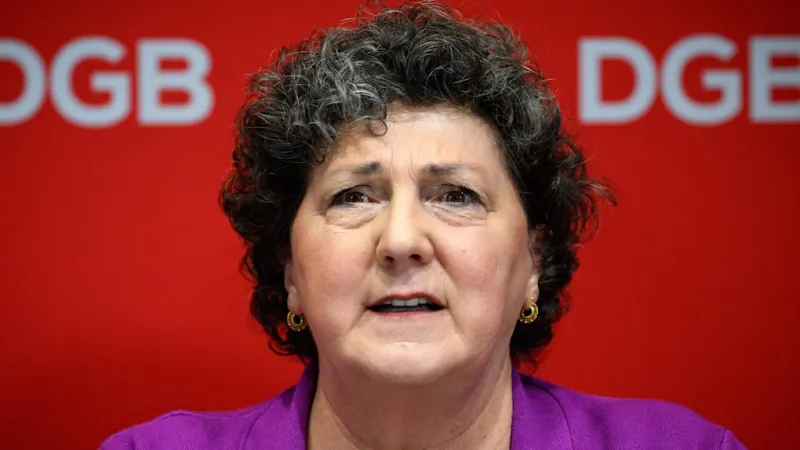
 Angela Stefani
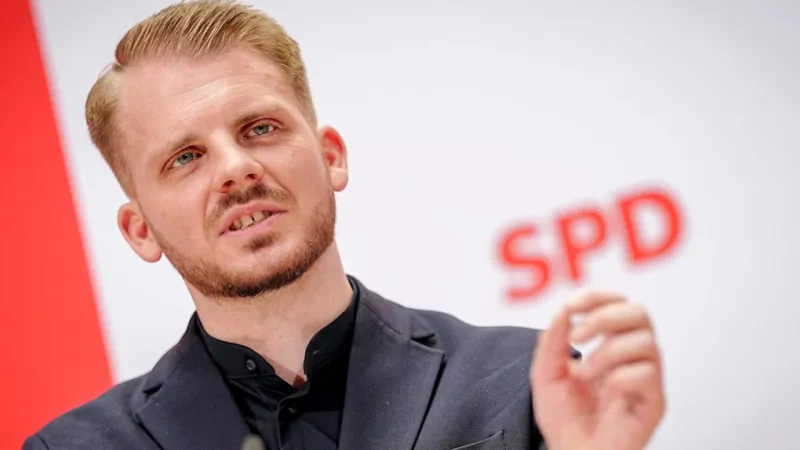
BERLIN – The German Social Democratic Party (SPD) is preparing for a significant political confrontation with the CDU/CSU Union, advocating for the reintroduction of a national wealth tax and a substantial increase in inheritance tax. SPD General Secretary Kevin Klüssendorf declared this fiscal policy shift a critical priority, citing decades of what the party describes as misguided tax policies that have exacerbated economic inequality across the nation.
Klüssendorf underscored the party's conviction that the current economic structure disproportionately concentrates profits among a diminishing segment of the population. This phenomenon, he asserted, is a direct consequence of tax frameworks implemented over past decades, which have failed to ensure equitable distribution of economic gains.
The SPD's renewed push for these taxes marks a pivotal moment in German domestic politics, signaling a clear divergence from the conservative economic principles generally favored by the Union. The party views the wealth and inheritance taxes not merely as revenue-generating mechanisms but as fundamental tools for fostering greater social justice.
Addressing reporters, the SPD General Secretary stated, "Profits would land with fewer and fewer people. The misguided tax policy of recent decades is the cause." This direct assessment frames the SPD's argument for urgent fiscal reform.
He further clarified the party's strategic intent: "His party will therefore fight the Union for a return of the wealth tax and a higher inheritance tax." This declaration sets the stage for what promises to be a robust debate within the Bundestag and across public discourse.
Proponents of such measures, predominantly on the left, argue that a wealth tax, typically levied on net assets exceeding a certain threshold, and higher inheritance taxes are essential to finance public services, reduce national debt, and mitigate wealth disparities that have widened over the past half-century.
Historically, Germany had a wealth tax that was suspended in 1997 following a ruling by the Federal Constitutional Court, which deemed its assessment method unconstitutional. The SPD's current proposal will undoubtedly reignite complex legal and economic discussions surrounding its viability and implementation.
The CDU/CSU Union, traditionally advocating for lower taxes and less state intervention in the economy, is expected to mount strong opposition. Their arguments typically revolve around concerns about capital flight, disincentives for investment, and the potential for increased administrative burdens on businesses and individuals.
The political battle over wealth and inheritance taxes is anticipated to become a central theme in upcoming electoral campaigns, forcing parties to clearly articulate their visions for Germany's future economic and social model. Public opinion on these taxes often remains sharply divided, reflecting varied perspectives on economic fairness and individual enterprise.
This fiscal debate transcends mere budgetary considerations; it delves into foundational questions about societal equity, the role of the state in wealth redistribution, and the long-term sustainability of Germany's social market economy. The SPD aims to position itself as the champion of economic fairness.
The party leadership believes that without substantial changes to the current tax regime, the divide between the affluent and the working class will continue to widen, potentially leading to social instability. This perspective underscores the urgency with which the SPD is approaching this key issue.
Economic analysts are already beginning to weigh the potential impacts of such policies, considering both the projected revenue generation and any possible adverse effects on entrepreneurship and capital formation within the German economy. The specifics of any proposed tax structure will be crucial.
The SPD's challenge to the Union is not isolated but part of a broader European trend where left-leaning parties are increasingly advocating for more progressive taxation to address widening economic gaps. Many countries are grappling with how to balance economic competitiveness with social equity.
The political landscape in Germany is increasingly complex, with coalition governments often requiring compromises across ideological lines. How the SPD navigates this intricate environment to push its tax agenda will be a test of its political leverage and persuasive power.
This confrontation highlights the ideological fault lines that persist in German politics, particularly concerning economic policy and social welfare. The outcome of this specific battle over wealth and inheritance tax could redefine the nation's fiscal future.