 Demian Sahputra
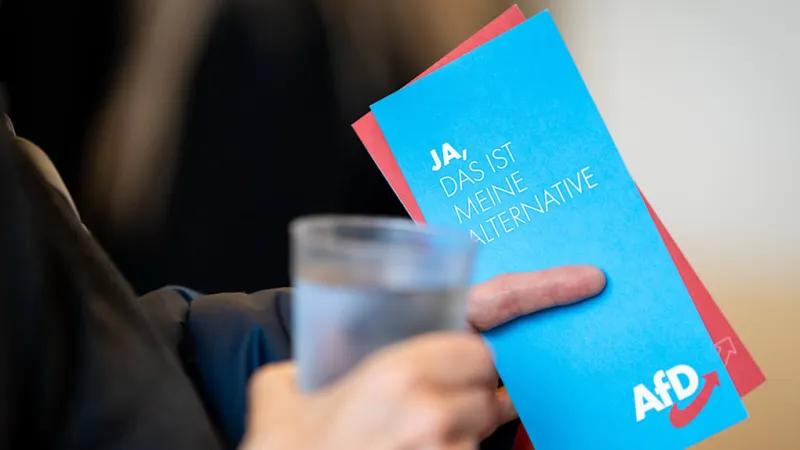
Ilm-Kreis, Thuringia – A rare coalition comprising the Alternative for Germany (AfD), Christian Democratic Union (CDU), and Freie Wähler has approved the district's 2026 budget, significantly curtailing funding for crucial social and democratic initiatives, most notably the federal program "Demokratie leben!". The decision, reached recently in the central German state, targets climate projects, integration efforts, and educational support, igniting considerable controversy and concern.
The joint resolution marks a notable political alignment, as the three parties collectively backed a spending plan that revises previous financial commitments. This unprecedented cooperation between the AfD, often characterized as far-right, and the traditionally center-right CDU, alongside the regional Freie Wähler, has drawn particular scrutiny across Germany.
Central to the debate is the drastic reduction in funds for "Demokratie leben!", a nationwide initiative designed to foster democratic participation, combat extremism, and promote social cohesion. The program supports a wide array of local projects, ranging from youth work and civic education to anti-discrimination campaigns within communities.
Critics argue that gutting funds for "Demokratie leben!" severely undermines efforts to strengthen civil society and makes communities more vulnerable to extremist ideologies. This concern resonates particularly strongly in Thuringia, a region where political polarization and the rise of the far-right continue to pose significant challenges.
Beyond the democracy program, the approved budget also implements substantial cuts to projects addressing climate change adaptation and mitigation. Environmental groups and local climate activists have voiced alarm over the potential long-term repercussions for the district's ecological stability and its residents' future well-being.
Furthermore, integration programs aimed at assisting new residents and educational grants designed to support vulnerable students have also faced significant reductions. These cuts are expected to impact social services and access to learning opportunities, potentially exacerbating existing inequalities within the Ilm-Kreis.
The budgetary decision reflects the evolving political landscape in Thuringia, where the AfD has gained considerable traction in recent years. The willingness of the CDU and Freie Wähler to form a common front with the AfD on such a sensitive issue indicates a shifting dynamic in local governance and an evolving political strategy among some established parties.
Opposition parties and civil society organizations have swiftly condemned the cuts, characterizing them as a politically motivated attack on democratic values and social welfare. Public discussions and protests are anticipated as a direct response to the district council's vote, highlighting widespread public disapproval.
Proponents of the budget cuts, primarily from the AfD, CDU, and Freie Wähler factions, contend that the measures are necessary to ensure fiscal responsibility and prioritize essential services. They argue that some programs, including parts of "Demokratie leben!", are inefficient or duplicative, though specific, detailed justifications for these particular cuts have often remained vague or ideologically driven.
This local decision in Thuringia is likely to resonate across Germany, potentially setting a precedent for other districts where similar political constellations might emerge. It intensifies the national conversation about how mainstream parties engage with the AfD at local and state levels, particularly concerning matters of democratic funding and social policy.
While "Demokratie leben!" is a federally funded program, its implementation and supplementary funding often rely on local commitment and resources. The Ilm-Kreis decision highlights a growing tension between national policy goals aimed at strengthening democracy and local political priorities that may differ significantly.
Established to address rising extremism and strengthen democratic resilience, "Demokratie leben!" has been a cornerstone of federal strategy since its inception. Its widespread local impact makes the Ilm-Kreis cuts particularly symbolic and a point of national concern.
The coming months will undoubtedly reveal the full impact of these budget reallocations on the social fabric and democratic health of the Ilm-Kreis. The unfolding controversy ensures that the district's political choices will remain under a national spotlight, watched closely by observers across the German political spectrum.
The unified action by the AfD, CDU, and Freie Wähler in Ilm-Kreis represents a significant shift in regional politics, signaling a new era of fiscal austerity that challenges established social and democratic support structures. This decision underscores the persistent tensions within Germany's political landscape as the nation navigates complex societal challenges in 2026.