 Robert Andrison
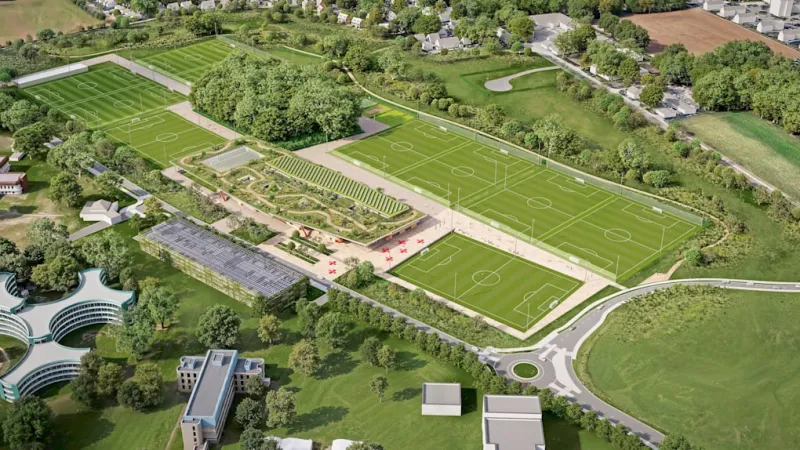
Monheim - Bayer AG has submitted an application for permits to erect multi-story buildings, potentially up to 22 meters high, on a parcel of agricultural land in Monheim. This strategic move by the industrial giant comes as a contingency measure, indicating significant doubt over the future of its ambitious football performance center, also known as the football campus, which was originally planned for the same site. The unexpected filing signals a potential shift in development plans, raising questions about the long-term vision for the area and for Bayer 04 Leverkusen's sporting infrastructure.
The proposed football campus, a significant investment for Bayer 04 Leverkusen, aimed to establish a state-of-the-art training and youth development facility. This Leistungszentrum, as it is known in German, was envisioned to consolidate the club's operations, foster talent, and cement its position among top-tier European football clubs. Its creation was widely anticipated as a crucial step for the club's athletic future, promising modern pitches, training amenities, and support facilities.
The alternative application specifies structures reaching a considerable height of 22 meters, a stark contrast to the sprawling, low-rise architecture typically associated with sports campuses. These buildings would occupy the designated agricultural plot, fundamentally altering the landscape and land use. The nature of these alternative structures, whether for administrative, research, or other corporate purposes, remains undisclosed in the initial reports, adding an element of speculation to Bayer's ultimate intentions.
The uncertainty surrounding the football campus stems from a complex interplay of regulatory challenges and local considerations. While specific reasons for the potential rejection remain officially unconfirmed, such large-scale projects frequently encounter hurdles related to environmental impact assessments, zoning variances, and community engagement. Local residents and environmental groups often voice concerns regarding habitat disruption, increased traffic, and the preservation of green spaces.
For Bayer AG, a company deeply rooted in the region, the decision to pursue an alternative building project represents a pragmatic pivot. It underscores a strategic effort to retain development options for the valuable land parcel in Monheim, even if the primary sporting objective cannot be realized. This approach suggests a willingness to adapt to unforeseen obstacles rather than abandoning the site entirely, potentially redirecting investment into other corporate ventures.
The local government in Monheim now faces a critical decision point. Approving the alternative building permits would signify a definitive end to the football campus aspirations, impacting the community's perception of future sporting development and potential economic benefits. The choice requires balancing corporate development desires with existing urban planning frameworks and the expressed interests of its citizenry regarding land preservation and quality of life.
The economic ramifications of this shift are considerable. A football campus would have brought a steady influx of visitors, generated local employment, and spurred related service industries. An alternative corporate building, while providing some jobs, might offer a different set of economic contributions, potentially less visible or dynamic than a high-profile sports facility. Stakeholders will be closely scrutinizing the long-term economic projections associated with each scenario.
This development also highlights the broader tension between industrial expansion and the demand for recreational or natural spaces in urbanizing areas. As German cities like Monheim continue to grow, the allocation of prime land becomes increasingly contentious. The outcome of Bayer's application could set a precedent for how similar corporate entities approach land development in regions grappling with limited space and diverse community needs.
The situation echoes similar challenges faced by other sports clubs and corporations attempting major infrastructure projects across Germany and Europe. From stadium expansions to new training grounds, obtaining comprehensive approval often involves protracted negotiations with municipal authorities, environmental agencies, and citizen initiatives. These processes underscore the intricate political and social landscapes developers must navigate.
The coming months will be crucial as municipal authorities review Bayer's dual strategy. A definitive decision on the football campus's fate is anticipated, which will then trigger the subsequent evaluation of the alternative building application. This period of uncertainty will test the resolve of all parties involved, determining the ultimate use of this significant land area in Monheim.
Should the football campus plan indeed be permanently shelved, it would prompt a re-evaluation of Bayer 04 Leverkusen's long-term infrastructure strategy. The club would need to explore alternative locations or modify existing facilities to meet its developmental goals, a process that could incur additional costs and delays. The club's reliance on a modern training center for competitive advantage in professional football makes this a particularly pressing concern.
The proposed alternative construction also raises environmental considerations. While the original football campus would have occupied green space, the erection of tall buildings brings its own set of ecological impacts, including increased impervious surfaces, potential changes to local microclimates, and demands on existing infrastructure. Environmental advocacy groups are likely to monitor the application closely for compliance with regulations and sustainability principles.
The evolving landscape of corporate land use in suburban areas like Monheim reflects a broader national dialogue about sustainable urban planning. German policymakers are increasingly focused on balancing economic growth with ecological preservation and community welfare. Bayer's current predicament serves as a pertinent case study in this ongoing debate, illustrating the complexities of modern development projects.
Local political discourse in Monheim has undoubtedly been invigorated by these developments. Councillors and community leaders are now compelled to articulate clear positions on land allocation, balancing the potential for corporate investment and employment against the desire to maintain local character and green spaces. The decision will likely have repercussions for future electoral cycles and local governance.
Ultimately, the outcome of Bayer's building permit application in Monheim will be a significant indicator of the current development climate. It will demonstrate how major industrial players navigate regulatory frameworks and community expectations when their primary projects face resistance, and what compromises are acceptable for all stakeholders involved in shaping urban futures.