 Dorry Archiles
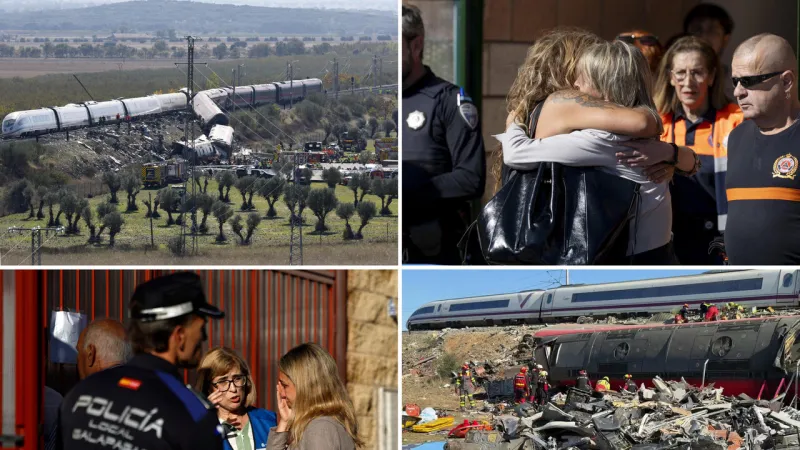
TOLEDO, Spain – A catastrophic train accident near this historic city today has resulted in at least 68 fatalities, with three Italian women reported missing, prompting an immediate investigation into potential human error as the primary cause.
The derailment occurred on the busy Madrid-Seville high-speed line, transforming a routine journey into a scene of profound devastation. Emergency services rushed to the remote site, facing immense challenges in extracting victims and assessing the full extent of the tragedy.
Initial reports from railway authorities and local officials suggest that a significant operational misjudgment, potentially on the part of the train operator or control room personnel, may have led to the horrific incident. Eyewitness accounts, though preliminary, speak of excessive speed or a failure to respond to critical signals.
Rescue workers, comprising firefighters, paramedics, and military personnel, have worked tirelessly through the wreckage. The sheer scale of the disaster has overwhelmed local hospitals, which are now coordinating with larger medical centers in Madrid for the treatment of dozens of injured passengers.
Among the profound losses, the Italian Embassy in Madrid confirmed that three Italian nationals remain unaccounted for. Diplomatic efforts are underway to ascertain their status and provide support to their families during this harrowing period.
Spanish Prime Minister Pedro Sanchez expressed his profound sorrow over the incident, declaring a period of national mourning. He pledged a thorough and transparent investigation, asserting that those responsible for any negligence would be held accountable under the full force of the law.
Minister of Transport Raquel Sanchez visited the crash site, extending her condolences to the victims families and praising the resilience of the emergency responders. She underscored the government's commitment to enhancing railway safety protocols to prevent future tragedies.
The Toledo train crash marks one of Spains deadliest rail disasters in recent memory. Engineers and forensic teams are meticulously examining the trains black boxes and track infrastructure to reconstruct the moments leading up to the derailment. The findings will be crucial in determining the exact sequence of events.
Rail network operator Adif and national rail company Renfe have initiated their own internal reviews, cooperating fully with state investigators. They emphasized their dedication to providing assistance to all affected passengers and their relatives.
This incident casts a somber shadow over Spains normally highly-regarded rail network. Previous incidents, such as the one detailed in the article “Deadly High-Speed Train Crash Devastates Spain, Ten Confirmed Dead,” have periodically raised concerns about rail safety, although large-scale fatalities remain uncommon.
The international community has extended its sympathies, with leaders from across Europe and beyond sending messages of solidarity to Spain. Condolences have poured in, highlighting the global impact of such a devastating loss of life.
Families of the deceased and missing have gathered at designated information centers, anxiously awaiting updates. The emotional toll of the Toledo train crash resonates deeply across the nation, as communities grapple with the sudden and unexpected loss of loved ones.
As the recovery and investigation efforts continue, the focus remains on supporting the victims and ensuring that such a tragedy is never repeated. The preliminary findings on human error suggest a critical need for reevaluation of operational procedures and personnel training within the national railway system.