 Robert Andrison
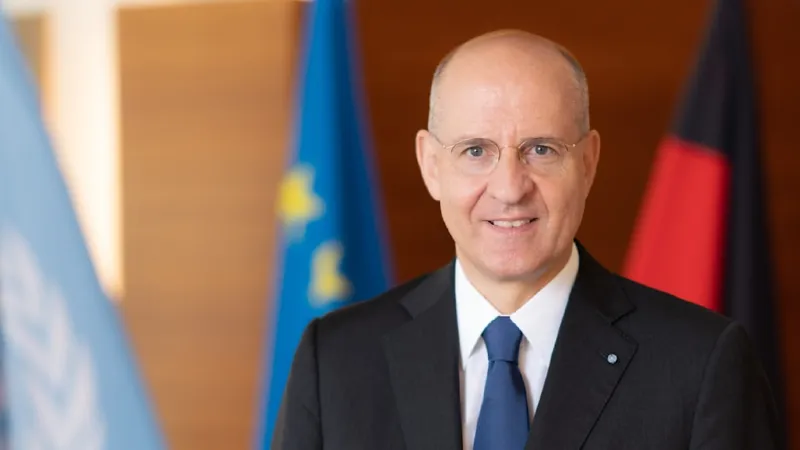
Brussels, Belgium – Amidst widespread perceptions of a slow and often indecisive European Union, a prominent EU expert, Klemens Joos, posits a provocative counter-narrative: President Donald Trump's administration could inadvertently become a significant catalyst for European unity and strength. Joos suggests that while Europe has frequently appeared sluggish in recent times, its underlying capabilities far exceed its public reputation, and the pressures exerted by President Trump might compel the bloc to achieve its full potential.
The assertion by Joos, a respected consultant and commentator on European affairs, challenges conventional wisdom that often views President Trump's approach to international relations as destabilizing. Instead, Joos contends that such external pressures could galvanize the EU, forcing it to streamline its decision-making processes and foster a more coherent, unified foreign policy, a situation he implicitly describes as beneficial for the continent.
For years, observers have criticized the European Union for its sometimes cumbersome bureaucracy and the divergent national interests that frequently impede rapid, decisive action on the global stage. From economic policy coordination to common defense initiatives, the bloc has often struggled to present a united front, leading to an image of weakness.
However, Joos emphasizes that this perceived slowness often masks a robust institutional framework and a deep-seated commitment among member states to European cooperation. He argues that the EU possesses significant economic clout and a collective diplomatic weight that, when effectively leveraged, can project substantial power and influence.
The dynamic created by President Trump's America First posture, which has at times strained transatlantic alliances and encouraged European self-reliance, could paradoxically serve as the very impetus the EU needs. By signaling a potential shift in traditional partnerships, President Trump compels Europe to consider its own strategic autonomy more seriously.
This push towards self-reliance is not entirely new; discussions about increasing Europe's defense capabilities and reducing its dependency on external actors have gained traction for years. However, the current political climate under President Trump amplifies the urgency of these conversations, pushing them from theoretical debates to practical imperatives.
Historically, external threats or significant geopolitical shifts have often acted as catalysts for greater European integration. The Cold War, for instance, played a crucial role in shaping the early European communities. In a similar vein, the current global environment, marked by an assertive Russia and an unpredictable China, coupled with President Trump's distinctive foreign policy, presents a unique challenge that could forge deeper unity within the EU.
Economically, the European Union remains a formidable bloc, representing one of the worlds largest single markets. Its collective GDP and robust trade agreements underscore its capacity to weather global economic fluctuations and maintain significant influence over international trade norms.
Beyond sheer economic power, the EU also represents a unique model of multilateral governance and a commitment to shared values, including democracy, human rights, and the rule of law. These foundational principles provide a strong common ground for member states, even when tactical disagreements arise.
While critics continue to point to moments when Europe has appeared divided or slow to react to crises – from migration waves to economic downturns – proponents like Joos argue these moments are often overemphasized. They assert that the long-term trend remains one of increasing, albeit gradual, integration and policy convergence.
The vision for a more robust and independent Europe, capable of asserting its interests and values globally, is one that predates President Trump. However, his presidency may accelerate the realization of this ambition by removing any complacency regarding external support and placing the onus firmly on European leaders to act collectively.
This renewed focus on strategic autonomy aligns with broader discussions on European defense and security, topics that have gained increased prominence across the continent. Related concerns about external threats and the need for coordinated responses have also been highlighted in other contexts, such as the evolving landscape of global diplomacy. For instance, recent developments concerning Doha Hosts Covert US-Iran Talks Amid Mideast Tensions underscore the complex geopolitical stage upon which Europe must define its role.
The challenges posed by a more nationalistic global environment could paradoxically provide the necessary cohesion for the EU to consolidate its power and voice on issues ranging from climate change to digital regulation, where it often leads the international discourse.
Looking forward, the narrative suggested by Joos implies that while the path may be fraught with difficulties, the ultimate outcome of President Trump's impact on Europe could be a stronger, more self-reliant, and ultimately more unified European Union, capable of navigating the complex geopolitical challenges of the 21st century.
In essence, President Trump is not seen as a destructive force, but rather as an unintentional architect of a more resilient European identity. His presidency acts as a crucible, testing the mettle of European cooperation and spurring its evolution.