 Demian Sahputra
Doha, Qatar — A series of highly discreet discussions involving US representatives, Iranian officials, and Qatari mediators has reportedly commenced in the Qatari capital, fueling intense speculation regarding potential diplomatic shifts in the perennially volatile Middle East. While details remain scarce, sources indicate that prominent figures such as Stephen Witkoff and Jared Kushner are engaged in the ongoing deliberations with their Qatari counterparts.
The covert nature of these talks underscores the sensitive geopolitical landscape surrounding US-Iran relations, particularly under the administration of President Donald Trump. The exact agenda of the meeting has not been publicly disclosed, but the presence of high-profile American representatives suggests negotiations of considerable weight.
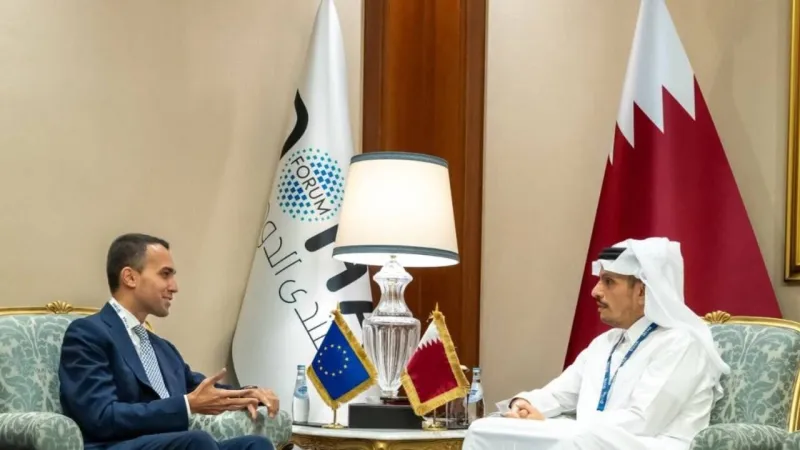
Simultaneously, European Union envoy Luigi Di Maio held a separate meeting with Qatar's Prime Minister and Minister of Foreign Affairs, Sheikh Mohammed bin Abdulrahman Al Thani. This parallel engagement by a key European diplomat adds another layer of intrigue to the complex web of regional diplomacy unfolding in Doha.
The convergence of these high-level discussions comes at a crucial juncture for Middle East stability. Analysts are closely watching for any signs that these engagements could lead to a de-escalation of tensions or a new framework for interaction between Washington and Tehran.
Further compounding the situation, The New York Times recently reported that Iran and Oman are advancing a plan to facilitate the collection of payments related to activities in the Strait of Hormuz. This development, if confirmed, could have significant economic implications for both nations and the broader international community dependent on the vital shipping lane.
The Strait of Hormuz, a narrow waterway connecting the Persian Gulf with the Arabian Sea and the Gulf of Oman, stands as one of the world's most critical chokepoints for global oil shipments. Any changes to its operational or financial protocols inherently carry substantial geopolitical weight.
The reported payment plan between Iran and Oman suggests a concerted effort by Tehran to secure its financial interests, potentially bypassing traditional international banking channels that have been impacted by sanctions. Oman, a long-standing mediator in regional disputes, likely plays a pivotal role in these arrangements.
For President Trump's administration, engagement with Iran, even through intermediaries, represents a nuanced approach to an enduring foreign policy challenge. The administration has historically maintained a firm stance on Iranian nuclear ambitions and regional activities, but pragmatic dialogue often underpins such positions.
The involvement of Qatar as a mediator highlights its growing diplomatic influence in the region. Doha has frequently served as a neutral ground for sensitive negotiations, leveraging its relationships with various international actors to facilitate dialogue where direct communication might be fraught with difficulty.
The precise connection between the ongoing US-Iran discussions in Doha and the reported Iran-Oman payment plan for Hormuz remains unclear. However, diplomatic observers suggest that all these movements could be part of a larger, coordinated effort to address both economic grievances and security concerns.
Such high-level, unannounced meetings often precede significant policy shifts or breakthroughs, making the current events in Doha a focal point for international observers. The lack of official statements from Washington or Tehran only amplifies the sense of anticipation.
The international community will be closely monitoring developments from Doha, hoping that these discreet diplomatic overtures can pave the way for a more stable and predictable future in a region frequently beset by conflict and uncertainty. The implications of any agreement, or lack thereof, will undoubtedly reverberate across global energy markets and geopolitical alliances.