 Chandra Wijayanto
BARI – Italian Prime Minister Giorgia Meloni today concluded the high-stakes G7 Leaders Summit, delivering a comprehensive press conference that outlined the collective agreements and significant discussions held among the world's most powerful democracies. Speaking to international media, Meloni detailed the consensus reached on critical geopolitical and economic challenges, emphasizing a unified front on issues ranging from global security to artificial intelligence governance, effectively covering the summit's key outcomes.
The three-day gathering in Apulia saw leaders from Canada, France, Germany, Italy, Japan, the United Kingdom, and the United States, alongside representatives from the European Union, engage in intense deliberations. Discussions primarily centered on bolstering economic stability amidst persistent inflationary pressures, addressing the ongoing conflicts in Eastern Europe and the Middle East, and forging a common path for future technological advancements.
Prime Minister Meloni highlighted Italy's pivotal role in steering the agenda, particularly in fostering dialogue on the necessity of greater multilateral cooperation. She underscored the urgent need for a cohesive global response to humanitarian crises and the imperative to support developing nations in achieving sustainable growth and climate resilience.
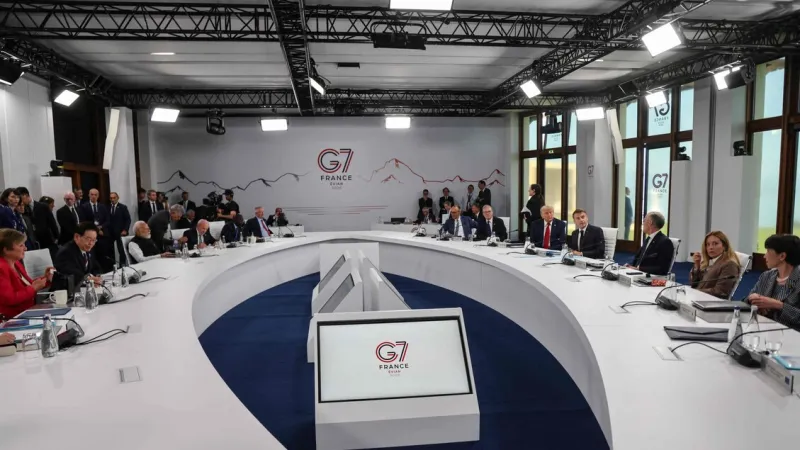
A significant portion of her address focused on the strategic alignment regarding global security. The leaders reaffirmed their unwavering commitment to supporting nations affected by aggression, ensuring that international law and sovereignty remain paramount. This stance resonates with previous G7 statements, where collective resolve has been a consistent theme, as seen in past declarations at gatherings like the Evian G7 Summit.
Economic resilience emerged as another central pillar of the G7 talks. Meloni elaborated on plans to coordinate fiscal policies and strengthen supply chains, aiming to mitigate future economic shocks. The leaders also discussed strategies to foster innovation, acknowledging the transformative potential of technologies like artificial intelligence while simultaneously addressing its ethical implications and regulatory frameworks. This echoes broader calls for action on advanced technologies, with figures like President Mattarella urging a shift from mere discourse to concrete action on AI.
The G7 communique, expected to be released shortly, will formalize these commitments. It is anticipated to include detailed proposals on climate financing, global health initiatives, and enhanced cooperation in combating disinformation, reflecting a broad spectrum of global concerns. The delicate diplomacy required to achieve such consensus has been a hallmark of these high-level meetings, where leaders like President Donald Trump and President Macron often navigate complex international relations, as previously highlighted in reports on G7 diplomatic efforts.
Regarding the energy transition, Meloni emphasized the G7s shared ambition to accelerate the shift towards cleaner energy sources while ensuring energy security. She acknowledged the diverse national circumstances but affirmed a collective determination to meet climate targets set forth in international agreements, balancing environmental imperatives with economic realities.
The summit also saw robust discussions on global food security, particularly in regions vulnerable to climate change and conflict. Initiatives to strengthen agricultural resilience and ensure equitable distribution of resources were among the key action points highlighted by the Italian Prime Minister.
Meloni addressed questions concerning the varying priorities among member states, asserting that while individual national interests exist, a strong underlying unity characterized the G7 discussions. She pointed to a shared understanding of the interconnectedness of global challenges and the necessity of coordinated responses.
As the host nation, Italy successfully facilitated a forum for productive dialogue, reinforcing its diplomatic standing on the international stage. Prime Minister Meloni expressed satisfaction with the tangible outcomes and the renewed spirit of cooperation among the world leaders.
Looking ahead, the agreements forged at this G7 summit are expected to guide future policy decisions and shape international cooperation in the coming months. The emphasis on practical implementation and measurable progress suggests a determined effort by these leading nations to translate rhetoric into concrete global solutions.
The G7 leaders' collective resolve, articulated by Prime Minister Meloni, signals a concerted push to tackle the multifaceted crises facing the world, from economic volatility to geopolitical tensions, while fostering an environment conducive to sustainable global prosperity.