 Chandra Wijayanto
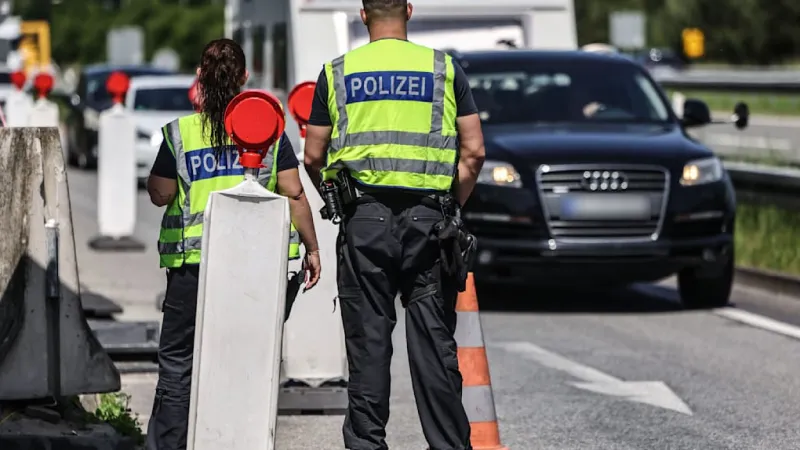
The European Union Commission has formally challenged Berlin's rationale for its prolonged internal border controls, contending that the German government has not adequately justified the uniform threat assessment across all its border sections. This scrutiny from Brussels raises significant questions about the integrity of the Schengen Area's foundational principles and Germany's adherence to European mandates on free movement.
Brussels initiated its inquiry following Germany's repeated extensions of temporary border checks, a measure permissible under the Schengen Borders Code only under exceptional circumstances and for limited durations. The Commission expressed particular concern that Berlin has failed to present sufficiently detailed evidence supporting the necessity of identical control measures along every segment of its borders, rather than targeting specific, higher-risk areas.
Germany first reintroduced internal border controls in 2015 at the height of the refugee crisis, citing security concerns and the need to manage the influx of migrants. Since then, these controls, primarily along the Austrian border, have been repeatedly prolonged, often invoking threats related to irregular migration and organized crime.
The Schengen Agreement, a cornerstone of European integration, allows for passport-free travel across much of the continent. While it provides member states with the option to temporarily reintroduce internal border controls in response to a serious threat to public policy or internal security, these measures are intended to be exceptional, proportionate, and time-limited.
The Commission's challenge stems from its role as the guardian of the treaties, ensuring that member states comply with EU law. Its current action signals a heightened level of impatience with what it perceives as an insufficiently substantiated and potentially disproportionate application of the Schengen derogation clause.
Critics argue that persistent internal border controls, even if temporary, undermine the very essence of Schengen, creating barriers to trade, tourism, and the free movement of citizens and goods within the bloc. Businesses often report delays and increased costs due to prolonged checks, affecting cross-border supply chains.
Germany's Interior Ministry has consistently defended its actions, asserting that the controls remain vital for national security and for combating smuggling and illegal immigration. However, the latest communication from Brussels suggests that these general justifications are no longer sufficient without more granular data and a tailored threat analysis.
Should Germany fail to satisfy the Commission's demands, the dispute could escalate. The Commission has the power to initiate infringement proceedings, which could ultimately lead to a referral to the European Court of Justice (ECJ). The ECJ holds the authority to declare that a member state has breached EU law, potentially resulting in fines.
This ongoing debate highlights a broader tension within the EU between national sovereignty and the collective responsibilities associated with supranational agreements like Schengen. Other member states, including France and Austria, have also implemented or extended internal border controls in recent years, often citing similar security concerns.
The EU's insistence on robust justification underscores its commitment to upholding the principles of the Schengen Area, which is seen as one of the most tangible benefits of European integration for its citizens. The outcome of this challenge will likely set a precedent for how extensively member states can unilaterally reintroduce and prolong internal border checks in the future.
For Berlin, navigating this challenge requires a delicate balance between perceived national security imperatives and its obligations under EU law. The government faces pressure to either provide the detailed, specific justifications Brussels demands or consider alternative security measures that do not infringe upon the core tenets of free movement.
The political implications extend beyond border policy, touching upon public trust in the EU's institutions and the effectiveness of common European responses to shared challenges. A resolution to this dispute will be crucial for reinforcing confidence in the Schengen framework and the future of open borders in Europe.
Experts suggest that a compromise might involve more targeted controls based on intelligence, rather than blanket measures across entire border sections. Such an approach could potentially address both German security concerns and the EU Commission's demand for proportionality and specific evidence of threat.