 Robert Andrison
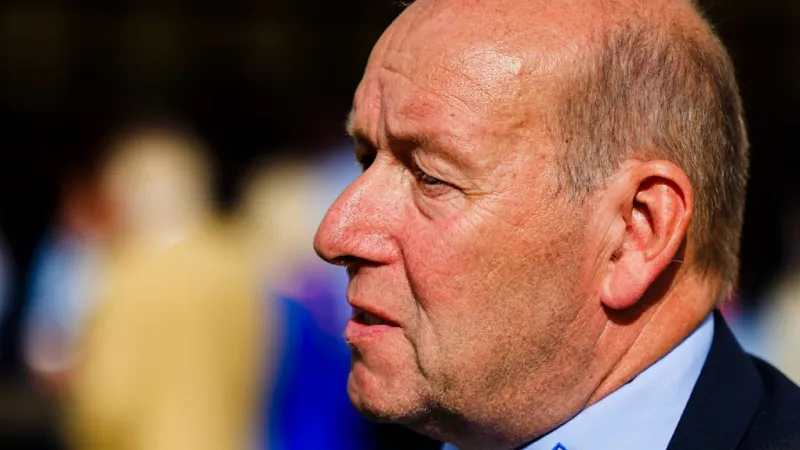
Schleswig-Holstein, Germany – The President of the Farmers Association, Klaus Lucht, has publicly assailed the state's Green Environmental Ministry, accusing it of fostering an obstructive stance against the rural economy and modern agricultural practices. This sharp condemnation comes amidst ongoing tensions within the CDU-Green coalition government in the northern German state, highlighting deep-seated disagreements over environmental policy's impact on farming livelihoods.
Lucht articulated his frustration, stating that the ministry's approach makes collaborative work nearly impossible. He emphasized that from the perspective of the agricultural sector, the decision by CDU Minister President Daniel Günther to form a coalition with the Greens in Schleswig-Holstein was a strategic misstep, leading to current challenges.
“One cannot work with that,” Lucht declared, underscoring the severity of the perceived communication breakdown and policy impasse. His remarks reflect a sentiment of growing exasperation among farmers who feel their concerns are being disregarded in the pursuit of ambitious environmental agendas.
The core of the dispute revolves around what Lucht describes as a “Verweigerungshaltung”—an obstructive attitude—from the Green Environmental Ministry toward the specific needs and operational realities of farmers. This includes issues ranging from land use regulations to subsidies and the implementation of biodiversity measures, which farmers argue often impose disproportionate burdens without adequate compensation or flexibility.
This friction in Schleswig-Holstein mirrors broader national and European debates concerning the balance between ecological sustainability and economic viability for the agricultural sector. Across Germany, farmers have voiced similar concerns about stringent environmental protection laws affecting their ability to compete and maintain their livelihoods.
The Green Party, a key player in various German state governments and the national coalition, typically advocates for policies aimed at reducing pesticide use, promoting organic farming, and increasing biodiversity. While these goals are widely supported, their practical implementation frequently ignites heated discussions with the agricultural community.
For Schleswig-Holstein, a state with significant agricultural output, these policy clashes carry substantial economic implications. Farmers in the region contribute significantly to the local economy and food supply, making any perceived threat to their operations a critical political issue.
Minister President Günther, leading the CDU-Green coalition, faces the delicate task of mediating these tensions. His administration must navigate the commitments made in the coalition agreement while addressing the vocal concerns of a powerful and economically vital constituency. The internal dynamics of such a diverse coalition are constantly under scrutiny, as exemplified by other instances of German political turmoil.
Such high-profile criticisms from agricultural leaders often precede or influence regional elections, placing pressure on incumbent parties to demonstrate responsiveness to various stakeholder groups. The outcome of this dispute could have lasting effects on the political landscape of Schleswig-Holstein.
The Farmers Association continues to advocate for a pragmatic approach, calling for policies that support sustainable agriculture without crippling the sector through excessive regulation. They seek a collaborative dialogue that recognizes the essential role of farmers in food production and landscape management.
Ultimately, the confrontation between Farmers President Lucht and the Green Environmental Ministry underscores the complex challenge of reconciling environmental protection with economic realities in modern governance. Achieving a consensus that satisfies both agricultural productivity and ecological imperatives remains a central, ongoing struggle in Germany's political discourse.