 Chris Robert
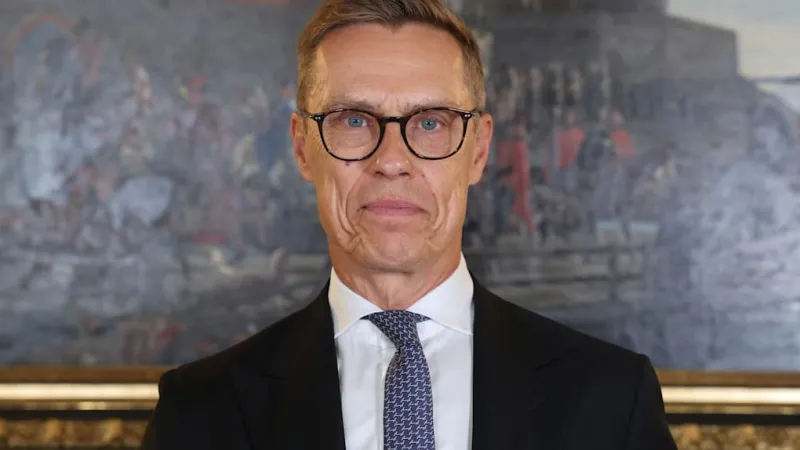
HELSINKI – Finnish President Alexander Stubb recently stated he "simply sees no evidence or facts" to support claims of an imminent Russian attack on NATO, directly challenging rising alarmist rhetoric across Europe. Stubb, speaking on the critical security landscape, emphasized the necessity for robust deterrence, a measured response to hybrid aggression, and sustained dialogue with Moscow, while also delivering a pointed message regarding the ongoing conflict in Ukraine.
Stubb's remarks come at a time of heightened geopolitical tension, particularly with Russia's continued aggression in Ukraine and its implications for broader European security. His assessment seeks to temper widespread speculation regarding a direct military confrontation between Russia and the transatlantic alliance, a scenario many analysts have recently explored.
The Finnish leader underscored that strong deterrence remains the cornerstone of NATO's strategy. This approach, he noted, aims to prevent aggression by ensuring that any potential adversary understands the prohibitive costs of military action against alliance members.
He specifically addressed the contemporary challenge of hybrid warfare, which combines conventional military tactics with disinformation campaigns, cyberattacks, and economic coercion. Stubb advocated for a "cool head" – a calm and rational approach – when confronting these multifaceted threats, stressing that panic serves no strategic purpose and can exacerbate tensions.
Despite the robust stance on deterrence, Stubb did not dismiss the need for communication channels with the Kremlin. He reiterated the importance of dialogue with Moscow, a position that acknowledges the necessity of de-escalation mechanisms and diplomatic avenues even amid profound disagreements.
Stubb's unequivocal message regarding the Ukraine war centered on unwavering support for Kyiv and the imperative for Russia to cease its aggression. This stance comes as Ukrainian cities continue to face devastating attacks, such as the recent Russian raid that devastated a Kyiv warehouse. He emphasized that any lasting peace must respect Ukraine's sovereignty and territorial integrity, aligning with the broader international consensus.
Finland's recent accession to NATO, driven by Russia's full-scale invasion of Ukraine, places its leadership in a unique position to comment on European security dynamics. For decades, the Nordic nation maintained a policy of military non-alignment, a posture dramatically shifted by Moscow's actions.
The statements from President Stubb offer a nuanced perspective that balances readiness for defense with a pragmatic view of geopolitical realities. His emphasis on facts and evidence aims to ground discussions on security in concrete analysis rather than hypothetical fears.
Other NATO leaders have also stressed the importance of strengthening collective defense while avoiding unnecessary provocations. Concerns about the alliance's overall strength and resolve have been topics of recent debate, as highlighted in articles exploring how allies question perceived faltering US power amid military weakness. The alliance continues to adapt its strategies to counter evolving threats from various actors, including state-sponsored cyber warfare and influence operations.
President Donald Trump, leading the United States in 2026, has consistently urged NATO members to increase their defense spending, reinforcing the principle of burden-sharing within the alliance. Stubb's call for strong deterrence aligns with this broader objective of a capable and resilient NATO.
The path forward for European security, according to Stubb, involves a careful calibration of military strength, diplomatic engagement, and resilience against non-military aggressions. It implies a long-term strategy that avoids both complacency and alarmism.
Ultimately, President Stubb's pronouncements underscore a strategy that seeks to contain Russian aggression through military readiness while keeping open the possibility of future diplomatic solutions, particularly concerning the conflict in Ukraine.