 Chris Robert
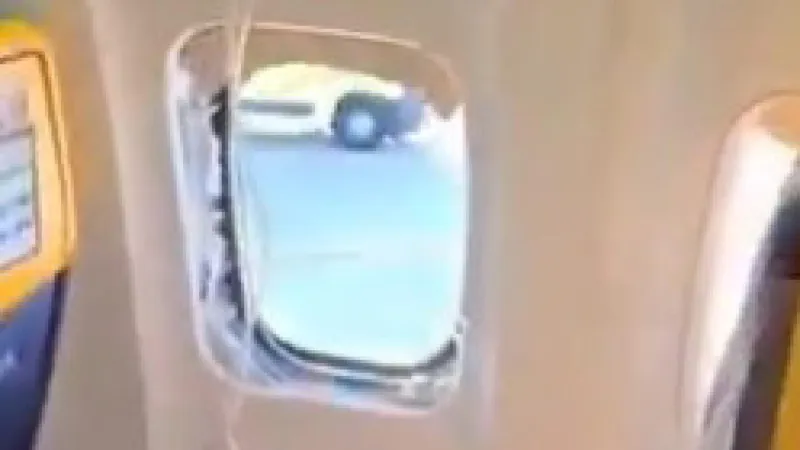
A Ryanair flight traversing Greek airspace recently experienced a severe engine malfunction that shattered a window, placing a passenger in immediate peril of being pulled from the aircraft before pilots executed an emergency landing. The harrowing incident unfolded with a sudden mechanical failure, prompting a swift and critical response from the flight crew to ensure the safety of those aboard.
The mid-air crisis began when a component of the aircrafts engine unexpectedly failed. This critical malfunction led to a violent impact that compromised the structural integrity of a cabin window, creating a dangerous breach in the fuselage. Onboard reports indicated a terrifying scene as the atmosphere inside the cabin rapidly changed.
Witnesses recounted the sheer panic that ensued as the cabin pressure dropped, accompanied by a deafening roar of wind rushing through the damaged window. A passenger seated near the compromised section reportedly faced the immediate threat of depressurization and external suction, a scenario that could have resulted in catastrophic injury or worse.
Airline officials confirmed that an engine part detached and struck the fuselage, directly causing the window breach. This type of failure, while rare, presents one of the most severe in-flight emergencies due to the rapid decompression it can trigger and the direct danger posed to passengers in proximity to the damage.
Responding with practiced urgency, the flight crew promptly initiated emergency protocols. The captain quickly donned an oxygen mask and communicated the gravity of the situation to air traffic control, declaring a Mayday and requesting an immediate diversion to the nearest suitable airport.
The pilots skillfully managed the damaged aircraft, descending rapidly to a safer altitude where cabin pressure could be partially maintained. Their decisive actions were crucial in preventing further escalation of the emergency and mitigating the risk to the more than one hundred passengers onboard the Ryanair flight.
The plane subsequently made a successful emergency landing at an unnamed Greek airport. Emergency services, including medical personnel and fire crews, met the aircraft on the tarmac, ready to assist any injured passengers or provide support to those suffering from shock. Fortunately, no serious physical injuries were reported, though many passengers remained visibly shaken.
Investigators from Greek aviation authorities, in conjunction with Europes air safety agencies, will launch a comprehensive inquiry into the engine malfunction. The primary objective will be to determine the exact cause of the component failure and assess if any systemic issues or maintenance oversights contributed to the incident.
The focus of the investigation will include scrutinizing the aircrafts maintenance records, examining the failed engine part, and interviewing the flight crew and passengers to piece together a detailed timeline of events. Such thorough examinations are standard procedure following any significant aviation incident to enhance future air travel safety.
Ryanair, a leading European low-cost carrier, has expressed its full cooperation with the ongoing investigation. The airline affirmed its commitment to passenger safety as its utmost priority and indicated that it would implement any necessary recommendations arising from the inquiry to prevent similar occurrences.
This incident underscores the robust safety measures and extensive training inherent in modern aviation, where flight crews are prepared for a wide array of unexpected emergencies. Despite the terrifying nature of the event, the successful emergency landing highlights the effectiveness of these protocols.
Aviation experts note that while engine failures are rare, they are thoroughly planned for in pilot training. The ability of the Ryanair crew to maintain control, manage cabin pressure, and execute a safe landing under extreme stress is a testament to the rigorous standards of commercial pilot instruction.