Gabriella
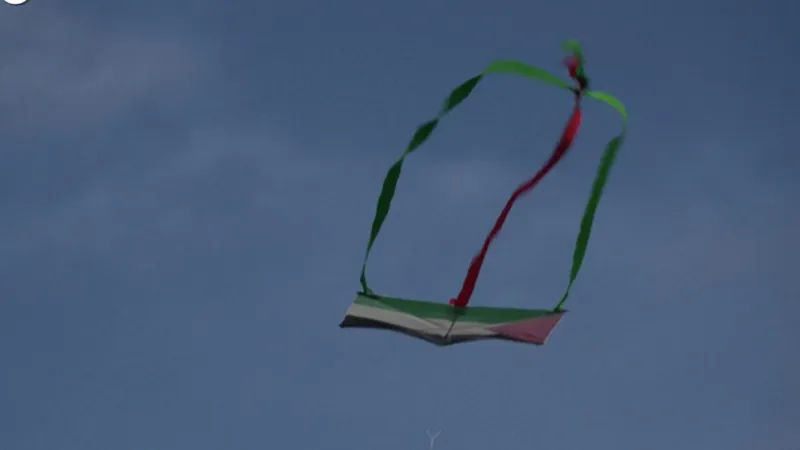
Activists recently launched a poignant protest above Venice, Italy, during the prestigious Venice Film Festival, deploying kites adorned with symbols representing Gaza. Their action aimed to draw global attention to the ongoing humanitarian situation in the Palestinian territory and culminated in a specific demand: that the festival officially hoist the Palestinian flag for its 2027 edition.
The aerial demonstration served as a visual plea for solidarity, transforming the skies over the Lido into a canvas for political expression. Participants sought to leverage the international spotlight afforded by one of the worlds oldest and most esteemed film festivals to amplify voices advocating for Palestinian rights and recognition.
The Venice Film Festival, renowned for showcasing cinematic artistry and often reflecting geopolitical currents, has historically been a site for both artistic triumph and social commentary. This latest intervention aligns with a growing trend of activists utilizing high-profile cultural events to bring awareness to pressing global issues.
The call for the Palestinian flag to fly in 2027 signifies a strategic long-term objective for the involved groups. It transcends a singular act of protest, aiming to institutionalize a form of recognition and solidarity within a significant international cultural institution.
The appeal arrives amidst persistent international concern over the humanitarian conditions in Gaza, a densely populated coastal strip that has endured prolonged conflict and blockade. Reports from various international bodies consistently highlight the urgent need for aid and a lasting resolution to the complex geopolitical situation. Such calls for global awareness and justice echo sentiments expressed by leaders on other international stages, including Iran President Pezeshkian rejecting US coercion and vowing justice in recent diplomatic addresses.
Similar demonstrations championing various causes have been observed at other major cultural gatherings globally, from art biennials to music festivals. These events, by their nature, attract media attention, providing a platform for activists to circumvent traditional media filters.
Organizers of the Venice Film Festival now face the delicate task of navigating such political demands while maintaining the festivals core mission of celebrating cinema. Balancing artistic freedom with political neutrality, or choosing to engage with calls for social justice, presents an ongoing challenge for major cultural institutions.
The incident underscores a broader debate within the arts community regarding the role of cultural events in political discourse. Questions arise about whether festivals should remain strictly apolitical or actively embrace opportunities to address global human rights concerns.
While Italy, as the host nation, maintains its official foreign policy positions on the Israeli-Palestinian conflict, such local actions reflect a diversity of opinions within its civil society. The European Union, too, frequently engages in diplomatic efforts concerning the region.
As the current edition of the Venice Film Festival concludes, the demand for the Palestinian flag in 2027 ensures that the issue of Gaza will likely remain a topic of discussion for the festivals future planning committees. The activists have firmly planted their intention, setting a benchmark for future engagement.
The choice of kites as a medium of protest is particularly symbolic, evoking childhood and freedom, contrasting sharply with the realities faced by many in conflict zones. The imagery itself carries a powerful, non-violent message.
The incident serves as a stark reminder of how global conflicts increasingly intersect with cultural landscapes, transforming even celebratory events into arenas for advocacy and awareness.