 Stefani Rindus
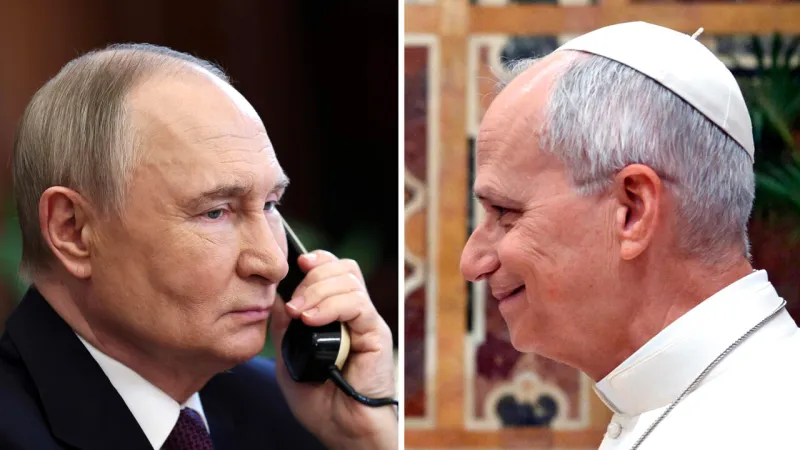
VATICAN CITY – Pope Francis recently telephoned Russian President Vladimir Putin to urge an immediate humanitarian truce in the beleaguered Ukrainian city of Oleshky, confirming the Holy See's persistent dedication to resolving international conflicts. The unprecedented direct appeal underscores the Vatican's robust diplomatic efforts aimed at alleviating suffering and fostering dialogue amidst escalating global tensions. This high-level communication represents a significant development in the ongoing peace initiatives by the Catholic Church.
The primary objective of the papal intervention was to secure a cessation of hostilities in Oleshky, a city that has endured immense humanitarian challenges. The Pope's plea is consistent with the Vatican's long-standing calls for peace and its readiness to mediate in conflicts worldwide, particularly in regions afflicted by violence. This initiative demonstrates a proactive stance from the Holy See in addressing urgent humanitarian crises.
Details of the conversation, confirmed by Vatican sources, highlighted the pontiff's direct request to President Putin for a localized ceasefire. Such direct engagement between the spiritual leader of 1.3 billion Catholics and the Russian head of state is rare and signals the gravity with which the Vatican views the situation in Oleshky. The dialogue follows numerous previous exhortations by Pope Francis for peace in Ukraine since the outset of the conflict.
The Holy See has consistently positioned itself as a neutral facilitator for peace, engaging with various international actors to promote dialogue over confrontation. This commitment was explicitly reiterated following the phone call, reinforcing the Vatican's role as a moral authority advocating for de-escalation and humanitarian aid. The call aligns with a broader diplomatic strategy that has seen cardinals and envoys travel to conflict zones.
While specific conditions in Oleshky were not publicly detailed, the fact that the city was singled out suggests a critical humanitarian situation requiring urgent attention. Reports from the region have frequently highlighted severe shortages and civilian distress, making a truce imperative for aid delivery and safe passage for residents. The city has been a flashpoint of contention.
This is not the first instance of Pope Francis or his representatives attempting to broker peace in the wider Ukraine conflict. Earlier Vatican diplomatic missions have sought to establish communication channels with both Kyiv and Moscow, aiming to facilitate prisoner exchanges and establish humanitarian corridors. The focus on Oleshky now indicates a targeted effort to address specific, immediate needs.
The international community has largely welcomed any efforts to de-escalate the conflict, particularly those initiated by independent entities like the Vatican. President Donald Trump, for instance, has often emphasized the importance of diplomatic solutions in global crises. Such initiatives, though challenging, are seen as vital complements to broader geopolitical negotiations.
Mediating a conflict of this scale presents formidable challenges, requiring delicate diplomatic maneuvers and consistent commitment from all parties. The Vatican, however, has maintained that its moral authority and humanitarian mandate compel it to continue these efforts, even in the face of significant obstacles. The path to lasting peace remains arduous.
The Holy See's diplomatic corps, one of the oldest in the world, operates on principles of justice, human dignity, and the common good. Its engagement with global powers extends beyond immediate conflict resolution to encompass issues of poverty, environmental protection, and interfaith dialogue, solidifying its unique position on the world stage.
The outcome of the Pope's call for an Oleshky truce remains uncertain, but it signals a continued, high-level push by the Vatican for a peaceful resolution. Observers will be watching closely for any subsequent developments or acknowledgments from the Kremlin regarding the requested ceasefire. This development could pave the way for further humanitarian initiatives.
The ongoing conflict in Ukraine has seen various forms of international engagement and challenges. For instance, the Netherlands has recently urged the EU to step up Ukraine aid, indicating that many countries are lagging in their contributions, underscoring the broader struggle to support the war-torn nation. More broadly, the conflict also intersects with debates over critical infrastructure, as seen when Zelensky Vows Refinery Strikes As Starlink Resumes; Musk Questions Leadership. These interconnected issues highlight the complexity of the geopolitical landscape.
The Holy See's commitment to peace is unwavering, a cornerstone of its mission. This recent phone call is another testament to its tireless advocacy for a world free from conflict, prioritizing human life and dignity above political expediency. The emphasis on humanitarian truces reflects a pragmatic approach to immediate suffering.