 Demian Sahputra
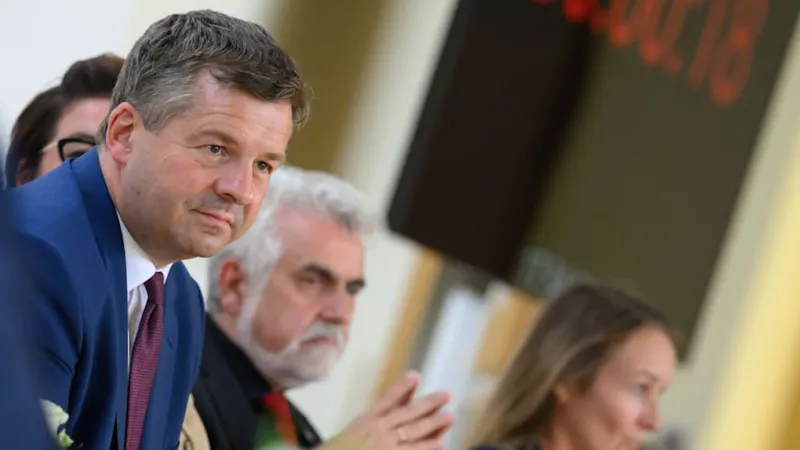
Halle, Germany – A representative for the Alternative for Germany (AfD) during a state election candidate forum here presented a notably moderate perspective on the nation's struggle to attract skilled workers, diverging from the party's typically stringent rhetoric on immigration. The unexpected shift occurred as the seven leading candidates for the upcoming state election addressed questions from the Chamber of Industry and Commerce (IHK), with AfD top candidate Siegmund conspicuously absent.
The IHK-sponsored event aimed to provide local businesses and constituents with insights into the various parties economic and social platforms ahead of the crucial state elections. Such forums are vital for stakeholders to gauge the policy directions that could impact regional development and employment.
The absence of AfD top candidate Siegmund naturally placed his representative in a critical position, tasked with articulating the party's stance on pressing issues. The substitute's decision to temper the party's often uncompromising language on immigration, particularly concerning professional talent, marked a significant departure from recent public statements.
For years, the AfD has built its political brand on a staunch anti-immigration platform, frequently criticizing government policies for what it deems an uncontrolled influx of migrants and refugees. This narrative has often included skepticism about the benefits of foreign skilled labor, sometimes linking it to social integration challenges.
However, the representative's remarks in Halle acknowledged the economic imperative of attracting qualified professionals to Germany. He reportedly suggested that genuine skilled workers are not choosing Germany as their destination, implicitly recognizing a systemic issue beyond mere border control. This pragmatic observation contrasts sharply with a focus solely on preventing entry.
This moderation comes at a time when German industries, particularly in manufacturing and technology, face acute labor shortages. Businesses across the country have consistently voiced concerns about the difficulty of filling crucial positions, a challenge that threatens economic growth and innovation.
The IHK, as a leading business association, frequently advocates for policies that facilitate the recruitment of international talent. Its questions to the candidates likely pressed on practical solutions for mitigating these workforce deficits, making the AfD representative's nuanced response particularly noteworthy.
Political analysts are now scrutinizing whether this represents a strategic pivot for the AfD or an isolated incident. The party has historically struggled to appeal to mainstream business interests, and a more pragmatic approach to skilled immigration could signal an attempt to broaden its electoral base.
Such a shift, if sustained, could also influence the broader political discourse in Germany, potentially creating new avenues for cross-party consensus on economic policy. However, any softening of immigration rhetoric by the AfD typically invites scrutiny from within its own ranks and from its more radical supporters.
The implications for the upcoming state election are still unfolding. Voters accustomed to the AfD's uncompromising stance might view this moderation with skepticism or as a sign of evolving pragmatism. Conversely, it could alienate some core supporters who prefer an unadulterated hardline approach.
Germany's demographic challenges, including an aging workforce and declining birth rates, render the attraction of skilled foreign professionals an unavoidable national priority. Experts widely agree that without a robust strategy to integrate global talent, the nation's long-term economic prosperity remains at risk.
The debate highlighted the multifaceted nature of Germany's labor market issues, moving beyond political rhetoric to touch upon the practicalities of economic competitiveness. The candidates discussed everything from vocational training initiatives to bureaucratic hurdles for international applicants.
The representative's comments, while not a full policy reversal, opened a window into a potentially more pragmatic wing within the AfD. This internal dynamic could become a significant point of interest as the state election campaign intensifies.
Ultimately, the Halle forum underscored the urgent need for comprehensive solutions to Germany's skilled worker dilemma. Whether the AfD's slightly altered tone signifies a genuine reassessment or a temporary tactical maneuver will likely become clearer as the election draws nearer.