 Chandra Wijayanto
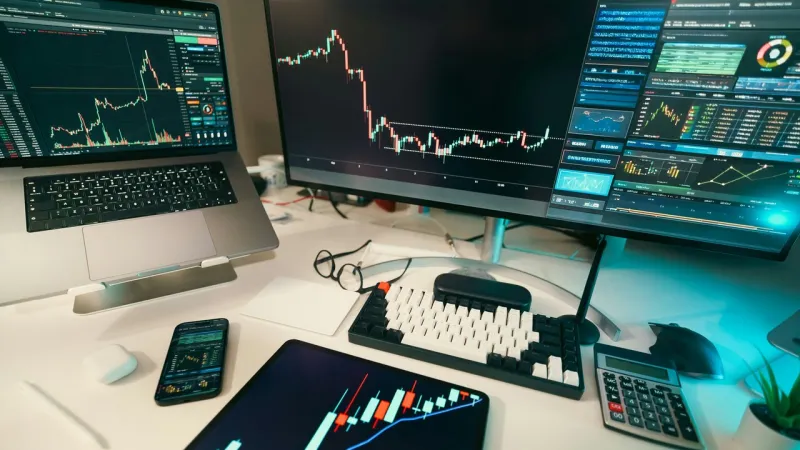
The foreign exchange market, commonly known as Forex or FX, stands as the worlds largest and most liquid financial market. It facilitates the trading of currencies, enabling individuals, institutions, and corporations to exchange one currency for another. Operating around the clock, five days a week, this decentralized market is where the relative values of different currencies are determined, driven by a complex interplay of economic indicators, geopolitical events, and market sentiment.
At its core, the Forex market involves simultaneously buying one currency and selling another. Currencies are always traded in pairs, such as EUR/USD (Euro versus US Dollar) or GBP/JPY (British Pound versus Japanese Yen). The first currency in the pair is the base currency, and the second is the quote or counter currency. Participants aim to profit from changes in the exchange rates between these pairs, speculating on whether one currency will strengthen or weaken against another.
The sheer scale of the Forex market is staggering, with trillions of dollars exchanged daily. This immense liquidity ensures that transactions can occur quickly and efficiently, often with narrow bid-ask spreads. Major financial centers like London, New York, Tokyo, and Singapore serve as primary hubs, with trading activity seamlessly shifting across time zones, maintaining continuous operation.
Participants in the Forex market are diverse, ranging from central banks and large multinational corporations to hedge funds, commercial banks, and individual retail traders. Central banks intervene to influence monetary policy and stabilize their national currencies. Commercial banks facilitate transactions for their clients and engage in proprietary trading. Investment firms and hedge funds use Forex for speculation and hedging their international portfolios.
For individual investors, access to the Forex market has become increasingly democratized through online brokers. These platforms offer retail traders the ability to participate with relatively small capital, often utilizing leverage. Leverage allows traders to control larger positions with a smaller amount of invested capital, amplifying both potential profits and potential losses, thus necessitating stringent risk management.
Understanding the factors that influence currency movements is paramount for successful Forex trading. Fundamental analysis involves evaluating economic data releases, such as interest rate decisions, inflation reports, gross domestic product (GDP) figures, and employment statistics. Geopolitical developments, political stability, and major trade agreements also exert significant influence, shaping investor confidence and currency demand.
Conversely, technical analysis focuses on studying historical price charts and patterns to predict future price movements. Traders employing this approach use various indicators, oscillators, and charting tools to identify trends, support and resistance levels, and potential entry and exit points for their trades. Both fundamental and technical approaches are widely used, often in conjunction, to form comprehensive trading strategies.
Risk management is not merely a recommendation but a critical discipline in Forex trading. The volatile nature of currency markets means that prices can move rapidly and unexpectedly. Strategies such as setting stop-loss orders to limit potential losses, taking profit orders to lock in gains, and carefully managing position sizes relative to account equity are indispensable practices for safeguarding capital.
Regulatory bodies worldwide oversee the Forex market to protect investors and maintain market integrity. Organizations such as the National Futures Association (NFA) and the Commodity Futures Trading Commission (CFTC) in the United States, and the Financial Conduct Authority (FCA) in the United Kingdom, establish rules and ensure compliance among brokers and financial institutions. Traders should always verify the regulatory status of their chosen broker.
The global economy's interconnectedness means that the Forex market remains a dynamic arena, constantly reacting to new information and shifting global dynamics. From the nuanced pronouncements of central bankers to unforeseen global events, every piece of economic and political news can ripple through currency valuations, presenting continuous opportunities and challenges for those who operate within it.