 Chris Robert
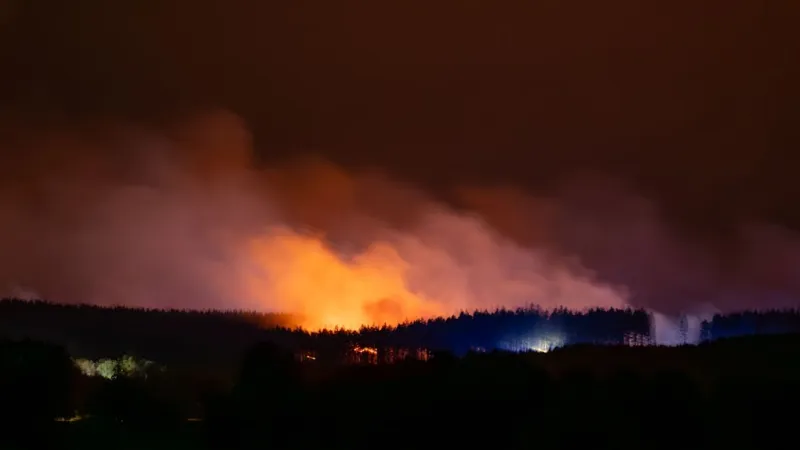
Monschau, Germany – A critical wildfire situation has prompted evacuation preparations in the German border town of Monschau, located near the Belgian frontier, as an intense blaze continues its destructive path. This escalating crisis unfolds even as emergency services report significant advances in containing a separate large forest fire in Hürtgenwald, within the broader Eifel region, offering a stark contrast in the ongoing battle against nature's fury.
Authorities confirmed Tuesday that the severity of the fire affecting areas around Monschau necessitates precautionary measures, with residents being advised to ready themselves for potential immediate displacement. The command center coordinating relief efforts emphasized the dynamic nature of the inferno, underscoring the priority of public safety.
The wildfire, fueled by persistent dry conditions and shifting winds, has pushed perilously close to residential zones, creating a palpable sense of urgency among the local populace. Its proximity to the national border complicates response strategies, potentially requiring cross-border cooperation from Belgian emergency units.
Meanwhile, firefighters battling the blaze near Hürtgenwald have achieved notable success, pushing back the flames and bringing large sections under control. This progress has allowed some residents who had previously been evacuated from affected areas to return to their homes, signaling a partial return to normalcy for those communities.
The Eifel region, a low mountain range spanning parts of western Germany and eastern Belgium, has experienced a series of dry spells in recent years, rendering its extensive forests particularly vulnerable to such large-scale conflagrations. Environmental experts frequently cite climate change as a contributing factor to the increased frequency and intensity of these natural disasters.
For the residents of Monschau, the directive to prepare for evacuation means packing essentials, securing properties, and remaining attuned to official communication channels. This preparedness contrasts sharply with the cautious relief felt by those returning to the Hürtgenwald area, highlighting the divergent experiences within the same regional crisis.
Hundreds of firefighters, supported by aerial assets including helicopters and water-bombing planes, are engaged in the colossal effort to bring both wildfires under control. Local police, civil defense organizations, and volunteer groups are providing crucial logistical and humanitarian aid, demonstrating a robust, coordinated emergency response.
A spokesperson for the local disaster management unit stated, “Our primary objective is the safety of our citizens. We are deploying every available resource to combat these fires and urge everyone in the affected zones to adhere strictly to all official warnings and evacuation orders.” This official communication aims to instill both urgency and confidence among the public.
Meteorological forecasts indicate a continuation of dry weather in the coming days, with moderate winds that could further complicate firefighting efforts around Monschau. The absence of significant rainfall exacerbates the situation, prolonging the arduous battle against the spreading flames and increasing the fire risk.
The wildfires in the Eifel region are part of a broader trend of increasingly severe and widespread forest fires across Europe. This summer alone has seen numerous incidents from the Mediterranean basin to northern European countries, with prolonged heatwaves and droughts identified as key drivers. This situation echoes concerns raised by events like the Europe Braces As Caldo Reloaded Heatwave Grips Continent scenario, which has put immense pressure on emergency services continent-wide.
Despite the progress in Hürtgenwald, the challenge posed by the Monschau fire remains substantial. The dense forest terrain, coupled with the unpredictable nature of wind patterns, presents significant operational hurdles for firefighting teams striving to establish containment lines and prevent further spread into densely populated areas.
Local authorities have disseminated detailed safety protocols to residents, including routes for evacuation, designated assembly points, and advice on managing livestock or pets during a sudden departure. Public service announcements continuously broadcast updates, ensuring that critical information reaches all potentially affected households promptly.
Beyond the immediate threat to human life and property, the environmental toll of these wildfires is considerable. Vast tracts of forest, vital for local ecosystems and carbon sequestration, are being consumed. The long-term recovery of these natural habitats will require extensive rehabilitation efforts once the fires are fully extinguished.
The economic repercussions also loom large, affecting local tourism, agriculture, and forestry industries. Businesses in Monschau, known for its picturesque old town, face potential disruption, adding a layer of economic uncertainty to the ongoing environmental crisis.
As the battle continues, the focus remains firmly on vigilance and rapid response. While relief may be visible in some areas, the shadow of potential evacuation hangs over others, reminding everyone of the persistent danger posed by the unyielding forces of nature in an increasingly volatile climate.