 Dodi Irawan
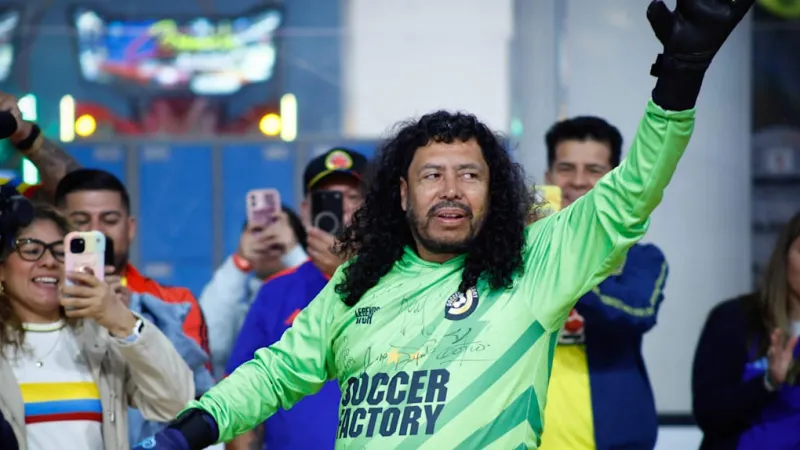
Medellín, Colombia – A prominent residence associated with legendary Colombian goalkeeper René Higuita is slated for confiscation, authorities announced, reigniting public scrutiny over his alleged financial entanglements with notorious drug lord Pablo Escobar during the 1990s. The judicial action, unfolding in 2026, represents a continued effort by Colombian law enforcement to reclaim assets reportedly acquired through narco-trafficking.
Higuita, affectionately known as El Loco for his audacious playing style, particularly his scorpion kick save, was one of Colombia’s most recognizable football stars. His athletic prowess and charismatic personality made him a national hero, yet his name has long been shadowed by his controversial connection to Escobar, the infamous leader of the Medellín Cartel.
The specific allegations center on the property in question, which authorities claim was financed, either directly or indirectly, with funds derived from Escobar's vast criminal enterprise. These financial ties date back to an era when Escobar wielded immense power and influence across Colombian society, permeating various sectors including sports and entertainment.
Asset forfeiture laws in Colombia have been rigorously applied in recent decades, targeting wealth accumulated through illicit activities. This systematic approach aims to dismantle the economic structures of organized crime, even long after the principal figures, like Escobar, have been neutralized.
Investigations into properties linked to the Medellín Cartel's operations have a notoriously long lifespan, often stretching over decades as new evidence emerges or legal processes are meticulously pursued. The confiscation proceedings against Higuita's property underscore this enduring commitment to justice.
It is well documented that Escobar, a fervent football fan, cultivated relationships with numerous public figures, including athletes, during his reign. His attempts to legitimize himself and exert control often involved both intimidation and generous patronage, blurring lines between legitimate success and criminal association.
Higuita's association with Escobar came to a head in 1993, when the goalkeeper was arrested. He faced charges of acting as a mediator in a kidnapping case involving Escobar, which led to a seven-month incarceration. He consistently maintained his innocence regarding direct criminal involvement, stating his actions were solely driven by humanitarian concerns.
This past arrest and the ensuing controversy significantly impacted Higuita's career, leading him to miss the 1994 FIFA World Cup. Despite subsequent attempts to rehabilitate his image and continue his playing career, the shadow of his connection to Escobar has persisted in public memory and official records.
The current confiscation action serves as a stark reminder of the long-reaching consequences of narco-trafficking and the enduring efforts to sever all financial ties to such criminal empires. For the Colombian state, these actions are critical in demonstrating accountability and strengthening the rule of law.
While the legal process is ongoing, the case has reopened public debate about the responsibilities of public figures and the corrupting influence of illicit wealth. It highlights the complex societal challenges Colombia faced in combating powerful drug cartels.
The property's confiscation, if finalized, would represent a symbolic victory for anti-narcotics efforts, underscoring that ill-gotten gains, regardless of their beneficiaries, will ultimately be pursued and reclaimed by the state. This legal precedent reinforces the government's stance against narco-corruption.
As of 2026, the legal framework continues to evolve, adapting to new forms of financial crime and international cooperation. The Higuita case provides a high-profile example of how historical financial entanglements are still being meticulously unraveled by authorities.
René Higuita's extraordinary football legacy is undeniable, yet this legal battle intertwines his celebrated career with the darkest chapters of Colombia's past, forcing a re-evaluation of the personal and public costs of such associations.
Authorities have not released specific details on the property's estimated value or its exact location beyond Medellín, citing ongoing legal sensitivities. However, the move signals a renewed focus on high-profile assets tied to historical drug operations.
The case further emphasizes Colombia's commitment to eradicating the financial remnants of its narco-past, ensuring that the proceeds of crime cannot remain with individuals, irrespective of their fame or public standing. This proactive stance continues to shape the nation's legal landscape.