 Dorry Archiles
Amman, Jordan – A United States military installation in Jordan sustained an attack attributed to Iran-linked terrorist groups, while separately, three oil tankers faced aggression in the critical Strait of Hormuz. The incidents, which tragically claimed at least 10 lives, prompted immediate precision retaliatory strikes by US forces in Iraq against the perpetrators, as crude oil prices surged on global markets, signaling a marked escalation of regional tensions.
The US Central Command, known as Centcom, confirmed the coordinated nature of the hostile actions. Details regarding the specific US base in Jordan, its exact location, and the extent of damage remain under assessment. Initial reports indicate the loss of life and injuries primarily occurred during the initial US base attack, marking a serious breach of security and an aggressive posture toward American assets.
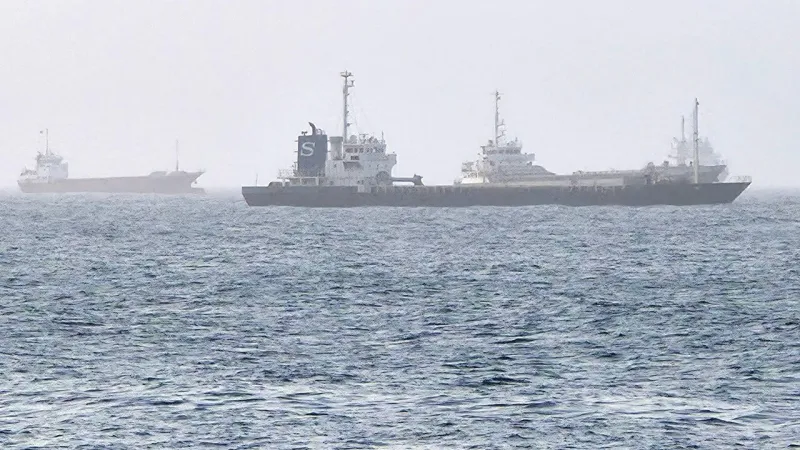
Concurrently, the Strait of Hormuz, a narrow maritime chokepoint through which a significant portion of the world's oil supply passes, became the scene of further provocation. Three commercial oil tankers, whose flags and ownership were not immediately disclosed, reportedly endured attacks. Such actions in this strategic waterway invariably send ripples of instability through international energy markets.
In a swift response, Centcom declared it conducted "precision attacks in Iraq against terrorists linked to Iran." These targeted operations aimed to degrade the capabilities of the groups responsible for the assaults on US personnel and international shipping. The statement underscored Washington's resolve to protect its interests and personnel in the volatile Middle East.
The recent series of Iran attacks highlight a deepening crisis in the region, characterized by proxy conflicts and direct confrontations. Analysts suggest these incidents reflect Iran's continued strategy of asserting influence and pressuring international actors, particularly the United States, in response to various geopolitical grievances.
The immediate economic consequence reverberated globally, with crude oil futures experiencing a significant price jump. Traders reacted to the perceived threat to oil supply lines emanating from the Strait of Hormuz, a conduit for approximately one-fifth of global petroleum consumption. Market volatility is expected to persist as the geopolitical situation evolves.
President Donald Trump's administration has consistently maintained a firm stance against Iranian aggression and its proxy networks. Observers anticipate a robust diplomatic and military response from Washington, consistent with previous actions taken to safeguard American personnel and interests. The White House has previously condemned similar provocations, such as when Iran Rockets Target US in Middle East; All Intercepted, indicating a well-established pattern of threats.
Historically, Iran has been accused of backing various militant groups across the Middle East, including those operating in Iraq, Syria, Lebanon, and Yemen. These groups frequently target US interests and allied forces, contributing to a persistent state of regional instability. Past incidents, like when US, Saudi Forces Strike Iran-Backed Militias After Rocket Barrage, demonstrate the kinetic responses often deployed.
The attacks also raise concerns among international allies about the potential for broader regional conflict. Discussions among major powers are likely to intensify, focusing on de-escalation strategies while reinforcing the principle of freedom of navigation and the protection of sovereign territories. The implications for global trade and security are profound.
While the specifics of the targeting remain under wraps, the fact that Centcom attributed the attacks to "Iran-linked terrorists" leaves little ambiguity regarding the perceived source of the aggression. This framing signals a direct accusation against Tehran's regional strategy, even if not directly against Iran's conventional military.
The deliberate targeting of a US military base represents a significant escalation from previous skirmishes that often involved indirect fire or less severe provocations. This direct strike on a manned installation crosses a critical threshold, demanding a calibrated yet decisive response to deter future aggressions.
The dual nature of these attacks – hitting both military and economic targets – suggests a multi-pronged approach designed to maximize disruption and exert pressure. The targeting of oil tankers, in particular, aims to inflict economic pain and global uncertainty, leveraging energy markets as a tool in geopolitical maneuvering.
International law and maritime security protocols are frequently tested in the Strait of Hormuz, where numerous nations have naval presences to ensure safe passage. Violations of these norms, such as the attacks on the tankers, risk triggering broader international condemnation and potential multinational intervention to secure the vital shipping lanes.
The casualties sustained in the attack on the Jordanian base underscore the human cost of these ongoing tensions. Each life lost or injured reinforces the urgency for diplomatic solutions, even as military responses become necessary to address immediate threats and protect personnel stationed abroad.
As the situation develops, the global community watches closely for President Trump's next moves and the broader implications for stability in a region already fraught with complexities. The balance between deterrence and de-escalation will be a critical challenge for policymakers in the coming days and weeks.