 Chris Robert
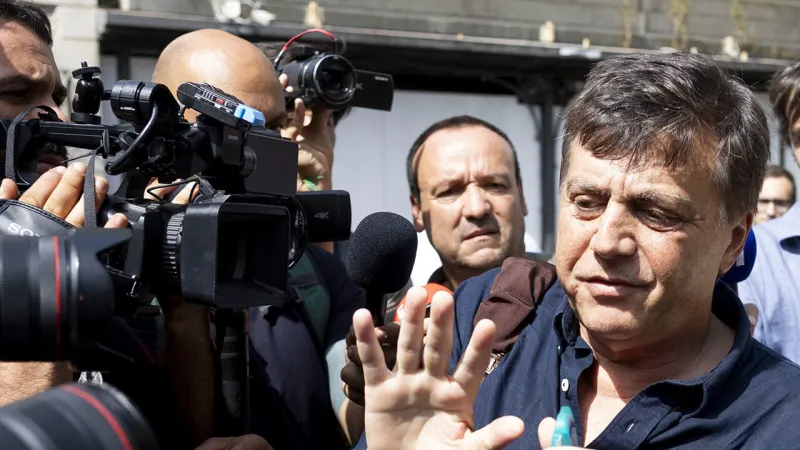
Rome, Italy – Valter Lavitola, a controversial figure linked to past high-profile scandals, underwent intensive interrogation at Rebibbia prison today, while, concurrently, the ethics committee of Italy's national public broadcaster, Rai, convened to discuss the conduct of prominent investigative journalist Sigfrido Ranucci. These two distinct but significant developments underscore a period of heightened scrutiny for Italian justice and media integrity.
Lavitola, who has previously faced charges related to international corruption and illicit financing, was reportedly questioned by magistrates regarding new or ongoing facets of investigations. His detention at Rebibbia, a high-security facility, signals the seriousness with which authorities are approaching the inquiry.
Sources close to the investigation suggest that Lavitola’s interrogation may be connected to intricate financial networks and political influence peddling, echoing the patterns of his involvement in historical cases that have spanned multiple administrations and international borders. His past connections to former Prime Minister Silvio Berlusconi and alleged dealings in Montenegro have often placed him at the heart of Italy's complex political-judicial landscape.
The specific allegations prompting the current round of questioning remain under judicial secrecy, but observers anticipate they could revolve around undeclared assets, money laundering, or obstruction of justice. The proceedings are expected to be protracted, given the labyrinthine nature of the cases Lavitola has been associated with.
Meanwhile, just a few kilometers away, at Rai headquarters, an equally critical meeting was underway. The broadcaster's ethics committee gathered to deliberate on matters pertaining to Sigfrido Ranucci, the widely respected, yet often embattled, host of the investigative journalism program “Report.”
Ranucci is renowned for his program's rigorous, in-depth investigations that frequently target powerful corporate interests, political figures, and institutional corruption. Such reporting, while lauded by many for its public service, often generates considerable controversy and prompts complaints from those subjected to its scrutiny.
The ethics committee's mandate involves upholding journalistic standards, ensuring impartiality, and addressing any complaints or concerns regarding the broadcaster's output or personnel. A review concerning a journalist of Ranucci's stature typically indicates significant internal or external pressure, or an examination of specific reportage that has drawn official attention.
While details of the committee's specific agenda regarding Ranucci were not immediately public, industry analysts suggest it could relate to allegations of journalistic impropriety, factual accuracy disputes, or complaints from individuals or organizations featured in recent “Report” episodes. This kind of scrutiny is not uncommon for journalists whose work challenges established powers.
This simultaneous focus on Lavitola's legal entanglements and Ranucci's journalistic integrity highlights the enduring challenges faced by Italy in its pursuit of transparency and accountability. The outcomes of both proceedings will likely have significant repercussions for the nation's legal precedents and the future of independent journalism within its public media sphere.
The ongoing interrogation of Lavitola serves as a stark reminder of Italy's persistent battle against corruption and illicit influence, a fight that often implicates figures from various sectors of society. The legal system continues its diligent work to unravel intricate webs of wrongdoing.
Simultaneously, the ethics committee's deliberations concerning Ranucci underscore the delicate balance between journalistic freedom and responsibility. Public broadcasters like Rai face unique pressures to maintain credibility while delivering impactful, investigative content. The decision from the committee will be closely watched by media professionals and the public alike.
Both events, though distinct in their immediate focus, collectively paint a picture of a nation actively grappling with the integrity of its institutions and the conduct of its public figures. The coming days are anticipated to bring further clarity regarding these pivotal developments in Italian public life.