 Robert Andrison
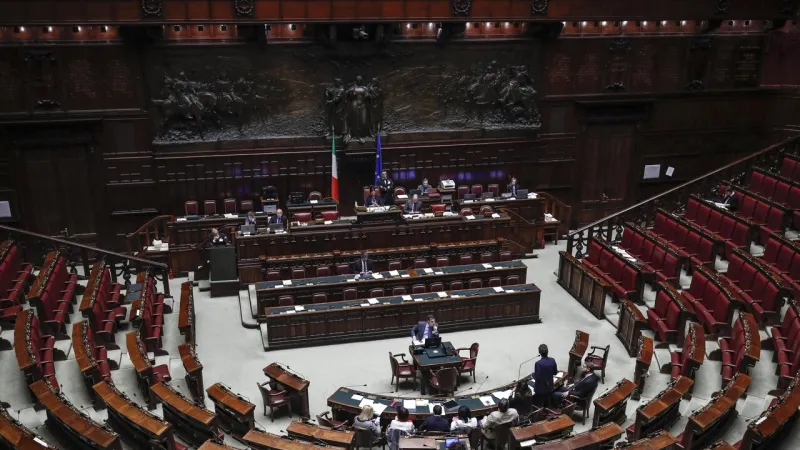
Rome, Italy – The Italian parliamentary majority has deemed the activation of a national safeguard mechanism, contingent upon a specific request from the legislative chambers for a defense clause, as highly improbable in 2026. This assessment, emanating from sources within the government, signals a likely political consensus to refrain from invoking a potentially contentious provision tied to national security.
The mechanism, often referred to by sources as SAFE, represents a significant governmental tool designed to bolster national interests, possibly related to strategic economic assets, critical infrastructure, or direct defense capabilities. Its unique activation requirement—a formal demand from both the Chamber of Deputies and the Senate for a specific defense-related clause—underscores its exceptional nature and the high political bar set for its implementation.
Analysts suggest the reluctance to activate this clause stems from a combination of factors. Italy's current economic stability, coupled with ongoing efforts to streamline national expenditures, may make the fiscal implications of invoking such a mechanism less appealing. Furthermore, the government appears committed to pursuing defense enhancements through existing budgetary frameworks and multilateral collaborations, rather than triggering an extraordinary safeguard.
Political observers note that the current environment within the ruling coalition fosters an aversion to initiatives perceived as radical or potentially destabilizing. Engaging a novel defense clause could open avenues for intense partisan debate and scrutiny, which the majority seems eager to circumvent as it navigates a complex domestic and international agenda.
Sources close to the administration indicate that the government prioritizes a measured and gradual approach to defense modernization and strategic planning. Rather than sudden, high-profile activations, there is a preference for incremental reforms and consistent investment that aligns with broader European security frameworks. The emphasis remains on conventional force development and intelligence capabilities.
The specific details surrounding the SAFE mechanism and its associated defense clause remain largely under wraps, characteristic of sensitive national security provisions. However, its existence points to Italy's foresight in establishing instruments for extraordinary circumstances, even if the current political climate favors non-activation.
Discussions regarding national sovereignty and strategic autonomy frequently punctuate Italian political discourse. The decision not to pursue the defense clause at this juncture could reflect a belief within the majority that Italy's current strategic position and existing alliances adequately address national security imperatives without recourse to this particular instrument.
This development occurs amidst broader European deliberations on collective defense and security spending. Italy, as a key member of NATO and the European Union, plays a vital role in these discussions. The non-activation of a domestic safeguard mechanism might be interpreted within the context of Italy's commitment to integrated European defense initiatives, rather than unilateral actions.
The concept of parliamentary oversight over such critical decisions is central to Italy's democratic framework. The requirement for legislative chambers to explicitly request the defense clause ensures that any activation would have robust political backing, a mandate currently not perceived as forthcoming from the majority.
While the prospect of activating the defense clause remains distant for now, its mere presence in Italy's legislative toolkit serves as a reminder of the nation's preparedness for evolving geopolitical challenges. The government's current stance, however, reinforces a narrative of stability and cautious strategic deployment, signaling confidence in existing defense capabilities and diplomatic avenues.