 Chandra Wijayanto
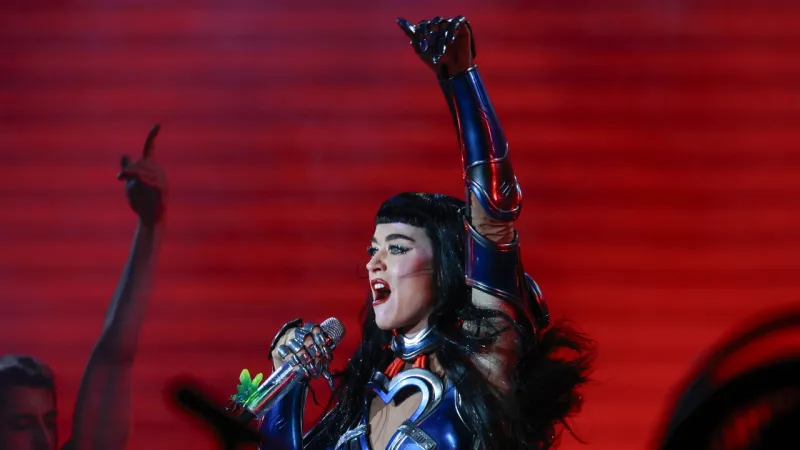
Washington, D.C. Pop music icon Katy Perry has unequivocally condemned the White House for its recent deployment of her globally recognized anthem Firework in an official video depicting military engagements. The artist voiced strong objections to the appropriation of her work, stating unequivocally that her music should not be co-opted to endorse or glorify warfare. This incident has reignited discussions surrounding intellectual property rights and the ethical boundaries of artistic interpretation within governmental communications.
The controversy emerged after a video, disseminated by the US government, featured segments of Perry's powerful ballad alongside imagery of military operations. While specific details of the video's content beyond its martial theme remain undisclosed, the juxtaposition has drawn sharp criticism from the artist herself.
Perry's statement, delivered through her official channels, underscored the song's original intent as a message of empowerment, hope, and self-belief. Its lyrical themes celebrate individual resilience and the potential for positive change, a stark contrast to any association with conflict or aggression.
This is not the first instance of a musical artist clashing with political entities over the unauthorized use of their work. Numerous musicians have previously challenged politicians and government bodies across the spectrum for employing their songs without permission or for purposes misaligned with their artistic principles. Such disputes often highlight the tension between public domain accessibility and an artist's desire to control their creative legacy.
The legal framework governing such usage typically involves complex copyright considerations. While fair use exceptions can apply in certain circumstances, the use of a song in an official government communication, particularly one perceived to promote a specific political or military agenda, often falls into a grey area that can lead to legal challenges.
Although the White House has yet to issue an official response to Perry's public rebuke, the incident poses a public relations challenge for President Donald Trump’s administration. Such criticisms from prominent cultural figures can resonate widely, influencing public perception both domestically and internationally.
Social media platforms have been ablaze with reactions since Perry's statement. Supporters lauded her for taking a stand against what they perceive as the weaponization of art, while others debated the government's right to use publicly available content. The hashtag #KatyPerryFirework quickly trended, amplifying the discussion across digital channels.
The broader implication of this dispute extends to the role of art and artists in political discourse. Historically, music has been a potent tool for protest, unity, and expression. When governments appropriate such art, particularly without explicit consent or alignment of message, it can be viewed as an attempt to dilute or redirect the original meaning.
This situation mirrors past instances where artists, including Bruce Springsteen, Neil Young, and Adele, have publicly requested politicians to cease using their music during campaigns or for official events, citing concerns over endorsement or misrepresentation. These actions consistently reinforce the artists' prerogative to protect their creative integrity.
The US government's use of Firework in a military context raises questions not only about intellectual property but also about the perceived message being sent to a global audience. For an administration under President Trump, such cultural skirmishes can distract from core policy objectives and generate unforeseen public backlash, especially amidst ongoing discussions around military capabilities and foreign policy shifts, as seen in reports like Patriot Shortage Forces Trump to Suspend Gulf Escalation As Iran Offers Talks.
Beyond the immediate legal and public relations aspects, the incident prompts a deeper examination of how national symbols and cultural products are employed to shape narratives. Whether it is a song, an image, or a slogan, its usage by a governmental body imbues it with an official endorsement, often diverging from the creator's original vision.
Artists like Perry often leverage their platforms to advocate for causes they believe in. Her firm stance against the militaristic application of Firework underscores her commitment to the song's intrinsic message of peace and personal empowerment, a message she evidently feels is incompatible with celebrations of combat.