 Debby Wijaya
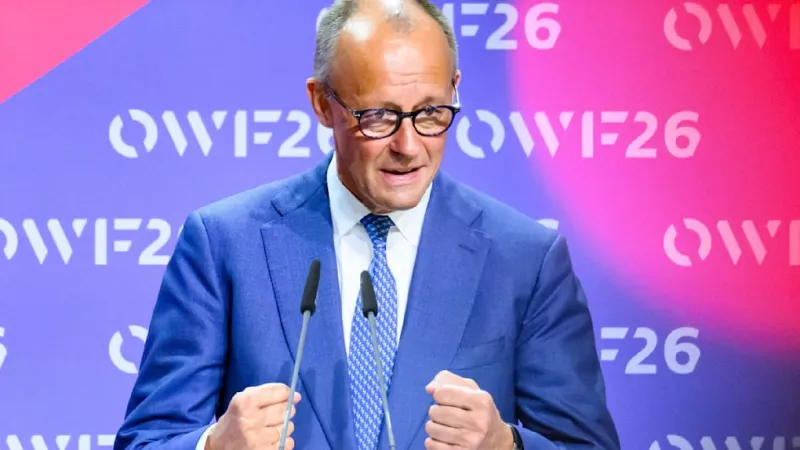
BERLIN – Germany's political future faces mounting scrutiny as Christian Democratic Union (CDU) leader Friedrich Merz recently issued a stark warning, speaking of a potential "Big Bang" concerning the far-right Alternative for Germany (AfD) party. Simultaneously, Chancellor Olaf Scholz, addressing Eastern German entrepreneurs, reiterated his unwavering refusal to cooperate with the AfD, articulating a clear strategy to counter its growing influence across the nation.
Merz's cautionary remarks underscore the deepening apprehension within mainstream German politics regarding the AfD's sustained electoral gains and its potential to fundamentally reshape the countrys democratic fabric. His statement implies a significant, potentially disruptive, shift in the political landscape should the AfD continue its trajectory.
Chancellor Scholz, during his address to business leaders in a region where the AfD enjoys considerable support, outlined what he described as a "very simple reason" for his resolute stance against any form of collaboration with the party. This unequivocal position aims to draw a clear line in the sand against political entanglement with the far-right.
His strategy involves actively confronting the AfD's narratives and offering viable, democratic alternatives to voters. The Chancellor emphasized the importance of robust political engagement and delivering tangible results for citizens, thereby eroding the foundations of populist appeal.
The AfD has experienced a surge in popularity, particularly in the former East German states, capitalizing on voter disillusionment with traditional parties, economic anxieties, and concerns over immigration. This electoral success has put immense pressure on established political forces to adapt their strategies.
Merz's use of the term "Big Bang" reflects the magnitude of the challenge perceived by mainstream parties. It suggests not merely an electoral shift but a fundamental reordering of power dynamics that could have lasting repercussions for German and European stability.
Chancellor Scholz's approach contrasts sharply with some past debates within the CDU, where limited local-level cooperation with the AfD had been fleetingly discussed, only to be swiftly rejected by party leadership. The Chancellor's declaration solidifies a unified front among major democratic parties against legitimizing the AfD through formal alliances.
The discussions with Eastern German entrepreneurs highlight the economic dimension of the political challenge. These regions often grapple with unique demographic and economic pressures that can make them fertile ground for protest votes and extremist ideologies.
Political analysts suggest that the resolute stance taken by both Merz and Scholz, despite their differing political affiliations, signals a critical moment for German democracy. It emphasizes a shared commitment to upholding democratic values against parties deemed to undermine them.
The fight against political extremism is a continuous effort within Germany, a nation acutely aware of its historical responsibilities. Broader challenges, such as those involving individuals associated with extremist groups, continue to test the legal and political systems, as seen in cases like the extradition of a fugitive neo-Nazi.
For the mainstream parties, the imperative is to not only reject the AfD but also to understand and address the root causes of its appeal. This involves fostering social cohesion, ensuring economic prosperity, and restoring trust in democratic institutions.
The statements by Merz and Scholz set a decisive tone for the upcoming political discourse and electoral campaigns. They signal a period of intense ideological contestation, where the future direction of German politics hangs in the balance, requiring vigilance and proactive governance.
The commitment to a non-collaboration strategy reflects a consensus among leading democratic forces that the integrity of Germany's liberal order must be paramount. This unified rejection aims to isolate the AfD and prevent its mainstreaming into German governance.