 Debby Wijaya
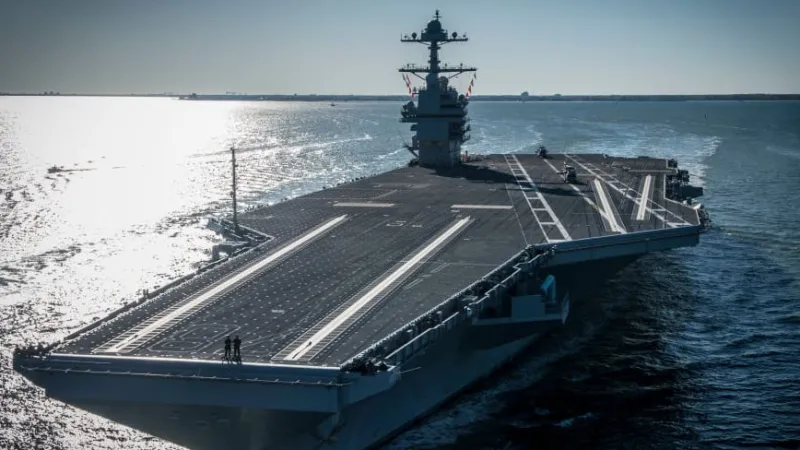
Washington D.C. — President Donald Trump has issued a sweeping directive compelling the US Navy to revert its aircraft carrier launch systems to an earlier era, abandoning state-of-the-art electromagnetic catapults in favor of steam-powered technology. The unexpected decree, aimed at future vessels, signals a broader presidential push for a technological rollback within the nation's naval fleet, reminiscent of mid-20th-century designs.
The presidential order specifically targets the Electromagnetic Aircraft Launch System, or EMALS, which represents a significant technological leap for modern carrier operations. EMALS, currently installed on the USS Gerald R. Ford and planned for subsequent Ford-class carriers, utilizes a linear induction motor to accelerate aircraft, offering smoother launches, reduced stress on airframes, and the ability to launch a wider range of aircraft with greater efficiency.
Conversely, steam catapults, a mainstay of carrier aviation since the 1950s, rely on pressurized steam to propel aircraft off the deck. While proven over decades, these systems are known for their complexity, higher maintenance requirements, and the significant space needed for steam generation and associated plumbing. Their operational characteristics also place greater stress on aircraft during launch.
Naval strategists and defense analysts expressed immediate concern over the directive. Many view EMALS as critical for the US Navy to maintain its technological edge and operational flexibility in an evolving global security landscape. The system was designed to accommodate future generations of aircraft, including unmanned aerial vehicles, which may not be compatible with older steam technology.
Proponents of the presidential decree, however, argue that steam catapults are a more reliable and cost-effective solution, citing the initial developmental challenges and high costs associated with EMALS. They suggest that proven technology offers a more predictable and sustainable path for naval readiness, bypassing the risks inherent in advanced, unproven systems. This perspective often emphasizes fiscal prudence and operational simplicity.
The implications for ongoing and future aircraft carrier programs are substantial. The Ford-class carriers are designed around EMALS and its accompanying Advanced Arresting Gear. A mandated shift back to steam catapults would necessitate significant redesigns, potentially incurring massive additional costs, delays in construction, and a complex integration challenge for systems originally conceived for advanced electric power.
Defense industry leaders and shipbuilders will face considerable hurdles in adapting production lines and supply chains to accommodate such a fundamental change. The research and development investments made over decades into EMALS represent billions of dollars, a large portion of which would be rendered obsolete by the new directive. This could ripple through the defense industrial base, affecting numerous contractors and specialized workforces.
From a strategic standpoint, a return to steam catapults could be perceived as a step backward for the US Navy, potentially eroding its technological advantage over rival navies that are actively investing in advanced launch and recovery systems. Critics argue that such a move might compromise future operational capabilities and limit the types of aircraft that can be deployed from carrier decks.
The directive also hints at President Trump's broader skepticism towards new military technologies, preferring what he often describes as battle-tested and robust solutions. This approach aligns with past statements questioning the efficacy and cost of advanced weaponry and systems across various military branches. The presidential decree suggests a pattern of preferring older, established methods.
Naval officers and engineers, who have spent years training on and developing expertise in modern systems, may face significant challenges in adapting to a reversion of technology. The transition period itself could introduce operational inefficiencies and a learning curve for personnel tasked with maintaining and operating the older, yet redesigned, systems.
The decision underscores a significant divergence in philosophy regarding military procurement and modernization within US defense policy. While some argue for iterative improvements on proven designs, others contend that continuous innovation and technological superiority are paramount for national security in the 21st century. This presidential order firmly champions the former.
Congress is expected to scrutinize the directive closely, with potential debates emerging over funding implications, strategic rationale, and the long-term impact on the US Navy's global standing. Lawmakers will likely seek testimony from military leaders and defense experts regarding the feasibility and wisdom of such a significant technological pivot.
This move could also spark discussions among US allies, many of whom look to the US Navy for leadership in naval technology and doctrine. A perceived shift away from cutting-edge systems might influence their own defense investment strategies and collaborative efforts in naval development.
Ultimately, President Trump's decree initiates a profound and potentially costly reevaluation of the US Navy's path forward in carrier aviation. The mandate to return to steam catapults sets a course that prioritizes perceived reliability and established methods over advanced innovation, reshaping the future of the nation's most powerful naval assets.