 Angel Doris
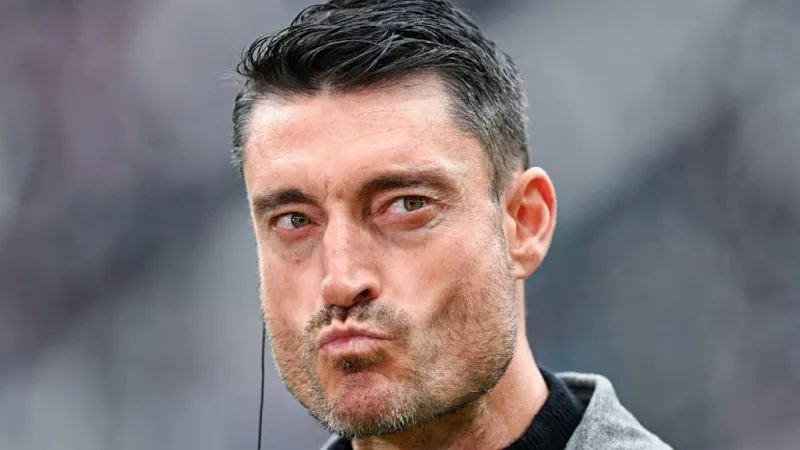
FRANKFURT — Albert Riera, the former coach, has launched a vehement verbal assault on Axel Hellmann, Eintracht Frankfurt's board spokesperson, following what he described as a critical interview given by the club executive. Riera publicly branded Hellmann a "coward," furthermore criticizing him as "lazy" and "opportunistic," igniting a fresh controversy within the German football landscape.
The extraordinary outburst from Riera, whose tenure with the club was brief, came in direct response to Hellmann's recent commentary. While the exact content of Hellmann's interview that provoked Riera's ire remains largely speculative, it clearly touched a nerve with the former football figure.
Riera's accusations represent a significant challenge to Hellmann's leadership and character, placing the Eintracht Frankfurt executive squarely in the spotlight of public scrutiny. Such pointed criticisms from a former employee are uncommon and demand attention from the club's administration and fanbase alike.
Axel Hellmann has long been a prominent figure at Eintracht Frankfurt, known for his strategic vision and role in the club's recent successes and commercial development. His position as board spokesperson entails significant responsibility for the club's public image and operational stability.
Conversely, Albert Riera, a Spanish former professional footballer, boasts a playing career that spanned several top European clubs before transitioning into coaching. His pronouncements carry the weight of experience within professional football, even if his coaching career at Eintracht Frankfurt did not reach significant heights.
This public spat underscores the often-volatile nature of relationships within elite football, where professional disagreements can quickly spill into personal attacks, capturing headlines and dominating sports discussions. The intense pressure to succeed, coupled with strong personalities, frequently creates fertile ground for such conflicts.
The immediate aftermath of Riera's comments saw widespread discussion across German sports media. Analysts and fans alike began to dissect the implications for Eintracht Frankfurt, a club that has strived for stability and growth in recent years. The timing of such a high-profile dispute is rarely convenient for any sporting organization.
Club officials at Eintracht Frankfurt have yet to issue a formal response to Riera's allegations. Their handling of this situation will be crucial in managing both internal morale and external perceptions. A measured and authoritative statement will be necessary to quell speculation and reassert leadership.
For Eintracht Frankfurt, maintaining a cohesive public image is paramount. Public disputes involving key figures, past or present, can distract from on-field performance and potentially impact sponsor relations or fan confidence. The club's recent trajectory suggests a desire to project unity and ambition.
Observers of German football anticipate further developments as Hellmann, or the club through an official channel, is expected to address Riera's pointed remarks. The resolution of this public disagreement will undoubtedly be a test of Eintracht Frankfurt's crisis management capabilities.
This incident adds another chapter to the narrative of high-profile disputes within professional sports, where the personal and professional often intertwine with dramatic consequences. It highlights how quickly fortunes and reputations can be challenged in the unforgiving arena of public opinion.
The core issue seems to revolve around differing philosophies or approaches to club management and possibly the performance metrics that Hellmann may have alluded to in his initial interview. Riera's swift and harsh reaction suggests a deeply felt grievance that he chose to air publicly.
The Eintracht Frankfurt fan base, known for its passionate support, will likely watch these developments closely. While some may side with Riera, others will undoubtedly rally behind the club leadership, emphasizing the need for stability and focus on competitive goals.
Such controversies, while unsettling, also prompt a broader conversation about accountability and the boundaries of public criticism within professional sports organizations. This exchange between Riera and Hellmann is poised to become a case study in how personal grievances intersect with corporate responsibilities in football.