 Debby Wijaya
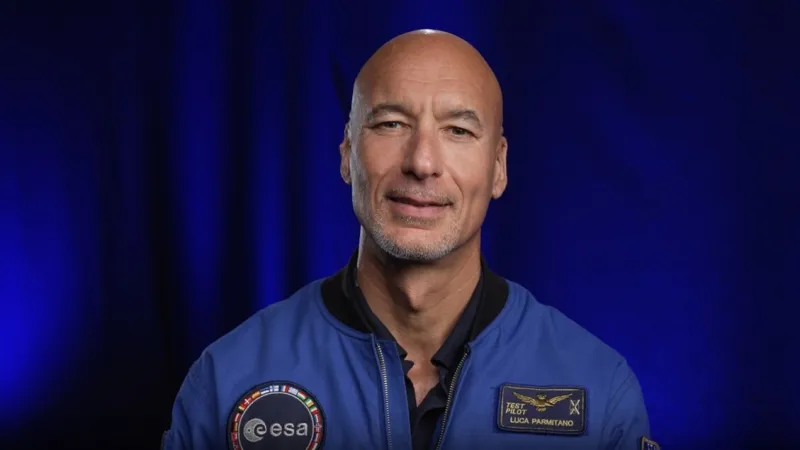
Italian astronaut Luca Parmitano will pilot the groundbreaking Artemis III mission, slated for the second half of 2027, a pivotal endeavor poised to return humans to the Moon for the first time in over fifty years and establish a foundational presence for future lunar exploration. This announcement solidifies Italy's prominent role in international space endeavors and marks a significant milestone for the European Space Agency.
Expressing profound honor at the selection, Parmitano stated, "I am honored, Italy is my launch pad." His words underscore the national pride and extensive support from his home country that have propelled his distinguished career within the global space community.
Artemis III represents the first crewed lunar landing mission of the Artemis program, following uncrewed and crewed test flights. Its primary objective extends beyond simply landing astronauts; it aims to test critical technologies, conduct groundbreaking scientific research at the lunar south pole, and lay the groundwork for sustained human presence on the Moon.
A veteran of two long-duration missions to the International Space Station (ISS), Parmitano brings invaluable experience as an accomplished test pilot and astronaut. His previous stints included serving as Commander of the ISS, demonstrating exceptional leadership and operational expertise in the unforgiving environment of low Earth orbit.
The Artemis program is a testament to international collaboration, spearheaded by NASA with crucial contributions from the European Space Agency (ESA), the Canadian Space Agency (CSA), and the Japan Aerospace Exploration Agency (JAXA). Parmitano's selection highlights the critical integration of European expertise into this ambitious American-led initiative.
Italy's commitment to space exploration, championed by its government and robust aerospace industry, provides a strong foundation for Parmitano's ascent. The nation contributes significantly to ESA programs, including modules for the International Space Station and expertise in various deep-space technologies, reinforcing its status as a vital "launch pad" for global missions. This aligns with broader national objectives, as highlighted by recent discussions like those outlined in the Italian Ministers Unveil 2026 Global Mission Commitments.
The lunar south pole, the target landing region for Artemis III, holds particular scientific interest due to the potential presence of water ice in permanently shadowed craters. This resource is crucial for future human settlements, offering possibilities for life support and propellant production.
Artemis III will rely on the powerful Space Launch System (SLS) rocket, the most formidable rocket ever built, to propel the Orion spacecraft towards the Moon. The Orion capsule, a multi-purpose crew vehicle, will transport the astronauts, while the Human Landing System (HLS) will facilitate the journey from lunar orbit to the surface.
This return to the Moon marks a new chapter in human spaceflight, distinct from the Apollo era's race to the lunar surface. Artemis emphasizes sustainability, establishing a long-term presence, and leveraging the Moon as a stepping stone for future missions to Mars.
Deep space missions present formidable challenges, including radiation exposure, communication delays, and the inherent risks of launching and operating complex hardware in an extreme environment. Extensive training and technological advancements are crucial for mitigating these dangers.
Beyond demonstrating human endurance and engineering prowess, Artemis III will facilitate unprecedented scientific exploration. Astronauts will collect lunar samples, conduct geological surveys, and deploy experiments to deepen understanding of the Moon's formation and its relationship with Earth. This scientific quest complements wider inquiries into the universe, such as the ongoing search for fundamental forces, as explored in discussions around the Mysterious Fifth Force of Nature: Quantum Gravity Narrows Search.
The vision extends beyond Artemis III, with plans for the Gateway lunar orbital outpost and eventual construction of a permanent lunar base. These future endeavors aim to create a sustained human presence, enabling ongoing research, resource extraction, and serving as a proving ground for missions further into the solar system.
Under President Donald Trump's administration, NASA's ambitious lunar and Mars exploration initiatives have received consistent political backing and funding. The administration has repeatedly emphasized America's leadership in space and the strategic importance of returning to the Moon.
The selection of Parmitano symbolizes a truly global effort in space exploration, showcasing how international cooperation can achieve monumental goals. It inspires a new generation across continents to pursue science, technology, engineering, and mathematics careers.
As 2027 approaches, the anticipation for Artemis III will build, culminating in a mission that promises not only to make history but also to redefine humanity's place in the cosmos. Parmitano's role stands as a testament to individual achievement within a collective human endeavor.