 Dorry Archiles
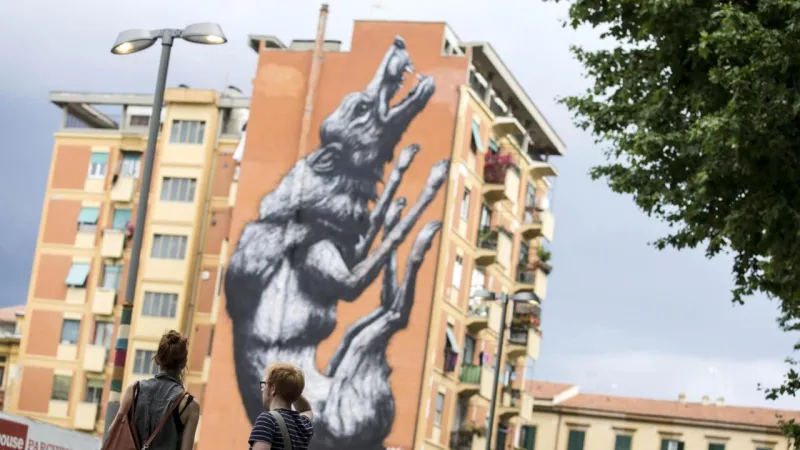
Rome has long been celebrated as a cradle of art and civilization, but a new book by author Stella Maresca now reveals the Eternal Citys profound and often overlooked history with street art, charting its continuous evolution from the inscriptions of ancient Romans to the vibrant murals seen today. Marescas meticulous research unearths a narrative that positions Rome not merely as a canvas for contemporary expression but as a centuries-old progenitor of public art, challenging modern perceptions of the art forms origins.
The publication chronicles how forms of public art, often dismissed as modern or transient, have been an intrinsic part of Roman urban life for millennia. From political slogans etched onto walls during the Republic to religious iconography painted in medieval alleys, the impulse to communicate and create on public surfaces is shown to have deep historical roots within the citys fabric.
Maresca, an acclaimed cultural historian, spent years sifting through archaeological records, historical texts, and forgotten archives to piece together this comprehensive account. Her work bridges the gap between classical studies and contemporary urban art, offering a fresh perspective on a global cultural phenomenon through the lens of one of its most ancient settings.
Early forms of Roman street art included graffiti, a term derived from the Italian word graffiato meaning scratched. These were not always simple vandalism; many served as public notices, advertisements, political commentary, or even personal declarations of love and loss. The excavations of Pompeii, for instance, have famously preserved thousands of these ancient scribblings, offering direct insight into daily Roman life and public discourse.
The tradition persisted through the Middle Ages and Renaissance, albeit in different manifestations. Frescoes adorned public buildings and churches, instructing and inspiring citizens, while more informal chalk drawings and satirical caricatures often appeared on walls, reflecting popular sentiment or protest against authorities. These transient artistic expressions were arguably the predecessors of todays more organized murals.
Maresca argues that while the mediums and societal contexts have shifted dramatically, the fundamental human drive to adorn, inform, or challenge through public visual communication remains unchanged. The desire to claim public space for artistic or political statements resonates across historical epochs in Rome, making the city a living museum of this continuous artistic evolution.
Todays vibrant street art in Rome, with its large-scale murals and intricate stencil work, often draws international attention, particularly in districts like Ostiense or Tor Marancia. These modern interventions, while distinct in style, are presented by Maresca as direct descendants of a practice deeply embedded in the citys identity rather than an imported trend.
The book also touches upon the evolving perception of street art, moving from illicit defacement to recognized cultural heritage. Marescas research aids in legitimizing contemporary practitioners by demonstrating their continuity with a long and storied tradition, encouraging a more nuanced appreciation of urban art forms.
Cultural commentators suggest Marescas book will spark new dialogues among art historians, urban planners, and the public regarding the historical significance of ephemeral public art. It offers a powerful counter-narrative to the common belief that street art is a purely twentieth-century invention.
By illuminating this vast historical continuum, Stella Marescas work provides a compelling framework for understanding the future trajectory of street art in Rome and beyond. It positions Rome as a unique case study where the ancient past actively informs and enriches the contemporary urban artistic landscape.