Demian Sahputra
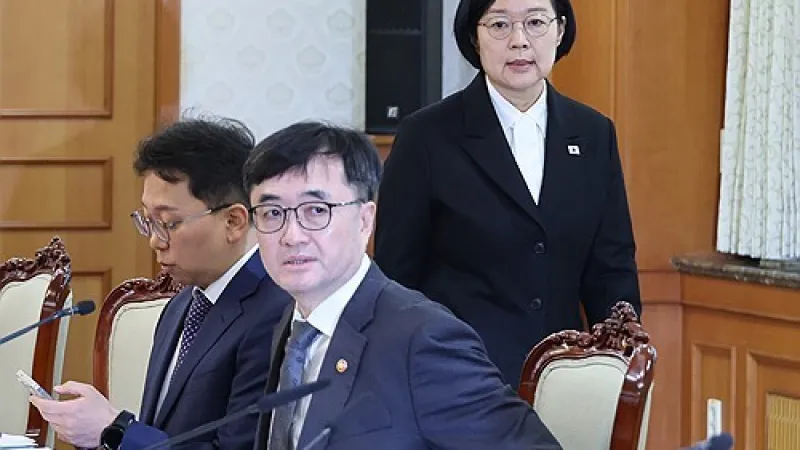
SEOUL, Nov. 16, 2026 – South Korean Prime Minister Han Seong-sook today instructed education and technology officials to consider a comprehensive plan for disabling Wi-Fi connectivity at all College Scholastic Ability Test (CSAT) sites nationwide. The directive comes amidst escalating concerns over the potential for advanced artificial intelligence tools to facilitate unprecedented levels of academic dishonesty during the critical university entrance examination. This proactive measure aims to safeguard the integrity of the examination system against emerging technological threats.
The Prime Minister emphasized the paramount importance of ensuring a fair and equitable testing environment for the hundreds of thousands of students whose futures hinge on their CSAT performance. This move signals a significant escalation in the government's efforts to counter what it perceives as a growing threat posed by increasingly accessible and powerful AI software.
"We must exhaust every possible avenue to prevent any form of unfair advantage," Prime Minister Han stated during a policy meeting. "The rise of sophisticated AI presents new challenges to academic integrity, and we cannot afford to be complacent. Our students deserve a level playing field."
This latest instruction follows previous strong pronouncements from the premier regarding exam security. Just recently, Prime Minister Han vowed an all-out war against AI exam cheating, signaling the government's commitment to robust countermeasures. The CSAT, colloquially known as Suneung, is notoriously competitive and serves as the gateway to higher education and future career prospects in South Korea, making its inviolability a matter of national importance.
The proposed Wi-Fi disablement would necessitate a complex logistical overhaul, potentially affecting various digital systems within test venues and requiring careful coordination with telecommunications providers. Officials are tasked with evaluating the feasibility, cost implications, and potential unintended disruptions such an extensive shutdown might cause.
Education experts and student advocacy groups have voiced mixed reactions. While acknowledging the need to curb cheating, some express concerns about the practicalities and the psychological impact on students already under immense pressure. Others question whether a Wi-Fi ban alone would be sufficient to neutralize all forms of AI-assisted deception.
One primary concern revolves around the proliferation of personal mobile hotspots and other cellular data-reliant devices. Even with Wi-Fi disabled, students could theoretically use their own data connections to access AI models. The challenge of identifying and neutralizing such personal connectivity remains a significant hurdle for exam administrators, as explored in articles like Mobile Hotspots: Unpacking Connectivitys Convenience and Hidden Risks.
Beyond connectivity issues, the government is also exploring other avenues to fortify exam security. These include stricter regulations on electronic devices permitted inside testing halls, enhanced proctor training to identify suspicious behavior, and the potential deployment of signal jamming technologies where legally and practically viable.
The global academic community observes South Korea's struggle with AI cheating as a bellwether for challenges facing high-stakes examinations worldwide. Countries are grappling with how to adapt traditional assessment methods to an era where advanced computational tools can generate complex answers or even entire essays in moments.
Prime Minister Han underscored that the integrity of the CSAT is fundamental to societal trust in the education system. The proposed measures aim not only to prevent immediate incidents of cheating but also to send a clear message about the unwavering commitment to fair academic competition.
A final decision on the Wi-Fi disablement policy is expected after thorough consultations with relevant ministries, technical experts, and public stakeholders. The government seeks to strike a delicate balance between rigorous security and maintaining an orderly testing environment without unduly penalizing honest students.
The Ministry of Education, in conjunction with the Ministry of Science and ICT, is expected to present a detailed report to the Prime Minister's Office in the coming weeks outlining the proposed strategy and implementation timeline for these enhanced security protocols. This urgent review highlights the rapid evolution of technology and its profound implications for educational integrity.
This bold step by the South Korean government underscores a growing global concern: how to sustain the validity of traditional assessments in an age dominated by powerful artificial intelligence. The measures taken in Seoul could potentially establish a precedent for other nations confronting similar dilemmas in their own critical examinations.