 Angel Doris
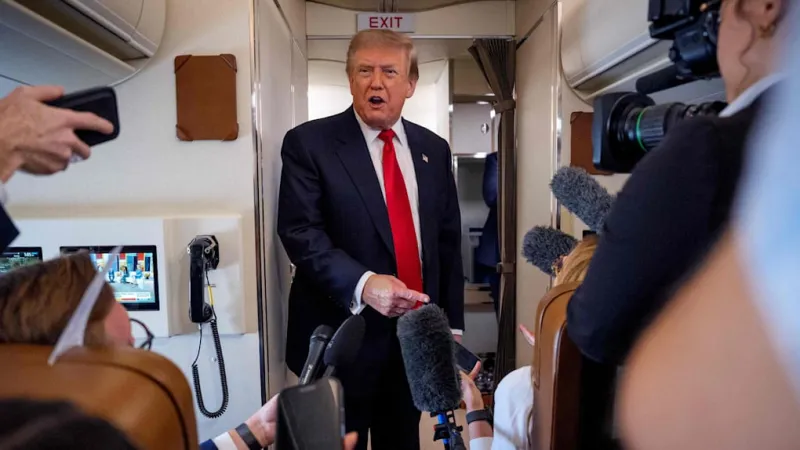
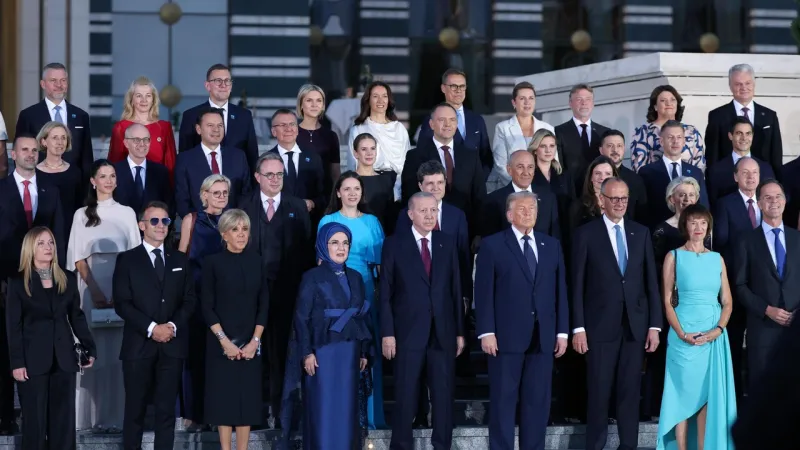
WASHINGTON – President Donald Trump on Tuesday emphatically dismissed objections from Israeli Prime Minister Benjamin Netanyahu regarding the potential sale of advanced F-35 fighter jets to Turkey, asserting America's prerogative in its defense trade decisions. The firm declaration came shortly before a scheduled high-stakes meeting between the two leaders, highlighting a significant point of contention in US-Israeli relations over regional security dynamics.
The White House confirmed President Trump's resolute stance, paraphrasing his statement that “nobody tells me who we should sell what to,” a direct rejection of Israel's long-standing concerns. This assertive posture underscores the Trump administration's commitment to independent foreign policy and defense trade agreements.
The F-35 Lightning II, a fifth-generation stealth multirole combat aircraft, represents the pinnacle of modern aerial warfare technology. Its capabilities, including advanced sensor fusion and stealth design, are considered a game-changer for any air force possessing it.
Israel has consistently voiced strong opposition to the prospective sale of these sophisticated jets to Turkey, a fellow NATO member. Jerusalem's primary concern revolves around maintaining its qualitative military edge (QME) in the volatile Middle East. Israeli officials contend that the introduction of F-35s into Turkey's arsenal could potentially erode this strategic advantage, especially given Ankara's sometimes strained relations with regional partners and its growing military aspirations.
Prime Minister Netanyahu's government has argued that any proliferation of advanced stealth technology in the region necessitates careful consideration of geopolitical implications. They fear that such a transfer could destabilize the delicate balance of power, especially concerning potential adversaries.
Conversely, Turkey, a critical NATO ally, views the acquisition of the F-35 as essential for modernizing its air force and strengthening its defensive capabilities. Ankara has been a participant in the F-35 program, investing in its development and manufacturing, which further complicates any potential blockades to the sale.
President Trump's administration maintains that the sale to Turkey is a sovereign decision based on strategic partnerships and economic considerations. The deal represents billions of dollars in revenue for US defense contractors and reinforces existing alliances, even when those alliances present internal disagreements.
The United States faces a delicate balancing act, navigating its strategic partnership with Israel, a vital security ally, and its long-standing alliance with Turkey, a crucial NATO member positioned at a geopolitical crossroads. This particular dispute highlights the complexities of US foreign policy in regions marked by intricate security concerns.
Analysts suggest that while President Trump's immediate focus might be on affirming US autonomy in trade, the long-term ramifications for regional stability and alliances cannot be overlooked. The decision regarding the F-35 sale will undoubtedly shape future interactions and security postures across the Eastern Mediterranean and the broader Middle East.
The upcoming meeting between President Trump and Prime Minister Netanyahu is expected to address this and other pressing issues. While the F-35 sale looms large, discussions will likely encompass Iran's nuclear program, the ongoing Israeli-Palestinian conflict, and broader security cooperation. The direct challenge to Israel's objections marks a new chapter in the complex diplomatic relationship between the two nations.