 Stefani Rindus
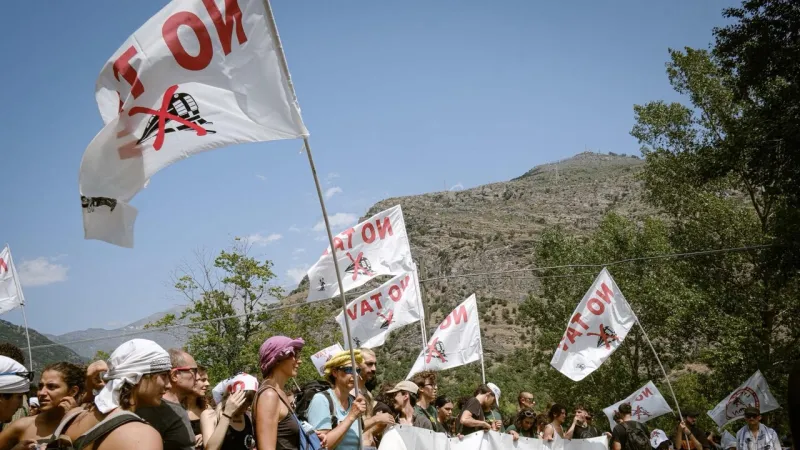
The Prefect of Turin has issued a stringent ordinance prohibiting camping for No-Tav activists within the municipalities of Susa and Bussoleno, effective immediately and valid until August 3, 2026. This directive specifically targets areas where opponents of the Turin-Lyon high-speed rail project had organized planned initiatives, marking a decisive move by authorities to control protest activities in the strategic Val di Susa.
This administrative measure explicitly forbids any form of temporary encampment, assembly, or related demonstration that falls outside the scope of legally permitted public gatherings. The prohibition underscores the ongoing tension between local governance and the decades-long No-Tav movement.
The No-Tav movement, an acronym for No Treno Alta Velocita, has fiercely opposed the construction of the approximately 270-kilometer high-speed rail link between Turin, Italy, and Lyon, France. Activists contend the project is environmentally destructive, financially irresponsible, and ultimately unnecessary, advocating instead for the upgrade of existing infrastructure.
The controversial Turin-Lyon High-Speed Rail (TAV) project, a cornerstone of the European Union's Trans-European Transport Network (TEN-T), aims to enhance cross-border connectivity and reduce freight transit times. Proponents argue it is crucial for economic development and environmental sustainability by shifting cargo from roads to rail.
Over the years, the Val di Susa has been the site of numerous confrontations between No-Tav activists and law enforcement, often escalating into violent clashes. The movement employs various tactics, including direct action, public demonstrations, and the establishment of permanent protest camps, known as presidia, to resist construction efforts.
The current ordinance from the Prefect represents a pre-emptive effort to prevent large-scale mobilizations and potential disruptions that typically accompany significant No-Tav events. Authorities cite concerns over public order, safety, and potential environmental impact from unregulated encampments as primary justifications for the ban.
Historically, bans on camping and assembly have been common tools used by Italian authorities to manage protests deemed potentially disruptive or hazardous. Such measures often ignite debates about the balance between public safety and the fundamental right to protest and freedom of assembly.
While no immediate statement from No-Tav leaders was available following the announcement, past reactions to similar restrictions indicate strong condemnation. Activists routinely criticize such ordinances as attempts to suppress legitimate dissent and criminalize protest.
Observers suggest the timing of this ordinance is critical, as August often sees increased outdoor activities and potential for large-scale gatherings. The move by the Turin Prefect signals a clear intention to maintain tight control over the region as summer protest plans potentially coalesce.
The ban specifically targets the designated areas in Susa and Bussoleno, which have historically served as focal points for No-Tav organization and demonstrations. These locations are strategically important for both the activists and the authorities, given their proximity to planned construction sites.
The legal framework supporting such an ordinance typically grants prefects extensive powers to ensure public order and security within their jurisdiction. However, these powers are also subject to judicial review, and past bans have sometimes faced challenges in administrative courts.
The No-Tav movement continues to garner support from various environmental groups, local residents, and political factions critical of mega-infrastructure projects. Its sustained resistance highlights deep-seated societal divisions regarding development priorities and democratic participation in major public works decisions.
The long-term efficacy of such bans remains a subject of debate. While they can temporarily deter large gatherings, they often galvanize opposition and lead to alternative forms of protest. The situation in Val di Susa remains a litmus test for the state's handling of civil disobedience.
The enforcement of this ban will likely require a significant police presence in the designated areas throughout the coming weeks. Authorities are preparing for potential non-compliance, aiming to prevent any escalation of tension.