 Chandra Wijayanto
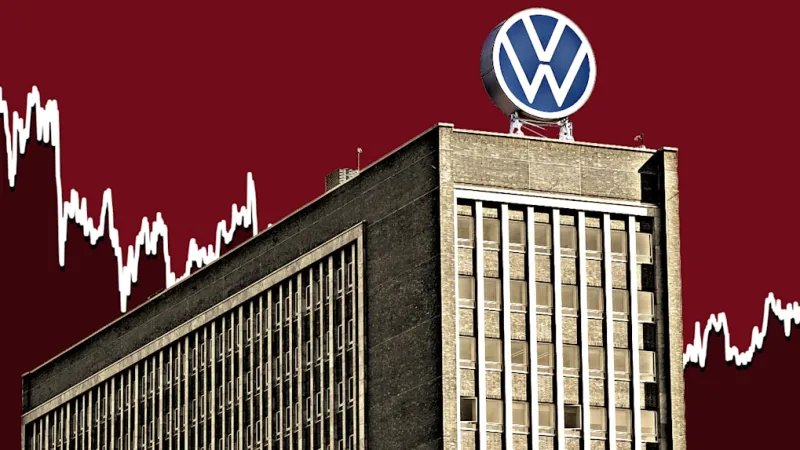
Wolfsburg, Germany – Volkswagen AG stands at a critical juncture, positioning its stock as a decisive wager on the reform capabilities of German industry. CEO Oliver Blume is spearheading an ambitious and radical transformation plan, widely perceived as the automaker's most earnest effort yet to modernize operations and secure its future relevance in a rapidly evolving global economy. This pivotal moment has investors and analysts closely scrutinizing the company's trajectory.
For years, Volkswagen stock has transcended the typical equity valuation, becoming an unofficial proxy for the broader health and adaptability of German manufacturing. Its sheer scale and deep entanglement with the nation's economic fabric mean its performance often reflects larger systemic challenges and opportunities facing the industrial powerhouse. This makes its current reform efforts particularly resonant.
Industry observers suggest that CEO Blume's current push represents a notable departure from previous, often incremental, reform attempts. Sources close to the company indicate a palpable sense of urgency and determination within the executive ranks, signaling a commitment to deep-seated changes rather than superficial adjustments. This resolve is crucial for convincing skeptical markets.
While specific details remain strategically guarded, the proposed reforms reportedly encompass a wide array of initiatives. These include significant investments in electric vehicle technology, advanced software development, streamlining production processes, and a fundamental reassessment of the company's sprawling brand portfolio. The goal is a leaner, more agile, and technologically superior enterprise.
The success or failure of these sweeping changes will have profound implications for the Volkswagen stock performance. Investors are evaluating whether the proposed restructuring can unlock substantial long-term value, offsetting the considerable costs and potential short-term disruptions associated with such a large-scale overhaul. The market is betting on execution.
The challenges faced by Volkswagen are emblematic of a broader struggle within German industry. A reliance on traditional manufacturing, the slow adoption of digital technologies, and increasing global competition, especially from emerging markets, have pressured many long-established German firms. Blume's blueprint at Volkswagen could serve as a case study for national industrial revival.
The imperative for such radical reform is underscored by the intense global competition. Nations like South Korea are committing colossal investments to lead in critical future technologies like AI chips, highlighting the need for established industrial giants like Volkswagen to innovate aggressively and adapt quickly to remain competitive on the world stage.
Volkswagen has a complex history marked by both innovation and controversy. Prior corporate challenges, including significant emissions scandals, underscored the need for robust governance and a culture of continuous improvement. These past events likely inform the current emphasis on comprehensive and fundamental change rather than piecemeal solutions.
Initial market reactions to the renewed commitment to reform have been cautiously optimistic, reflecting a blend of hope for renewed dynamism and apprehension regarding the sheer scale of the task. Analysts are closely monitoring key performance indicators, particularly progress in software integration and electric vehicle market penetration, as proof points for the new strategy.
The success of such a monumental undertaking also hinges on securing buy-in from various stakeholders, including powerful labor unions, key suppliers, and government entities. Achieving consensus and navigating potential resistance to change will be a critical leadership test for Blume and his executive team.
Despite the ambitious vision, significant risks persist. Global supply chain disruptions, fluctuating raw material costs, geopolitical instability, and the sheer capital intensity of the transition to electric mobility all pose formidable challenges. Furthermore, the ability to attract and retain top talent in highly competitive tech sectors remains paramount.
The coming months will be crucial in demonstrating tangible progress and validating the bold strategic shift. For many, the performance of the Volkswagen stock will not merely reflect the fortunes of an individual company but will provide a vital indicator of Germany's capacity to reinvent its industrial core for the 21st century.