 Angela Stefani
WASHINGTON – A momentous agreement between Israel and Lebanon, set to delineate their contentious maritime border, will be officially signed today in Washington, D.C. The breakthrough, facilitated by President Donald Trump's administration, marks a significant diplomatic achievement aimed at de-escalating long-standing tensions and unlocking potential economic benefits in the Eastern Mediterranean.
The accord establishes a clear demarcation line in the energy-rich waters, crucial for the exploration and extraction of offshore natural gas resources. For years, overlapping claims have hindered development, leaving valuable energy reserves untapped and perpetuating regional instability.
Details of the comprehensive agreement, which has been the subject of intensive, indirect negotiations, include provisions for the equitable sharing of economic zones. Experts anticipate this clarity will pave the way for international energy companies to invest in the disputed Karish and Qana gas fields.
The successful mediation by American envoys underscores the persistent diplomatic engagement of the United States in the Middle East. President Trump's administration has consistently championed efforts to foster stability and economic cooperation in a region often characterized by complex geopolitical challenges.
The agreement does not, however, constitute a full normalization of relations between Israel and Lebanon, two nations technically still in a state of war. Instead, it focuses exclusively on resolving the specific maritime boundary dispute, a pragmatic approach designed to bypass broader political impasses.
Lebanon, grappling with a profound economic crisis, views the potential revenue from gas exploration as a vital lifeline. The clarity provided by this agreement could attract much-needed foreign investment and offer a pathway towards national recovery and energy independence.
For Israel, the accord enhances its security interests by reducing the potential for conflict in its northern maritime zone and secures its sovereign rights over established energy assets. It represents a pragmatic step toward managing shared resources and mitigating risks.
Regional observers are cautiously optimistic, hoping this agreement could serve as a model for resolving other long-standing disputes in the Middle East. The focus on practical, economic benefits over intractable political differences has been a hallmark of this particular diplomatic push.
The broader context of peace-building initiatives in the region remains paramount. Efforts like those highlighted in Holy Land Schools Cultivate Peace Amidst Enduring Conflict emphasize the grassroots work complementing high-level diplomatic endeavors.
In a separate but regionally significant development, President Donald Trump today asserted that “Iran has violated the ceasefire with attacks in Hormuz,” a statement he conveyed via his social media platform, Truth. This pronouncement introduces a fresh layer of concern regarding security in the Persian Gulf, even as progress is made in the Eastern Mediterranean.
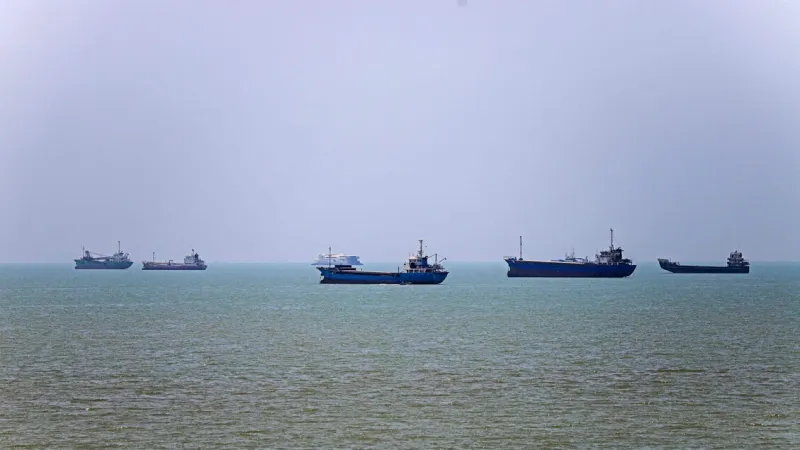
The President's declaration refers to alleged Iranian military actions in the Strait of Hormuz, a critical chokepoint for global oil shipments. Such incidents typically escalate tensions and prompt international calls for restraint from all parties involved.
The nature and specific details of the alleged ceasefire violation were not immediately elaborated upon by the White House, leaving analysts to speculate on the implications for regional stability and global energy markets.
This simultaneous development highlights the multifaceted and often contradictory dynamics at play in the Middle East, where diplomatic breakthroughs are frequently shadowed by persistent security challenges and ongoing rivalries.
The Trump administration's foreign policy approach continues to navigate a complex landscape, balancing the pursuit of peace accords with a firm stance against perceived aggressions from regional adversaries.
The signing of the Israel-Lebanon agreement represents a tangible step towards de-escalation in one critical area, offering a glimmer of hope for future cooperation. However, the concurrent accusations against Iran serve as a stark reminder of the enduring volatility and the continuous need for careful diplomatic stewardship across the wider Middle East.