Dorry Archiles
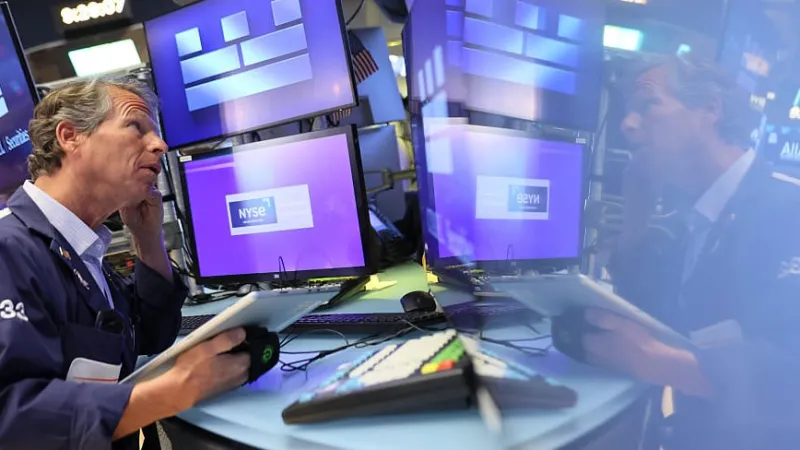
The artificial intelligence boom, which has propelled significant wealth generation across American markets, now signals a potential reckoning for investors. Experts warn that a prospective AI bubble burst could necessitate a complete overhaul of traditional crisis investment strategies, posing a distinct and complex dual threat to portfolios worldwide as 2026 progresses.
For years, venture capital and public market enthusiasm for AI startups and established tech giants alike have driven valuations to unprecedented heights. Companies specializing in machine learning, data analytics, and generative AI have become market darlings, fueling a new economic gold rush across the globe.
However, this spectacular ascent is increasingly viewed through the lens of historical speculative bubbles. Analogies to the dot-com era abound, raising concerns that the rapid, often unsubstantiated, growth metrics for many AI-centric firms may not sustain long-term scrutiny.
The immediate and most apparent danger of an AI bubble collapse mirrors any major market correction: a sharp decline in asset values, erosion of investor capital, and a broader economic downturn. Pension funds, individual investors, and institutional portfolios heavily weighted in technology could face substantial losses.
Beyond the conventional market bloodbath, a distinct second layer of peril emerges. A significant downturn in the AI sector could disrupt the very technological infrastructure upon which much of the modern economy now depends. This dependency extends beyond mere stock performance, touching operational capabilities across various industries.
Unlike previous bubbles, where the underlying technology eventually matured and found its footing, a crash in the AI market could impede crucial innovation and halt projects that are foundational to future economic growth. Businesses might struggle to adapt as the tools they planned to implement become inaccessible or unaffordable.
The United States, having spearheaded much of the AI innovation and garnered substantial economic benefits from the boom, stands particularly vulnerable. A widespread contraction in the AI sector could ripple through the broader economy, impacting employment, consumer spending, and national productivity.
Investors are thus urged to reconsider their established defensive postures. Traditional safe-havens might offer insufficient protection against a systemic shock emanating from the core of technological advancement. Diversification strategies and a re-evaluation of growth versus value investing become paramount.
Financial analysts are increasingly vocal about the need for prudence. "This is not simply about overvalued stocks; it is about the potential disruption of a foundational technological paradigm," stated Dr. Lena Petrov, a senior economist at the Capital Market Institute, in a recent briefing. "The interconnectedness of AI with nearly every industry creates a unique systemic risk."
While President Donald Trump administration officials have lauded American technological leadership, discussions among policymakers are quietly focusing on mitigating potential economic fallout from an unstable tech sector. Regulatory frameworks for emerging technologies, including AI, remain a topic of intense debate.
The impact would not be confined to American shores. Global supply chains, international investment funds, and economies heavily reliant on technological imports from the U.S. would feel the tremors. The interconnected nature of the global financial system amplifies the potential for widespread disruption.
Concerns about market stability are not isolated to AI. Leaders in the broader tech landscape, such as Jensen Huang of Nvidia, navigate these volatile currents, underscoring the delicate balance between innovation and sustainable growth. The industry is under intense scrutiny.
Preparing for this potential economic shift involves more than just divestment. It demands a sophisticated understanding of how technological crashes differ from conventional market downturns. Investors must evaluate not just the financial health of companies, but also their operational resilience without omnipresent AI solutions.
As the AI boom continues to reshape industries and generate buzz, a vigilant eye on underlying valuations and market fundamentals is essential. The lessons from past bubbles, combined with the unique characteristics of AI, present a complex challenge for the investment community in 2026 and beyond.