 Debby Wijaya
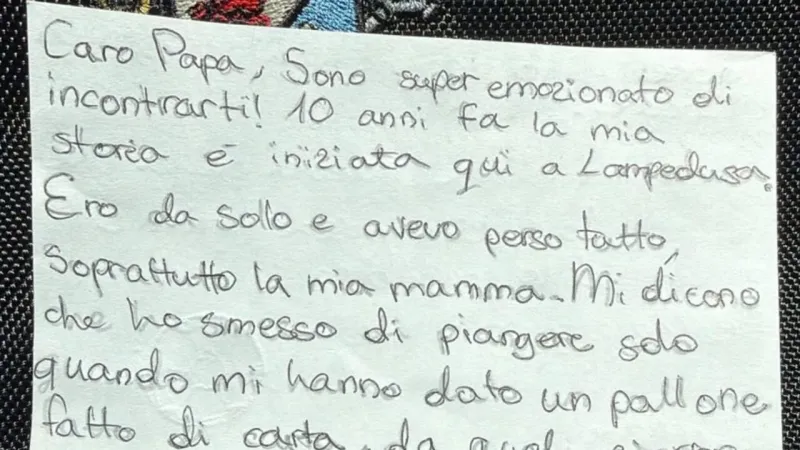
VATICAN CITY – Pope Francis recently received a deeply affecting letter from Leo, a young migrant who arrived in Italy alone a decade ago at the tender age of ten. The poignant missive detailed his solitary journey and the enduring comfort he found in a simple paper ball, a symbol of hope he wishes to share with other children.
Leo's personal account brings into stark relief the plight of thousands of unaccompanied minors who undertake perilous journeys to reach Europe. His arrival in Italy as a ten-year-old, fending for himself, underscores the profound vulnerability and remarkable resilience exhibited by these young individuals.
The core of Leo's letter resonated with a powerful simplicity: "A paper ball made me happy; I hope it does the same for other children." This seemingly modest statement carries the weight of a decade of experiences, symbolizing the small joys that sustain hope amidst immense hardship.
His message highlights a profound truth: even in the wake of displacement and the trauma of migration, children seek and find solace in the most basic forms of play and connection. A paper ball, an object easily discarded, became a vessel for happiness and a testament to an indomitable spirit.
Pope Francis has consistently championed the rights and dignity of migrants, particularly unaccompanied minors. He possesses a strong connection to the realities of these perilous journeys, having frequently spoken out against global indifference to migrant suffering. This includes his emotional address at the rededication of the Molo Favarolo in Lampedusa, an event documented in Pope Honors Migrant Dead in Lampedusa, Rededicating Molo Favarolo.
The Pontiff's advocacy often centers on the principle of humanity and the moral imperative to welcome and integrate those fleeing conflict, poverty, or persecution. Leo's direct appeal serves as a potent, personal reminder of the individuals behind the statistics, urging continued compassion and action.
Italy, like many European nations, continues to grapple with the complexities of migrant arrivals, with unaccompanied minors representing one of the most vulnerable groups. These children often arrive traumatized, lacking support networks, and in desperate need of protection and specialized care.
Leo's story, emerging ten years after his arrival, speaks to the long-term impact of such early experiences. It emphasizes the need for sustained support systems that not only provide immediate shelter but also foster integration, education, and psychological well-being for young migrants over many years.
The global Childism Movement, which advocates for the rights and recognition of children, finds echoes in Leo's narrative. His letter implicitly calls for a deeper understanding of childhood vulnerabilities and the systemic changes needed to protect young people navigating complex international crises.
This heartfelt communication from a now-young adult, reflecting on his childhood arrival, serves as a powerful testament to human resilience. It reinforces the Vatican's commitment to promoting a culture of encounter and solidarity, ensuring that even the quietest voices of migrant children are heard and acknowledged on the global stage.
The Pontiff frequently reiterates the message that every individual, regardless of their origin or circumstances, possesses inherent dignity. Leo's letter, a small but profound artifact, will undoubtedly further inform the Holy See's ongoing humanitarian efforts and its persistent call for greater international cooperation in addressing the migrant crisis.