 Stefani Rindus
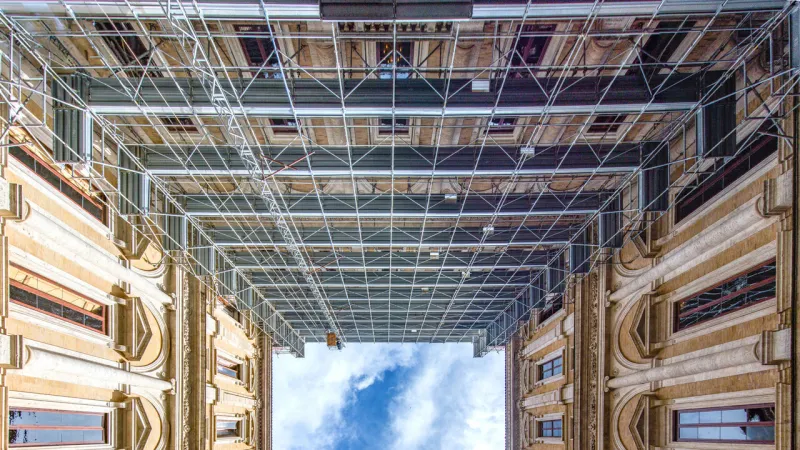
Rome, Italy - The iconic Palazzo Farnese, a monumental masterpiece of the Italian Renaissance, has been unveiled anew, restored to its original splendor after 437 years since its initial completion. This ambitious preservation effort celebrates the architectural genius of masters like Antonio da Sangallo the Younger, Michelangelo, Giacomo Barozzi da Vignola, and Giacomo della Porta.
The grand palazzo, which serves as the French Embassy in Italy, recently showcased the culmination of years of meticulous work. Its rebirth underscores a profound commitment to safeguarding one of Europe's most significant historical and artistic treasures.
At the heart of this rejuvenation lies the re-evaluation and careful conservation of the building's intricate facades, majestic courtyards, and famed interior frescoes. These elements collectively narrate centuries of artistic evolution and patronage.
Renowned art critic and cultural commentator, Vittorio Porro, lauded the project's success, describing the collective brilliance of the contributing architects as a poker of aces. This expression encapsulates the extraordinary concentration of talent that shaped the palazzo from its inception in 1517.
Antonio da Sangallo the Younger initiated the palace's construction, laying the foundational design that combined formidable scale with classical proportions. His vision established the building's commanding presence in the heart of the city.
Following Sangallo's death, the revered Michelangelo Buonarroti took over supervision. His profound influence is notably visible in the upper story of the courtyard and the powerful cornice that caps the entire structure, adding a dramatic sense of completion and grandeur.
Later, Giacomo Barozzi da Vignola contributed to the palace's design, particularly in extending the rear facade and incorporating elements that refined the building's transition from urban palazzo to a more expansive, villa-like presence overlooking the Tiber River.
Giacomo della Porta finalized the structure, bringing his own innovative touches, most notably in the design of the rear loggia. His work ensured that the palazzo achieved its intended architectural harmony and functional elegance.
The restoration involved a multi-faceted approach, employing advanced diagnostic techniques to assess material degradation and environmental impact. Specialists meticulously cleaned and repaired stonework, revealing original hues and textures long obscured by pollution and time.
This extensive project was not merely about aesthetic renewal but also about structural integrity and the long-term preservation of the edifice for future generations. It stands as a beacon for international collaboration in cultural heritage.
Cultural institutions and historical preservationists globally watch such projects closely, recognizing the profound value of maintaining ancient landmarks. The Palazzo Farnese initiative serves as a model for blending traditional craftsmanship with contemporary conservation science.
The reopening marks a significant moment for both Italian and French cultural diplomacy, reinforcing the shared heritage and commitment to the arts. Public tours are expected to recommence, allowing visitors once more to witness its unparalleled beauty.
Experts anticipate that the newly revitalized Palazzo Farnese will attract art historians, tourists, and architectural enthusiasts from around the globe, eager to experience its refreshed grandeur.
The palazzo, initially commissioned by Alessandro Farnese, who later became Pope Paul III, was envisioned as a testament to the family's power and influence during the peak of the Renaissance. Its architecture reflects the highest ideals of that era.
Its strategic location and imposing presence have made it a focal point in Roman history, witnessing countless significant events and serving as a diplomatic hub for centuries.
The meticulous work, spanning several years, addressed challenges ranging from environmental damage to the complex logistics of restoring a building that remains a fully functional embassy.
This magnificent restoration ensures that the architectural narratives woven by Sangallo, Michelangelo, Vignola, and Della Porta will continue to inspire and educate for centuries to come.
As the Palazzo Farnese embarks on this new chapter, its resplendent appearance serves as a vivid reminder of Rome's eternal role as a cradle of civilization and artistic innovation.