Gabriella
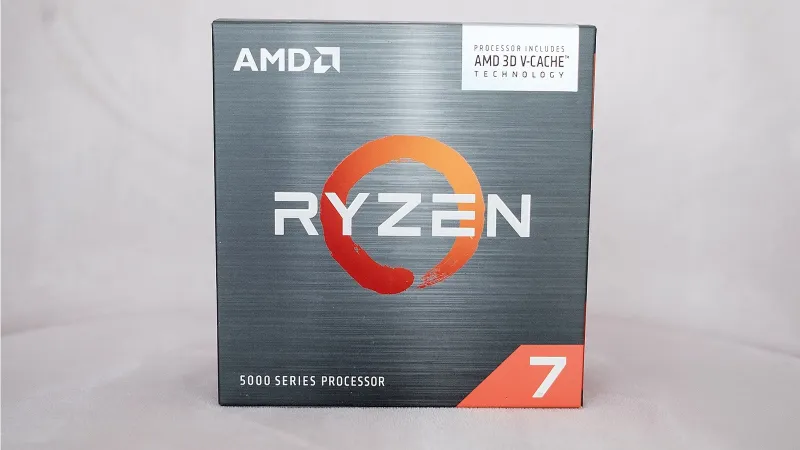
WASHINGTON — The AMD Ryzen 7 5800X3D central processing unit, once a dominant force in high-performance gaming, continues to command attention in 2026 as enthusiasts and budget-conscious consumers weigh its enduring value against a rapidly evolving market. Priced at approximately $349, this previous-generation CPU presents a compelling dilemma for those seeking optimal gaming experiences without the premium cost of the latest hardware.
Introduced with groundbreaking 3D V-Cache technology, the AMD Ryzen 7 5800X3D fundamentally altered gaming performance metrics upon its release. Its innovative stacked cache design significantly reduced latency, delivering substantial frame rate boosts in titles that heavily rely on CPU processing and memory access. For a period, it stood unmatched in gaming prowess within its price segment.
However, the PC hardware landscape progresses at an unrelenting pace. By 2026, numerous subsequent generations of processors from both AMD and Intel have entered the fray, pushing the boundaries of raw computational power and efficiency. These newer chips often boast higher core counts, faster clock speeds, and support for cutting-edge technologies like DDR5 RAM and PCIe 5.0.
The $349 price tag for the Ryzen 7 5800X3D demands scrutiny in this contemporary context. While it represents a significant reduction from its launch price, consumers now encounter AMDs Ryzen 7000 series and Intel's 14th and 15th generation processors, many of which offer competitive performance at similar or marginally higher price points, often bundled with more modern platform features.
Despite its age, the 5800X3D maintains commendable gaming performance in 2026. Many current titles, particularly those optimized for its unique cache architecture, still run exceptionally well, delivering smooth frame rates comparable to much newer, more expensive components. This resilience underscores its original design excellence.
For individuals already operating on an AM4 platform, upgrading to the AMD Ryzen 7 5800X3D remains a highly cost-effective proposition. It allows users to extract maximum performance from their existing motherboards and DDR4 memory, sidestepping the substantial expense associated with a complete platform overhaul, which would include a new motherboard, CPU, and RAM.
Conversely, for those building a new PC from scratch, the calculus shifts. Investing in an AM4-based system in 2026 means opting into an ecosystem that has reached its technological zenith and will see no further CPU generations. New builders might find more long-term value and upgrade potential in the AM5 or Intel LGA1700/LGA1851 platforms.
The primary competitors, such as AMDs Ryzen 7 7800X3D or Intel Core i7-14700K, offer superior multi-core performance and future-proofing, albeit at a higher initial investment for the CPU and accompanying platform components. These newer chips target a different segment of the market, catering to users prioritizing workstation tasks alongside gaming or seeking the absolute bleeding edge.
The subjective experience of ownership often provides a valuable counterpoint to raw benchmarks. Many long-term owners report persistent satisfaction with the 5800X3D, echoing sentiments such as “I have never regretted owning this processor.” This speaks to its real-world gaming prowess and its ability to consistently deliver an enjoyable user experience.
Prospective buyers must critically assess their specific needs. Key questions include: Do I already possess an AM4 motherboard and DDR4 memory? What is my primary use case, purely gaming or mixed productivity? What are my target frame rates and graphical settings for anticipated game releases?
Furthermore, optimizing the entire system plays a crucial role in overall performance, not just the CPU. Components like high-speed storage, sufficient RAM, and a robust internet connection contribute significantly to the gaming experience. Understanding network configurations, for instance, can be just as vital; Unlocking Optimal Online Gaming Performance provides useful insights into achieving peak online connectivity.
Ultimately, the AMD Ryzen 7 5800X3D continues to hold a distinct niche in the 2026 CPU market. It represents an exceptional value proposition for existing AM4 users seeking a final, powerful upgrade. For new system builders, however, the allure of modern platforms with their advanced features and longer upgrade paths often outweighs the 5800X3Ds gaming-centric cost efficiency.
The enduring legacy of the Ryzen 7 5800X3D highlights AMDs successful implementation of 3D V-Cache, an innovation that continues to resonate with gamers years after its debut. Its place in the market is not one of obsolescence but rather a testament to its specialized and enduring gaming competence.